 Japan is Nippon
Why Japan? Everyday Japan, explained
Why are there no trash cans? Why do trains apologise for a one-minute delay? The answers, with history and practical tips.
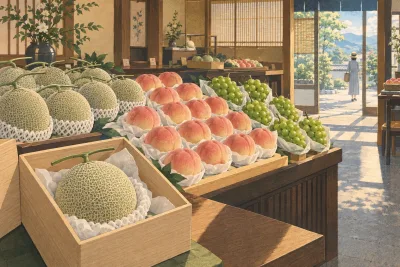
Why Is Fruit So Expensive in Japan?
Peaches at several thousand yen each, melons over 10,000 yen. The prices come down to a culture of gift-giving and very labour-intensive growing.
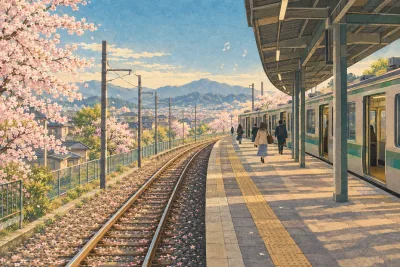
Why Does Every Train Station in Japan Have Its Own Departure Melody?
It began with complaints about noisy bells. How a small fix for station noise grew into a way for each town to introduce itself.
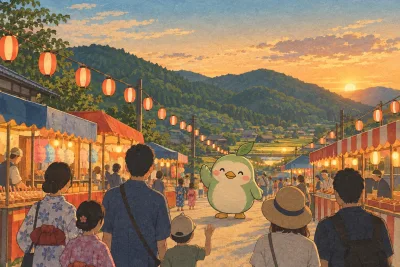
Why Does Every Town in Japan Have Its Own Mascot?
Prefectures, cities, even the police have a "yuru-kyara" mascot. Behind the cuteness lies a serious business: selling your region to the world.
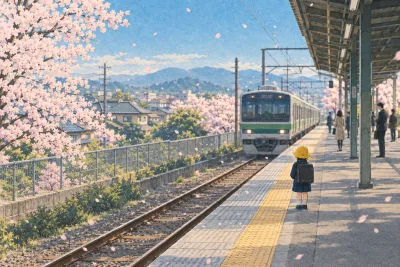
Why Do Young Children in Japan Ride the Train Alone?
Young pupils with randoseru backpacks riding trains alone: behind it lie low crime, school travel systems and a habit of community watch.
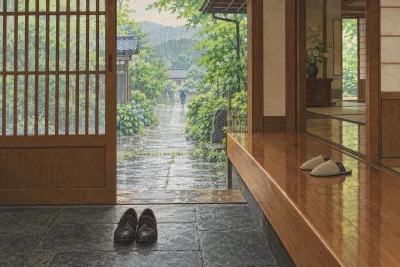
Why Do Japanese People Take Their Shoes Off Indoors, and What Are Toilet Slippers For?
Sitting and sleeping on the floor in a humid climate. The step at the entrance marks "inside" from "outside"; toilet slippers draw one more line within.
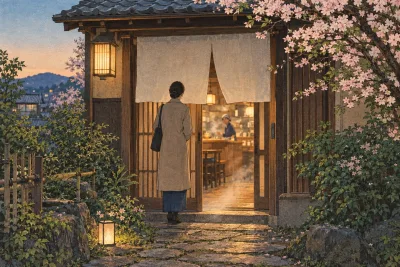
Why Do Shop Staff in Japan Say "Irasshaimase" When You Walk In?
An Edo-era barker's call became a greeting that means "we've noticed you". Plus why you don't need to reply.
Why Do People in Japan Wear Face Masks When They Aren't Sick?
Hay fever, not wanting to pass things on, a pandemic 100 years ago and a sense of security: why masks became part of everyday life in Japan.
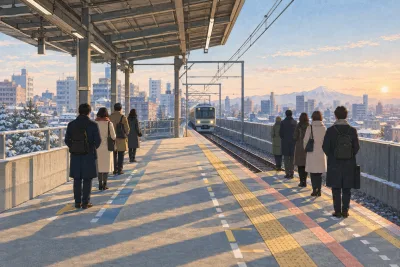
Why Do People in Japan Queue So Neatly?
"The Japanese are just well-mannered" doesn't explain it. It comes from systems built to run packed cities, plus a habit of going along with them.
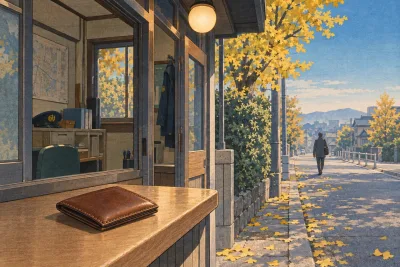
Why Do Lost Wallets Get Returned in Japan?
"Japanese people are honest" doesn't fully explain it. The keys are detailed laws, the koban police box and a habit of handing things in.
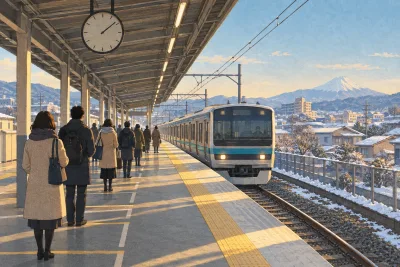
Why Do Japanese Trains Apologise for Being One Minute Late?
The apology is more than a formality. How a commuter society timed to the minute works, and the hard lesson behind all that punctuality.
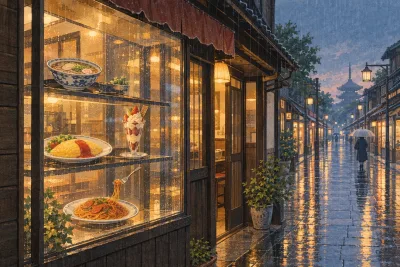
Why Do Japanese Restaurants Display Plastic Food?
Those lifelike food models are a "3D menu" born in Japan about 100 years ago. Here is how they started and why they are still used today.
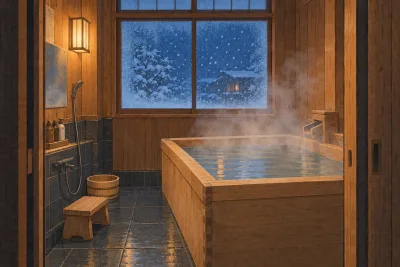
Why Do Japanese People Take a Bath Every Night?
A Japanese bath isn't a place to get clean but a place to warm up and reset after the day. That is also why it happens at night.
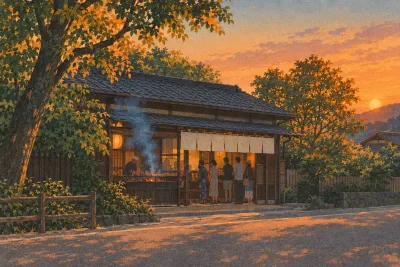
Why Do Japanese People Eat Eel in the Middle of Summer?
Eating eel on the summer Day of the Ox grew out of a 1,300-year-old poem, an Edo-era advertising legend and the fight against summer fatigue.
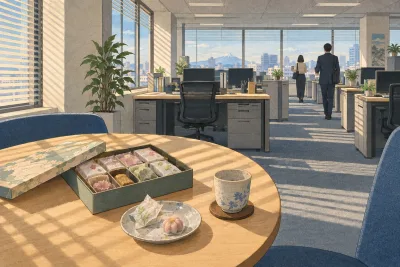
Why Do Japanese People Bring Souvenirs Back for Their Coworkers?
Those little sweets on your desk after someone's holiday go back to Edo-period pilgrimages to Ise and thanking the people who covered for you.
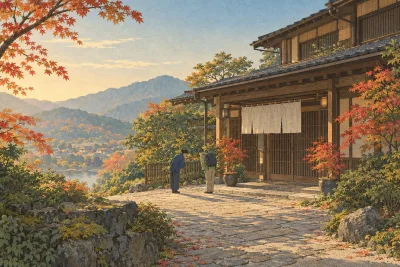
Why Do Japanese People Bow, and How Low Should You Go?
A bow does greeting, thanks and apology in one movement. As a traveller, a simple light nod of the upper body is enough to get your feelings across.
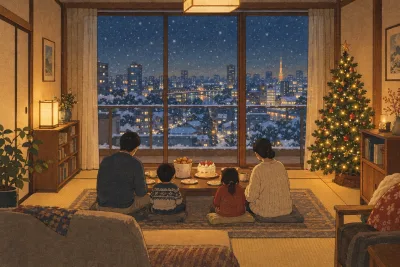
Why Do Japanese Families Eat KFC at Christmas?
It began with an advertising campaign in 1974. Fried chicken slotted neatly into a Japanese Christmas that had no set way of celebrating.
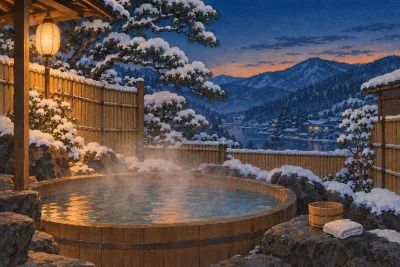
Why Can Tattoos Keep You Out of Some Hot Springs in Japan?
It is not against the law. A history linking tattoos with organised crime still shapes the rules at some baths, and here is how to navigate them.
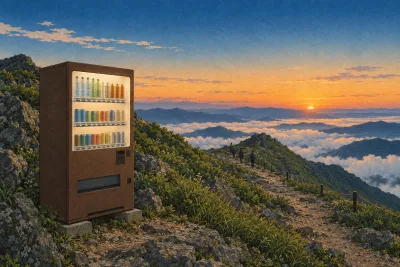
Why Are There Vending Machines Everywhere in Japan, Even on Mountains?
Safety, the 100-yen coin, hot-and-cold machines and a "just lend the space and power" model. Mount Fuji's summit machine goes up by bulldozer each summer.