Chiba
Chiba brings together cities on Tokyo Bay, fishing ports, farming country and the Pacific coast of the Boso Peninsula.
Map outlines: Natural Earth
-
1
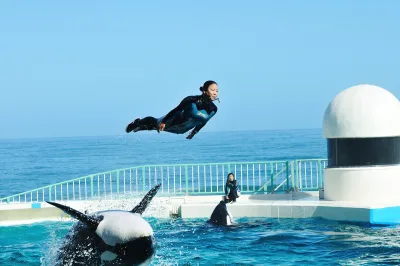 Kamogawa Sea World
A Boso Peninsula aquarium on the Pacific, famous for orca shows. In 1976 it was Japan's first to keep belugas, and 2026 marks 50 years.
Kamogawa Sea World
A Boso Peninsula aquarium on the Pacific, famous for orca shows. In 1976 it was Japan's first to keep belugas, and 2026 marks 50 years.
-
2
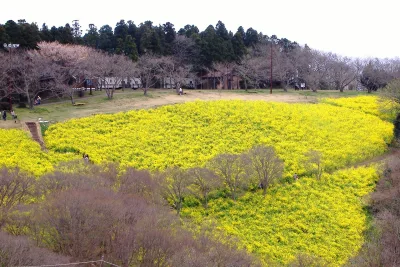 Mother Farm
A 250-hectare farm park on a Boso Peninsula hilltop overlooking Tokyo Bay and Mount Fuji: stampeding sheep, seasonal flower fields and animals to meet.
Mother Farm
A 250-hectare farm park on a Boso Peninsula hilltop overlooking Tokyo Bay and Mount Fuji: stampeding sheep, seasonal flower fields and animals to meet.
-
3
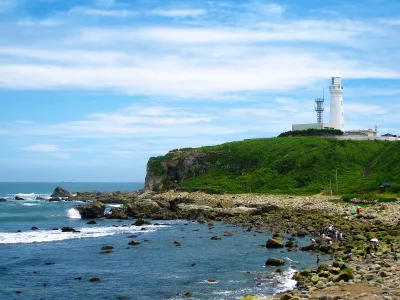 Inubosaki Lighthouse
A white Meiji-era lighthouse on a cape jutting into the Pacific at Kanto's eastern tip. Climb its 99 spiral steps to look out over a sea of crashing waves.
Inubosaki Lighthouse
A white Meiji-era lighthouse on a cape jutting into the Pacific at Kanto's eastern tip. Climb its 99 spiral steps to look out over a sea of crashing waves.
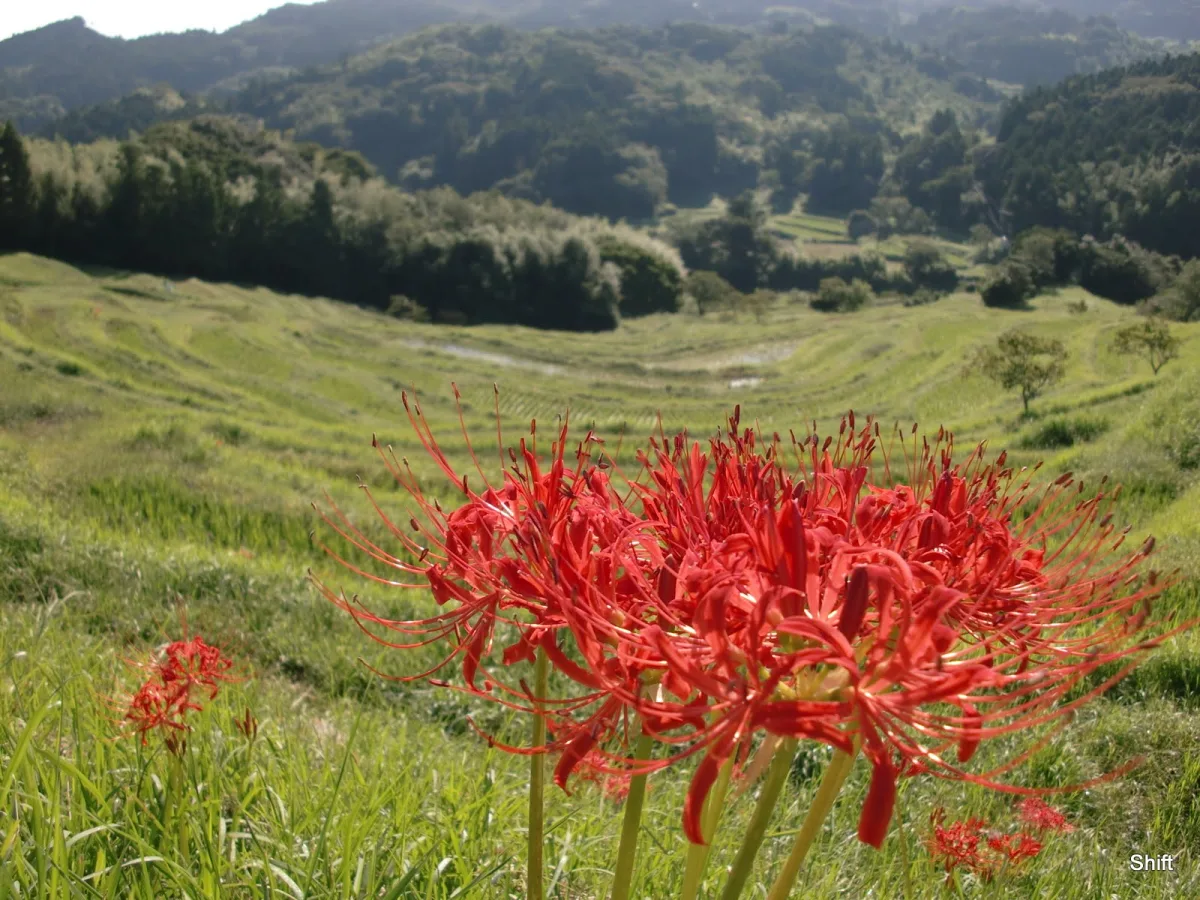
_%E5%A4%A7%E5%B1%B1%E5%8D%83%E6%9E%9A%E7%94%B0%E3%80%82%E6%9D%B1%E4%BA%AC%E3%81%AB%E4%B8%80%E7%95%AA%E8%BF%91%E3%81%84%E6%A3%9A%E7%94%B0%E3%81%A8%E3%81%97%E3%81%A6%E6%9C%89%E5%90%8D%E3%81%A7%E3%81%99%E3%80%82%E5%BD%BC%E5%B2%B8%E8%8A%B1%E3%81%8C%E3%80%81%E9%9D%9E%E5%B8%B8%E3%81%AB%E5%8A%9B%E5%BC%B7%E3%81%84%E8%B5%A4%E3%81%A7%E5%8D%B0%E8%B1%A1%E7%9A%84%E3%81%A7%E3%81%97%E3%81%9F%E3%80%82%E3%81%93%E3%81%AE%E6%A3%9A%E7%94%B0%E3%80%81%E6%B1%9F%E6%88%B8_-_panoramio.jpg)


A peninsula with two very different coasts
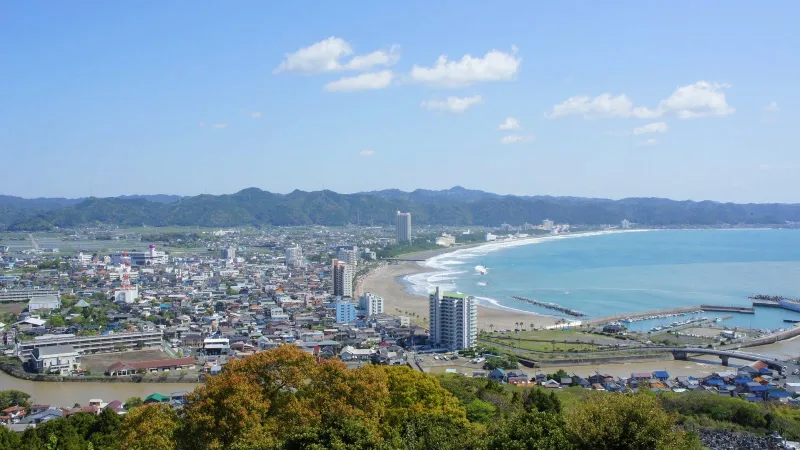
Chiba lies just east of Tokyo, but it is easiest to understand by looking at the sea around it. Its west side borders Tokyo Bay, while its east and south coasts face the Pacific Ocean. Most of the prefecture sits on the Boso Peninsula. In the north-west, the cities and rail lines feel closely tied to the capital. Travel further south and the scenery shifts to fishing towns, fields and low, wooded hills.
Kujukuri Beach, a long stretch of sand, faces the open Pacific and draws surfers. On the west side of the peninsula, Mount Nokogiri rises above Tokyo Bay, with a path that leads through temple grounds and past large Buddhist carvings. The Boso Hills inland have rivers and terraced rice fields. Chiba is not a single seaside scene: the calm bay, the wave-battered beaches and the farming interior give even a short trip clearly different moods.
Towns shaped by the roads to Edo
Chiba's closeness to Tokyo is an old relationship. In the Edo period, when Tokyo was called Edo, highways and the Tone River carried goods from northern Chiba to Edo. Various towns grew up around that trade: Sakura became a castle town, Narita a temple town, Sawara a merchant town and Choshi a port town. Their surviving streets give a far more concrete picture of local history than the idea that Chiba is just somewhere you pass through on the way to Tokyo.
Near Narita Station, the Omotesando (the approach road to a temple or shrine) leads between rows of shops to Naritasan Shinshoji Temple. In Sawara you can walk through a preserved riverside merchant district. The area's history goes beyond trade, too: Ino Tadataka, who lived in Sawara, later surveyed Japan and produced remarkably accurate maps. Near Narita, Boso no Mura shows reconstructed local buildings and old ways of life for anyone curious about everyday life in the past.
Peanuts, fish and the bounty of the fields
If you take home just one Chiba food, it might be peanuts. Chiba is Japan's top producer, and local varieties appear roasted, boiled and in sweets. Rakkasei monaka, a crisp wafer shell filled with sweet bean paste, is one way to enjoy them. The fields produce much more besides: pears, loquats, daikon radish and carrots are all Chiba produce. The long coastline also supplies nori seaweed, sardines and other seafood.
On the southern coast, look for namerō, a fishermen's dish made by finely chopping fish together with ginger, spring onion, miso (fermented soybean paste) and more. Instead of neatly sliced sashimi, it comes minced and seasoned. Katsuura has its own warming tantanmen noodles, with a soy sauce-based soup, onions and chilli oil. Around Narita, a long tradition of making soy sauce and sake (Japanese rice wine) is another flavour of the area's farming and trading history.
What the seasons bring to local streets
The sea tempers Chiba's climate, and winters are relatively mild, especially in southern Boso. Yellow rapeseed flowers can brighten the scenery before spring is properly felt elsewhere. In spring, cherry blossoms also bloom in parks and temple grounds. In summer people flock to the beaches, and autumn is a good time to enjoy the colourful leaves of the wooded Yoro Valley.
Local festivals give the calendar another rhythm. A matsuri is a traditional festival, often rooted in a community's religious life. During Sawara's great festival, residents haul ornate dashi (festival floats) through the old merchant town. At Narita's Gion Festival, decorated floats and mikoshi (portable shrines) take to the temple approach. On the Pacific coast, at the Ohara Hadaka Festival, mikoshi are carried into the sea in thanks for its bounty. These events show Chiba's ties to its towns and the sea in a visible way, not just as history.
Getting there and choosing a route
Many travellers first meet Chiba at Narita International Airport. From Tokyo, the JR Sobu and Keiyo lines are the routes into the prefecture: the Keiyo Line runs along the bay side, and Chiba Station is a handy hub for travelling further by rail. Narita, Sawara and Chiba city each make a focused day out without trying to tour the whole peninsula.
For a longer trip, the Uchibo Line runs along the inner, Tokyo Bay side of Boso, and the Sotobo Line along the outer, Pacific side. Highway buses are another way to reach some southern destinations. From the western side of Tokyo Bay, you can also come across via the Aqua-Line road or by ferry to Kanaya. Trains reach many seaside towns, but places in the hills need more careful planning. Start by choosing one coast or one inland area: given Chiba's geography, that is the more rewarding way to understand how its landscapes connect.
Sources
- Description of Chiba Prefecture/Chiba Prefecture
- 40,000 Years of Culture/Chiba Prefecture
- Bountiful Land and Sea/Chiba Prefecture
- Chiba | Kanto | Destinations | Travel Japan - Japan National Tourism Organization (Official Site)
- Boso Peninsula | Chiba | Kanto | Destinations | Travel Japan - Japan National Tourism Organization (Official Site)
- Kisarazu & Around | Chiba | Kanto | Destinations | Travel Japan - Japan National Tourism Organization (Official Site)
- About Chiba & Area Guide | Visit Chiba
- A tour of Chiba’s gourmet specialties | Visit Chiba
- Traditional Festivals in Chiba | Katsuura Big Hina Matsuri, Narita Gion Festival, Sawara Grand Festival, Ohara Hadaka Festival, Takabe Shrine Knife Ritual | Visit Chiba