Miyazaki
Miyazaki pairs a long Pacific coast with volcanic highlands, farming country and communities that keep Japan's oldest stories alive.
Map outlines: Natural Earth
-
1
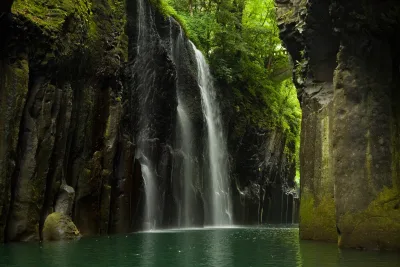 Takachiho Gorge
A gorge in northern Miyazaki lined with column-like cliffs born of Mount Aso's volcanic activity. Hire a rowing boat to look up at Manai Falls from close by.
Takachiho Gorge
A gorge in northern Miyazaki lined with column-like cliffs born of Mount Aso's volcanic activity. Hire a rowing boat to look up at Manai Falls from close by.
-
2
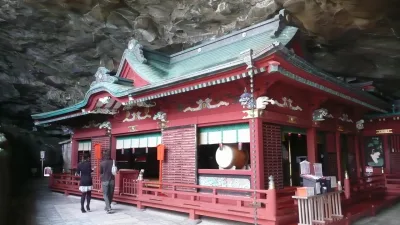 Udo Jingu Shrine
A vermilion shrine set in a clifftop cave above the Hyuga-nada sea. Walk down the steps to pray, then throw lucky undama at a turtle-shaped rock for a wish.
Udo Jingu Shrine
A vermilion shrine set in a clifftop cave above the Hyuga-nada sea. Walk down the steps to pray, then throw lucky undama at a turtle-shaped rock for a wish.
-
3
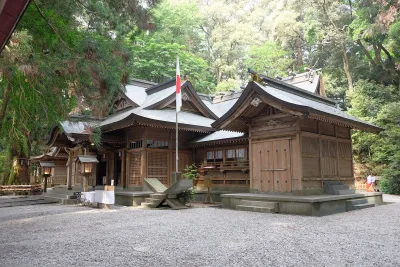 Takachiho Shrine
An ancient shrine ringed by giant cedars in Takachiho, a setting of Japanese myth. Every night at 8 pm, an hour of myth-based kagura dance is performed.
Takachiho Shrine
An ancient shrine ringed by giant cedars in Takachiho, a setting of Japanese myth. Every night at 8 pm, an hour of myth-based kagura dance is performed.
.jpg)
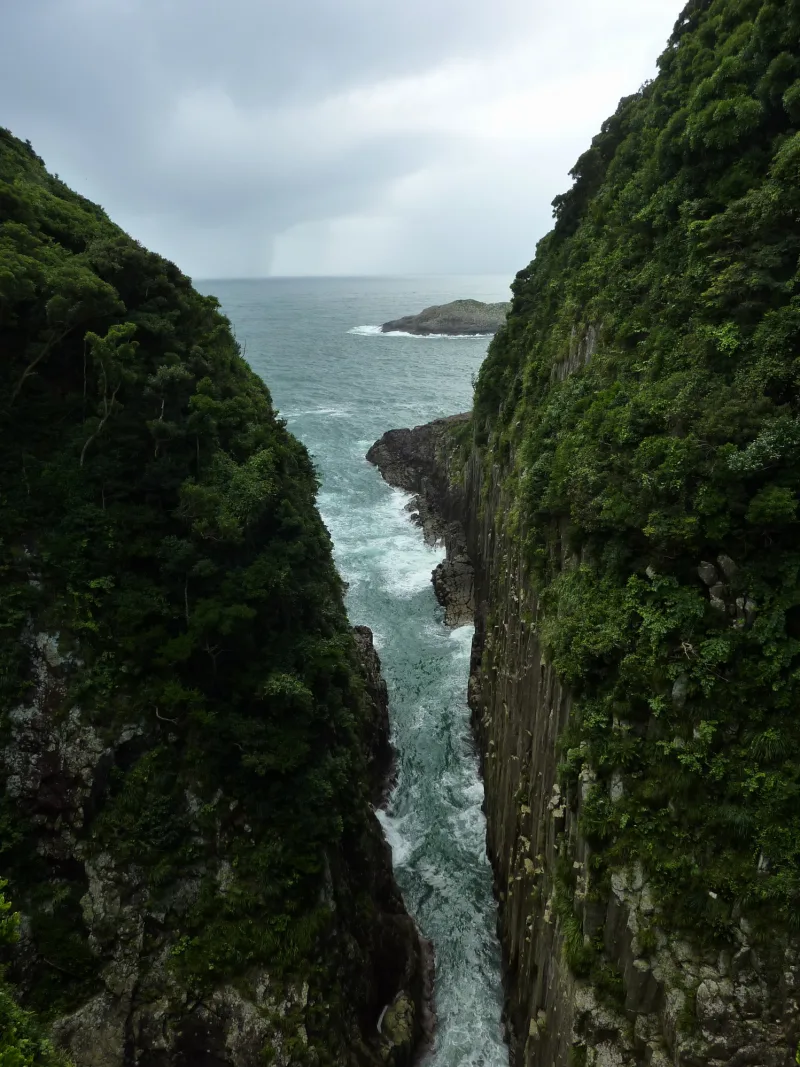

From the shores of Aoshima to the cliffs of Takachiho
Miyazaki Prefecture faces the Pacific on the eastern side of Kyushu, but it is not all seaside. Aoshima is a small island by the shore with a shrine and a surfing area. Along the coast, surf beaches and the road leading down to Nichinan keep the ocean constantly in view.
Head inland and the scenery changes. At Takachiho Gorge, water flows between sheer, columnar cliffs formed from volcanic material that came from Mount Aso. You can look down from the walking path or view Manai Falls from a boat. Further west, the Ebino Plateau belongs to Miyazaki's volcanic mountain country. Seen together, these places explain how a trip can begin among palm trees and end on a highland trail.
Myths, burial mounds and an old castle town
Many places in Miyazaki are linked to stories recorded in Japan's ancient chronicles. In Takachiho, local tradition connects Amano Iwato Shrine with the tale of the sun goddess Amaterasu hiding in a cave. It is best to take these stories as stories, rather than confusing them with recorded history. They are part of how people make sense of the shrines and landscapes around them.
There is visible history too. At Saitobaru, hundreds of kofun (ancient burial mounds) are scattered across an open plateau. In the south, Obi developed as a castle town from the late 16th century. With its surviving stone walls, former samurai residences and the buildings around the Otemon Gate, it is a perfect place to explore on foot. Miyazaki's past is not a single era: it runs from the burial mounds to the castle-town streets, with myth close by both.
What Miyazaki grows, catches and cooks
Farming shapes the prefecture's table. Miyazaki produces cattle, chicken, vegetables, mangoes and citrus such as hyuganatsu, a local fruit eaten with its white pith left on. Mangoes are another familiar Miyazaki product, and shochu, a Japanese distilled spirit, gives you a taste of the region's tradition of making alcohol.
For a meal, try chicken nanban: fried chicken coated in a sweet-and-sour sauce and often served with tartar sauce. The dish was born in Nobeoka, and various restaurants have shaped the style eaten today. Jidori (local chicken) grilled over charcoal offers a different flavour and texture. On hot days, hiyajiru, a chilled soup made with fish, miso and other ingredients, is another way to enjoy local flavours. From the Pacific coast come bonito and other seafood caught around Nichinan.
Kagura danced on winter nights
In Takachiho, kagura means ritual dances offered to the gods. Local communities keep up the Takachiho Yokagura, a tradition performed through the night in the cold season. The dancers include residents who usually work in farming or other jobs. The dances give thanks for the harvest and pray for a good one the following year, and some scenes bring the region's myths to life.
Visitors can see a shortened, rearranged version of kagura at Takachiho Shrine, but the community rituals are more than a performance put on for tourists. If you go to watch, it matters to understand that difference: this is a living local custom, not just a story printed on a sightseeing map.
Seasons and the shape of a trip
Miyazaki has a mild climate, but frost and snow appear around the Ebino Plateau in winter. In spring, cherry blossoms and yellow rapeseed flowers bloom at the same time at Saitobaru. Summer is for days by the sea. In autumn, the trees around Takachiho Gorge change colour, and you can see a sea of clouds from Kunimigaoka in Takachiho. Winter is also the season of village kagura. In other words, a photo of a warm-looking beach will not tell you what to pack for the highlands.
Most travellers arrive in Miyazaki by air and plan their route outwards from the city. Travelling across the prefecture takes more planning. Takachiho is a long way inland, and a car or a sightseeing bus is the realistic option. If you want to enjoy both the coast and the mountains, give each enough time in your itinerary rather than treating them as stops in the same neighbourhood.
Sources
- Miyazaki | Kyushu | Destinations | Travel Japan - Japan National Tourism Organization (Official Site)
- Takachiho | Miyazaki | Kyushu | Destinations | Travel Japan - Japan National Tourism Organization (Official Site)
- Takachiho Gorge | See & Do | Visit MIYAZAKI -Official Tourism Website of Miyazaki Prefecture-
- First time in Miyazaki? Let us tell you all about the appeals of Miyazaki Prefecture, from classic spots to gourmet food and hot springs! | Highlights | Visit MIYAZAKI -Official Tourism Website of Miyazaki Prefecture-
- Charms of Miyazaki|G7 Agriculture Ministers’ Meeting in Miyazaki
- Mouthwatering cuisine you have to try in the cornucopia of Miyazaki | Highlights | Visit MIYAZAKI -Official Tourism Website of Miyazaki Prefecture-
- [Experience Article] A trip to the town where the gods dance. Discovering the true faces of the people who perform the “Takachiho Kagura” through a farm stay | Highlights | Visit MIYAZAKI -Official Tourism Website of Miyazaki Prefecture-
- Discover Takachiho: A Guide to Local Attractions and Accommodations (Sobo, Katamuki and Okue Biosphere Reserve) | Highlights | Visit MIYAZAKI -Official Tourism Website of Miyazaki Prefecture-
- Take a tour of famous spots for seasonal flowers in Miyazaki! - Spring - | Highlights | Visit MIYAZAKI -Official Tourism Website of Miyazaki Prefecture-