Fukushima
Fukushima runs from the snowy Aizu mountains through fruit-growing basins to the Pacific coast, with different food, history and seasons along the way.
Map outlines: Natural Earth
-
1
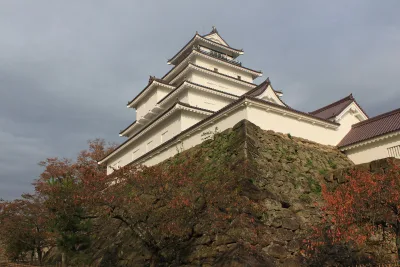 Tsuruga Castle (Aizu-Wakamatsu Castle)
Aizuwakamatsu's symbol, which held out through a month-long siege in the Boshin War. Its five-tier keep is the only red-tiled castle keep in Japan today.
Tsuruga Castle (Aizu-Wakamatsu Castle)
Aizuwakamatsu's symbol, which held out through a month-long siege in the Boshin War. Its five-tier keep is the only red-tiled castle keep in Japan today.
-
2
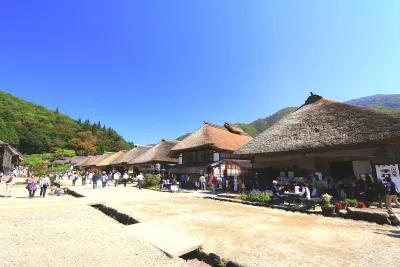 Ouchi-juku
A mountain village in Minami-Aizu that still looks like an Edo-period post town, lined with thatched houses and famous for soba eaten with a leek.
Ouchi-juku
A mountain village in Minami-Aizu that still looks like an Edo-period post town, lined with thatched houses and famous for soba eaten with a leek.
-
3
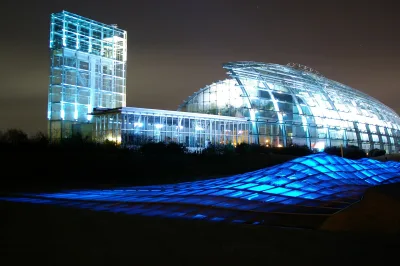 Aquamarine Fukushima
An environmental aquarium in Iwaki themed on Fukushima's "shiome", where warm and cold currents meet. Catch and touch sea life as well as watch it.
Aquamarine Fukushima
An environmental aquarium in Iwaki themed on Fukushima's "shiome", where warm and cold currents meet. Catch and touch sea life as well as watch it.

Three regions, three ways of life
Fukushima is one of Japan's largest prefectures, and it is easiest to understand as three regions rather than a single landscape. Aizu, in the west, has old towns ringed by mountains and deep snow in winter. Nakadori, running through the middle, links cities, hot springs and orchards. Hamadori faces the Pacific, with sea breezes and generally less snow. Crossing the prefecture can feel like moving between different versions of the Tohoku region.
The mountains have shaped more than the weather. Around Mount Bandai, an eruption in 1888 created lakes and ponds, among them Goshikinuma, meaning 'Five-Coloured Ponds'. The greens and blues of the ponds shift with the minerals in the water, the light and the weather, and walking trails pass beside several of them. On the coast, Iwaki shows another side of Fukushima's landscape: its hot springs.
Aizu's castle town and a changing coast
Aizu-Wakamatsu still tells the story of the samurai, Japan's former warrior class. Tsuruga Castle was the seat of the lords of the Aizu domain, and it was a battleground in the Boshin War of 1868-69, fought between forces loyal to the old shogunate and the new government's army. Today the castle grounds are also a well-known spot for cherry blossoms. The surrounding streets, lacquerware shops and traditional buildings show that Aizu's past lives on in its crafts as well as its memorials.
South of the city, Ouchi-juku was a post town where travellers rested on the road linking Aizu with the Nikko area. Thatched-roof houses line its street. Fukushima's coast has a different, more recent history. The earthquake, tsunami and nuclear accident of 11 March 2011 had a serious impact on coastal towns. The Great East Japan Earthquake and Nuclear Disaster Memorial Museum in Futaba presents the testimony of residents, and recovery is still under way in parts of the region. Visiting thoughtfully means paying attention to those stories alongside the coast's older traditions.
Noodles, orchards and things made to last
Fukushima rewards anyone who likes tasting regional differences. Kitakata ramen is the area's noodle dish. In mountainous Aizu, preserved seafood and wild mountain vegetables have long been part of local cooking. At Ouchi-juku, negi soba is buckwheat noodles served with a long green onion that you can use in place of chopsticks.
On a trip through Nakadori, fruit is the landmark. Orchards around Fukushima city and Date grow peaches, and pears, grapes and apples are harvested later in the year. For souvenirs, look for Aizu lacquerware, a local craft with hand-painted designs. Locally brewed sake (the drink made from rice) is another Aizu product with deep roots.
A red cow and horses by the sea
A little red cow says a lot about Aizu. Akabeko means 'red cow' in the local dialect, beko being the regional word for cow. In Yanaizu, a legend tells of a red-haired cow that helped carry building materials for Enzoji Temple. Today the cow appears as a painted folk toy associated with good health and good luck. Visitors can spot it in souvenir shops or paint their own at workshops in Aizu.
Hamadori has its own striking custom. Soma Nomaoi is a horse festival rooted in the area's history of warfare and horse breeding: mounted warriors in armour gather for processions, horse races and a contest to seize flags on horseback. It has moved from its former summer dates and is now held in spring. These traditions differ in scale, but both are deeply bound up with the communities that keep them alive.
The mood of each season
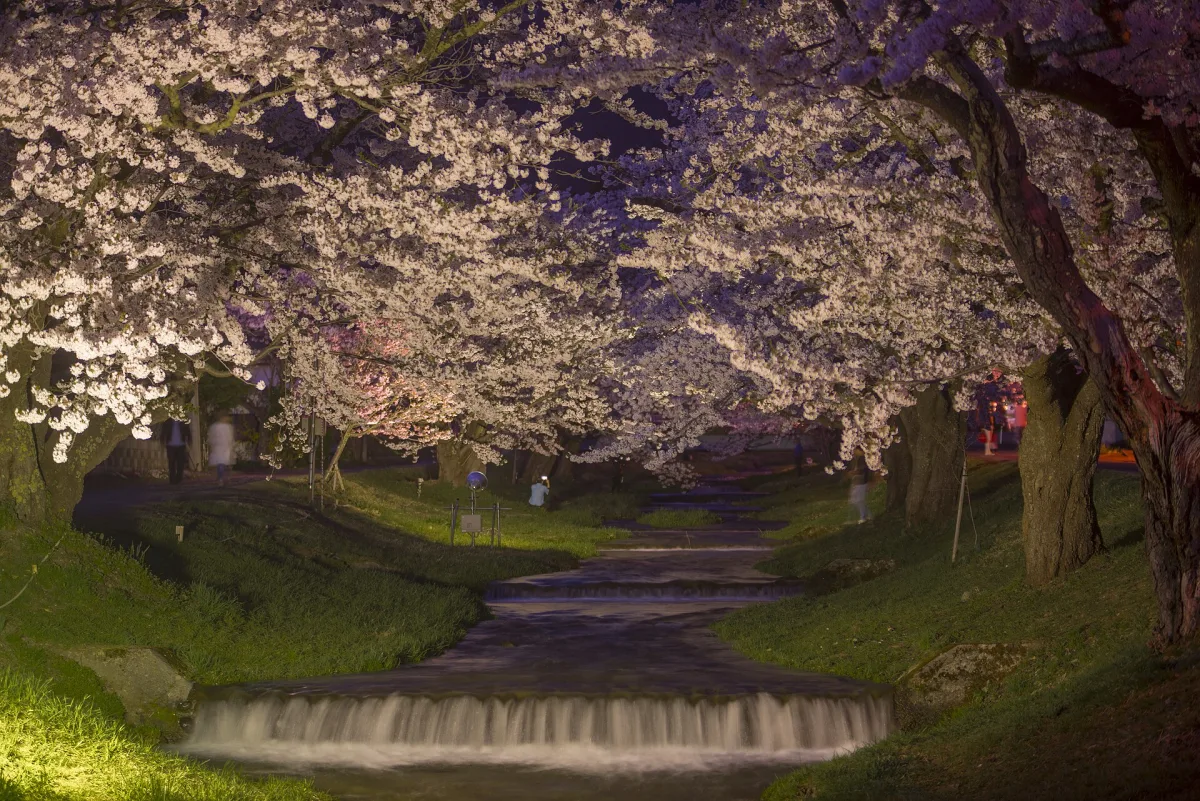
In spring, plum and cherry trees bloom at Hanamiyama Park near Fukushima city, and cherry-blossom viewing draws people to the castle grounds in Aizu-Wakamatsu. Summer is peach season. Breezes from the Pacific give Hamadori a different atmosphere.
In autumn, as the orchards move on to pears, grapes and apples, Goshikinuma puts on its autumn scenery. In winter there is skiing around Mount Bandai and snowshoeing in Urabandai. Onsen (baths in natural hot springs) are one of the pleasures of travelling in the cold season.
Getting there and getting around
From Tokyo, the Tohoku Shinkansen brings you to Fukushima or Koriyama in the centre of the prefecture. Koriyama is a convenient place to change for Aizu-Wakamatsu, and the Ban'etsu West Line continues towards Kitakata. Travellers heading for Iwaki and other coastal areas can take the Joban Line instead. Decide which of Fukushima's three regions you will explore first, and your route will fall into place.
Local trains and buses link many towns and sights. Aizu-Wakamatsu has a loop bus around its main historic sites, and the Tadami Line carries passengers into the countryside of western Aizu. For a trip combining scattered mountain sights, orchards and small villages, a hire car gives you more freedom. If you prefer public transport, pick one region as your base and allow plenty of time for connections, rather than trying to cross the whole prefecture in a single outing.
Sources
- Destinations in Fukushima - Fukushima Travel
- Fukushima | Tohoku | Destinations | Travel Japan - Japan National Tourism Organization (Official Site)
- Goshiki-numa Ponds - Destinations - Fukushima Travel
- Aizu-Wakamatsu | Fukushima | Tohoku | Destinations | Travel Japan - Japan National Tourism Organization (Official Site)
- Coastal Fukushima | Fukushima | Tohoku | Destinations | Travel Japan - Japan National Tourism Organization (Official Site)
- Step Back in Time at Ouchi-juku | Experiences in Japan | Travel Japan(Japan National Tourism Organization)
- Fukushima’s Revitalization Educational One-Day Trip - Fukushima Travel
- Safety in Fukushima - Fukushima Travel
- Fruit in Fukushima - Fukushima Travel
- Paint Your Own Akabeko - Destinations - Fukushima Travel
- もっと 知って ふくしま! 赤べこ篇〖6秒〗 - 福島県ホームページ
- Soma Nomaoi Festival - Destinations - Fukushima Travel
- Fukushima City | Fukushima | Tohoku | Destinations | Travel Japan - Japan National Tourism Organization (Official Site)
- Getting around Fukushima Prefecture - Fukushima Travel