Fukui
Fukui pairs a rugged Sea of Japan coast with mountain temples, dinosaur finds, working craft towns and food coloured by the seasons.
Map outlines: Natural Earth
-
1
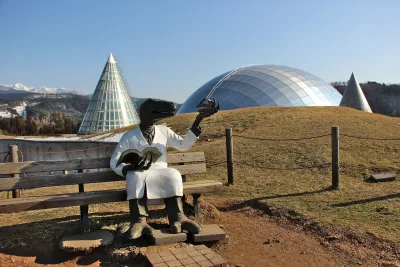 Fukui Prefectural Dinosaur Museum
One of Japan's biggest dinosaur museums, in Katsuyama, Fukui, source of many of Japan's dinosaur fossils. See 50 full skeletons.
Fukui Prefectural Dinosaur Museum
One of Japan's biggest dinosaur museums, in Katsuyama, Fukui, source of many of Japan's dinosaur fossils. See 50 full skeletons.
-
2
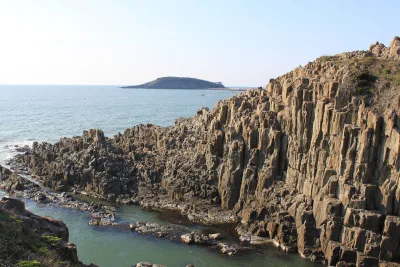 Tojinbo
About 1 km of Sea of Japan cliffs of hexagonal and other rock columns. Walk the top as waves crash below, or look up from a boat.
Tojinbo
About 1 km of Sea of Japan cliffs of hexagonal and other rock columns. Walk the top as waves crash below, or look up from a boat.
-
3
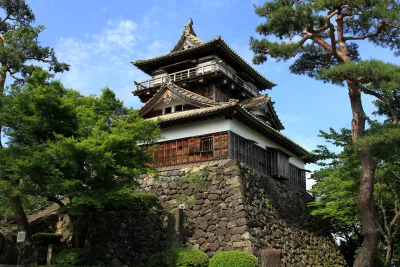 Maruoka Castle
Hokuriku's only castle among Japan's 12 with an original keep. Toppled by an earthquake, it was rebuilt from its own timbers under stone tiles.
Maruoka Castle
Hokuriku's only castle among Japan's 12 with an original keep. Toppled by an earthquake, it was rebuilt from its own timbers under stone tiles.

Two coasts, mountain valleys and dinosaur country
Fukui faces the Sea of Japan, but its coastline is not all of one kind. At Tojinbo in the north, tall, tightly packed columns of rock stand up to the waves; they formed millions of years ago as molten rock cooled and cracked. Further south, Wakasa Bay curves around beaches and coves. Nearby, the Mikata Five Lakes (the name means "the five lakes of Mikata") are a group of connected lakes where fresh water and seawater mix in different proportions. Rather than treating the coast as a single stop, it is worth giving the north and the south a day each.
Head inland and the scenery changes again. Katsuyama is home to the Fukui Prefectural Dinosaur Museum, close to the dig sites where many of Japan's dinosaur fossils have been found. The theme carries all the way to Fukui Station, where large dinosaur models greet arriving passengers. Even so, the mountain forests, farming country and coast are always close to the story of this land. Fukui feels like a place where local people have learned to live alongside many different landscapes.
A temple valley and the road to Kyoto
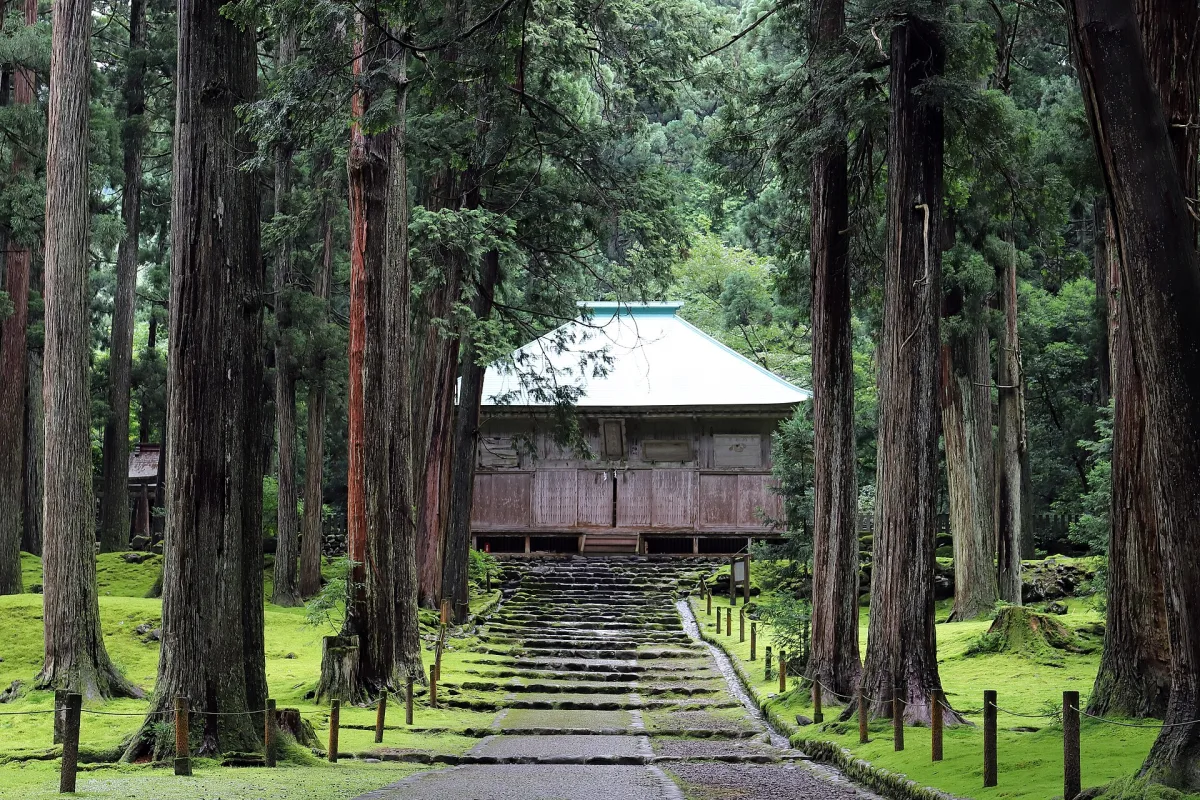
At Eiheiji, founded by the monk Dogen in 1244, daily practice is still at the heart of life for the Soto school, a branch of Buddhism that stresses disciplined training and zazen (seated meditation). The temple lies in a forest-ringed valley, and its halls are still used by monks in training. Here you encounter a living religious community, not just a collection of old buildings.
Ichijodani, near Fukui city, preserves the remains of a town ruled by the Asakura clan during Japan's Warring States period. Excavations have revealed where samurai, merchants and artisans lived, and part of the streetscape has been reconstructed. Obama in southern Fukui tells a different history. It was the centre of the old Wakasa Province and a port linked to trade beyond Japan. The Saba Kaido ("mackerel road") carried seafood from this coast to Kyoto. Visiting these places makes it easier to picture Fukui's position between the sea, the mountains and the old capital.
What Fukui makes, eats and says
Start with two everyday dishes. Echizen oroshi soba pairs soba (buckwheat noodles) with grated daikon radish, and is usually served cold with a dipping sauce, spring onion and bonito flakes. Sauce katsudon is thin tonkatsu (pork cutlet) coated in sauce and served on rice. Katsudon simply means a bowl of rice topped with a cutlet, but Fukui's sauce version differs from the egg-topped kind common elsewhere. In winter, Echizen-gani is the local name for male snow crab landed at Fukui's ports. The prefecture's food is not only about eating out: thick aburaage (fried tofu) is a familiar ingredient in local home cooking.
What is made here is just as worth your attention. Echizen, a historical name associated with northern Fukui, is known for washi (Japanese paper) as well as forged knives, pottery and lacquerware. In the Wakasa area to the south, craftspeople make lacquered chopsticks decorated with materials such as seashells and pine needles. The language changes as you travel, too: local travel writers note that people speak differently in Reihoku in the north and Reinan in the south, which are separated by a mountain pass. Listen in a café or on a guided walk and you may hear the word hoyahoya, an enthusiastic way of agreeing: "yes, exactly".
A year from blossom season to winter sweets
In spring, cherry blossoms bloom at places such as the Ichijodani ruins, and seasonal seaweed comes in from the coast. Summer is hot and humid: the season for Wakasa's swimming beaches and for ayu (sweetfish) from the Kuzuryu River. Autumn brings the rice harvest, autumn leaves and the start of crab season. That means a trip in one season can taste completely different from a trip in another.
Winter needs particular care when planning. Northern Fukui can get heavy snow, and the Sea of Japan coast turns rough and windy. The snow also brings skiing in the mountains and makes a soak in a hot spring all the more appealing. Look out for mizu yokan, a soft sweet made from azuki beans and agar. Elsewhere in Japan this kind of sweet is thought of as a summer treat, but in Fukui it is traditionally enjoyed in winter. With warm clothes and a weather-aware plan, you can savour the season itself rather than working around it.
Getting there and getting around
The Hokuriku Shinkansen, the Japanese high-speed rail line that runs through the region, goes directly to Fukui from Tokyo and Kanazawa. From Kyoto, Osaka and Nagoya, you usually take a limited express train to Tsuruga and, if heading for Fukui city, change to the shinkansen there. Tsuruga is also a handy starting point for southern Fukui, so the best station to arrive at depends on which part of the prefecture you want to explore.
Once you arrive, think area by area. Fukui city is a base for Eiheiji and Ichijodani, and Katsuyama is the destination for the dinosaur museum. For time around Wakasa Bay and Obama, plan a separate itinerary. Many of the main sights can be reached by train or bus, and bicycles are handy on the flatter routes around stations and lakeshores. For a trip linking several rural or coastal stops, a rental car gives you more freedom. Fukui is big enough that leaving slack between destinations is part of enjoying it.
Sources
- Guide for First-Time Visitors
- The Four Seasons of Fukui
- Explore Japan’s Undiscovered Food Haven in FUKUI
- Traditional Crafts
- Fukui | Hokuriku Shinetsu | Destinations | Travel Japan
- 聞いたことある?福井の方言
- しあわせを呼ぶ福井の方言
- The Natural and Historical Wonders of Wakasa Bay
- Fukui: Highlight of a Hokuriku Trip
- Ichijodani Asakura Clan Ruins (Ichijodani Asakura Family Site)
- Eiheiji Temple
- A Guide to Enjoying the Sheer Cliffs of Tojinbo