Kumamoto
Kumamoto pairs Aso's volcanic grasslands, kept alive by human hands, with the island coast of Amakusa, and castle history and bold local food in between.
Map outlines: Natural Earth
-
1
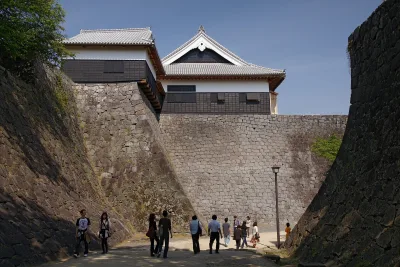 Kumamoto Castle
Kato Kiyomasa's great castle, famed for its curving stone walls. Still recovering from the 2016 quake, it shows off its restored keep and repairs in progress.
Kumamoto Castle
Kato Kiyomasa's great castle, famed for its curving stone walls. Still recovering from the 2016 quake, it shows off its restored keep and repairs in progress.
-
2
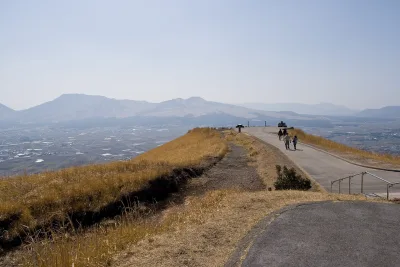 Daikanbo Lookout
A lookout about 936 m up on the northern rim of Aso's huge caldera, taking in the valley towns below, the five peaks of Aso and the distant Kuju range.
Daikanbo Lookout
A lookout about 936 m up on the northern rim of Aso's huge caldera, taking in the valley towns below, the five peaks of Aso and the distant Kuju range.
-
3
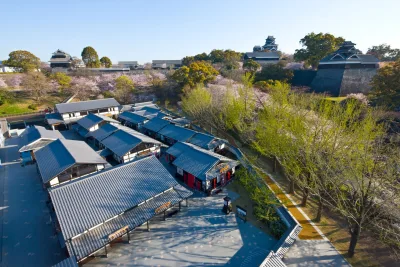 Sakuranobaba Josaien
A visitor complex below Kumamoto Castle with a street of local food and souvenir shops and a tourist office: ideal for a meal or break around your castle visit.
Sakuranobaba Josaien
A visitor complex below Kumamoto Castle with a street of local food and souvenir shops and a tourist office: ideal for a meal or break around your castle visit.
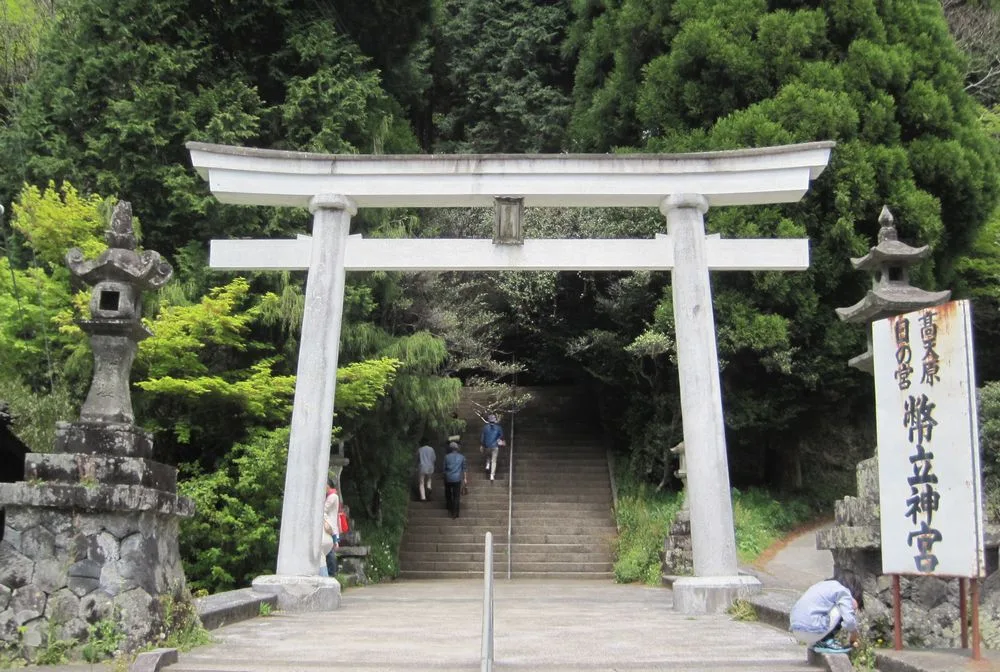

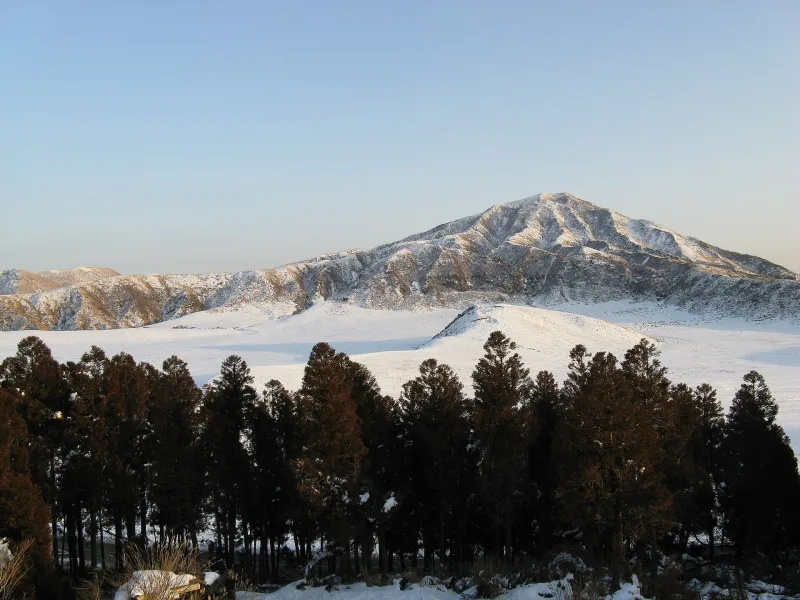

Aso: a volcano and a landscape shaped by people
Kumamoto is known as Hi no Kuni, 'the Land of Fire', because of its active volcano. Inside the vast caldera are villages and farmland, and the active Nakadake crater is a reminder that this landscape is still changing. Open grasslands spread across the surrounding slopes, with grazing cattle and sweeping mountain views. It may look like untouched countryside, but people have looked after these grasslands for generations.
Every year in early spring, local people carry out noyaki, a controlled burn that clears dead grass and helps new grass grow back. They also cut grass and graze cattle, and without this work the grasslands could not survive for long. For an easier introduction to Aso, the meadow of Kusasenri-ga-hama and the area's onsen (hot springs) show two very different sides of life alongside a volcano. Access near the active crater can change, so check the local restrictions before you go.
The castle and the city around it
Kumamoto city is more than a place to change trains. Kato Kiyomasa put great effort into building Kumamoto Castle. Nearby, Suizenji Jojuen, a garden made for strolling rather than for defence, offers a quieter view of the city's history.
The 2016 earthquake caused severe damage to Kumamoto Castle. The restored main keep welcomes visitors, but repairs continue elsewhere. That makes the castle a place to appreciate both old building techniques and present-day care: some parts are open to visit, while others are still under construction. In spring, cherry blossoms draw people into the grounds. At other times of year, too, walking around the castle and its surroundings is a good way to start understanding the city before you head out across the prefecture.
Amakusa: islands with a different history
Head west from the mountains and Kumamoto changes character. Amakusa is an archipelago of more than 120 islands. Fishing villages, sandy beaches and boat trips shape this seaside side of Kumamoto. Seafood is one of the pleasures of a visit, with sea urchin a local speciality, and wild dolphins live in the waters around the islands.
Amakusa's churches and museums tell a harder story. When Christianity was banned in Japan, these islands became an important Christian centre. Persecution continued after the Shimabara Rebellion of 1637-38, but Christian communities survived. Sakitsu Church, where part of the interior is laid with tatami, ties that history to everyday life in a fishing village. Tatami are the woven mats used as flooring in traditional Japanese rooms. The islands deserve a slow visit, giving time to their history as well as to the sea views.
What Kumamoto makes and eats
The distance between Aso and Amakusa shows on the table too. In Aso, akaushi ('red cattle') means the Japanese Brown breed, whose meat is known for being relatively lean. Kumamoto also grows citrus, such as the sweet, juicy dekopon. Near the sea, seafood takes centre stage. It is a good clue when choosing a meal: local menus often reflect whether you are in grazing country or by the water.
In the city, try karashi renkon: lotus root stuffed with a mix of mustard and miso, then coated in batter and fried. Miso is a fermented soybean paste, and the mustard gives the dish a sharp kick. For something sweet, ikinari dango is a steamed dumpling wrapped around sweet potato and sweet red bean paste. Kumamoto's crafts are another way to take its history home. Amakusa has long produced pottery and porcelain, and Higo zogan is a metalworking technique of inlaying gold and silver that was once used to decorate weapons and armour.
Seasons the locals treasure
Spring has two striking sights: cherry-blossom viewing around Kumamoto Castle, and the blackened slopes of Aso just after noyaki, which turn green again as the season goes on. In summer comes the Yamaga Toro Festival, where women dance in a circle with light, golden lanterns balanced on their heads. The lanterns are made from washi, traditional Japanese paper, so this is a celebration of local craft as much as a dance.
In autumn, the colourful leaves make a soak in a hot spring even more enjoyable, and citrus starts to appear as a seasonal taste of the prefecture. In winter, hot springs and warming food give you a reason to slow down. Kumamoto is worth visiting all year round, but the season changes what you will see on the grasslands and how you get around them.
Getting there and getting around
Kumamoto Station is the main rail gateway. The shinkansen, Japan's high-speed rail, links Kumamoto with Fukuoka to the north and Kagoshima to the south, and Kumamoto Airport is another arrival point. From the city, local trains and buses head out across the prefecture.
You can reach Aso from Kumamoto by local train towards the caldera, but the sights are spread out and buses are infrequent, so a car is handy for exploring widely. Amakusa can be reached by car, bus or ferry, but once you are on the islands buses are few, so a car helps there too. Rather than treating Kumamoto as a quick stop, choose where you want to spend more time: the volcanic interior, the island coast, or the city in between.
Sources
- Kumamoto | Kyushu | Destinations | Travel Japan - Japan National Tourism Organization (Official Site)
- Aso & Around | Kumamoto | Kyushu | Destinations | Travel Japan - Japan National Tourism Organization (Official Site)
- Grasslands explained | 道の駅 阿蘇Michi no Eki Aso
- Kumamoto City | Kumamoto | Kyushu | Destinations | Travel Japan - Japan National Tourism Organization (Official Site)
- Amakusa | Kumamoto | Kyushu | Destinations | Travel Japan - Japan National Tourism Organization (Official Site)
- Kumamoto’s Local Flavours | Discover 2 Must-Try Dishes | JNTO
- A thousand women dancing at Yamaga Lantern Festival