Ishikawa
Ishikawa runs from the lived-in Noto coast to the Hakusan mountains, with Kanazawa's craft traditions and Kaga's hot springs in between.
Map outlines: Natural Earth
-
1
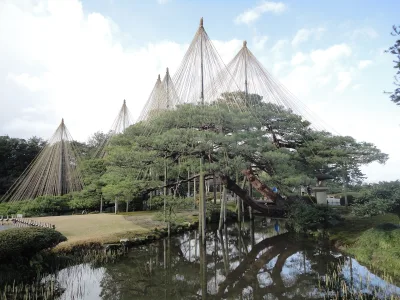 Kenroku-en Garden
One of Japan's three great gardens, shaped over generations by the lords of Kaga. Stroll past ponds, hills and teahouses that change with every season.
Kenroku-en Garden
One of Japan's three great gardens, shaped over generations by the lords of Kaga. Stroll past ponds, hills and teahouses that change with every season.
-
2
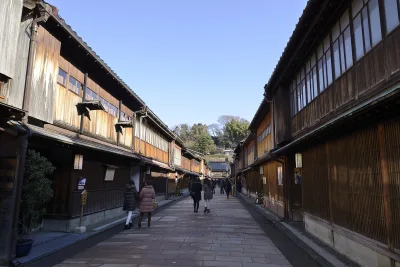 Higashi Chaya District
Kanazawa's teahouse district, dating from the late Edo period: wooden lattices on stone-paved streets, teahouses to tour and cafés in old townhouses.
Higashi Chaya District
Kanazawa's teahouse district, dating from the late Edo period: wooden lattices on stone-paved streets, teahouses to tour and cafés in old townhouses.
-
3
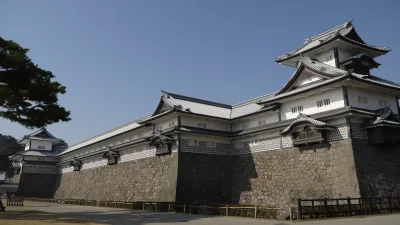 Kanazawa Castle Park
The grounds of the Maeda clan's Kanazawa Castle: an Edo-period gate, turrets rebuilt in traditional timber, and walls called a "museum of stone walls".
Kanazawa Castle Park
The grounds of the Maeda clan's Kanazawa Castle: an Edo-period gate, turrets rebuilt in traditional timber, and walls called a "museum of stone walls".



From the Noto seaside to the foot of Hakusan
Ishikawa faces the Sea of Japan, and its geography gives the prefecture several distinct moods. The Noto Peninsula juts north into the sea, where fishing villages, terraced rice fields and a rocky coastline lie far from the streets of Kanazawa. To the south, the land rises towards Mount Hakusan, and the Kaga area at its foot has mountain scenery, temples and onsen (naturally hot springs).
Noto has its own words for how people relate to the landscape. Satoyama means countryside shaped by generations of farming and forestry, and satoumi means coastal waters closely tied to local livelihoods. Noto's Satoyama and Satoumi were recognised as a Globally Important Agricultural Heritage System in 2011. These words help you understand the peninsula: fields, forests, fishing and festivals all belong to the same way of life.
A castle town that nurtured makers
Kanazawa is Ishikawa's prefectural capital and was the centre of the Kaga domain, the territory ruled by the Maeda family in the Edo period. The Maeda family's support for artists and craftspeople helps explain much of what you still see in the city. Kenrokuen Garden and Kanazawa Castle recall the lords, while the nearby Nagamachi district preserves traces of the samurai who served them. The Higashi Chaya district has streets tied to the traditional performing arts, and the 21st Century Museum of Contemporary Art, Kanazawa shows that the city's interest in making things did not stop in the past.
Look beyond the city, too. Kutani ware is the area's boldly painted porcelain, and Wajima on the Noto Peninsula has a long lacquerware tradition. At Yamanaka Onsen, wood-turners shape the wooden bases for another local style of lacquerware. Kanazawa's gold leaf and Kaga Yuzen, a technique for dyeing the silk fabric of kimono, show how many different trades flourished under the Maeda family's patronage.
What the sea and fields bring to the table
Tasting Ishikawa's geography through its food is easy. The Sea of Japan brings fish and shellfish, and the Noto and Kaga areas grow vegetables used in local cooking. In winter, crab, sweet shrimp and yellowtail are especially associated with the coast. At Omicho Market in Kanazawa, produce and seafood from all over the prefecture line the stalls and make their way into the city.
Kaga ryori means Kaga-style cuisine, a carefully prepared cooking tradition that developed alongside the domain's culture of hospitality. One dish worth knowing is jibuni: poultry (usually duck) simmered in dashi (Japanese soup stock) with vegetables. It appears at formal meals as well as home cooking. Kanazawa also has a strong tradition of wagashi. These Japanese sweets are often made with rice and sweet beans, and are sometimes shaped to evoke the season.
Lanterns, songs and the turning year
Local customs give each part of Ishikawa its own voice. In Noto, communities carry huge illuminated floats called kiriko in summer festival processions. In Kanazawa, the Hyakumangoku Festival commemorates the start of Maeda rule with performances and parades. Yamanaka Onsen has its own song, Yamanaka-bushi, influenced by the songs of sailors on the trading ships that plied the Sea of Japan coast.
The weather changes the experience just as much. In spring, cherry blossoms bloom at Kenrokuen; summer is hot and humid, with a rainy season (tsuyu) before the mountain-walking season and Noto's festivals. Autumn colours arrive at Kenrokuen and at Kakusenkei Gorge in Kaga. To prepare for winter snow, Kenrokuen's gardeners put up yukizuri, ropes and bamboo stretched out to support the branches of trees against the weight of snow. It is practical winter preparation, but it has also become part of the garden's seasonal scenery.
Once you arrive, set your own pace
Many travellers enter Ishikawa through Kanazawa. The Hokuriku Shinkansen, the Japanese high-speed rail line that runs through the region, reaches Kanazawa from Tokyo. From Kyoto or Osaka, you usually take a limited express train to Tsuruga and change to the shinkansen. Komatsu Airport is another gateway, especially for the south of the prefecture, and Noto Satoyama Airport handles flights to the peninsula.
Once in Kanazawa, buses link the station with the city's main sights. Rail serves some larger towns such as Kaga Onsen and Nanao, and buses run to other areas. A car gives you more freedom to explore Noto's scattered villages and coast and the countryside around Hakusan, where public transport is sparse. Before planning a trip to Noto, check the prefecture's latest tourist information: sightseeing facilities, accommodation and transport have been affected by recovery from the earthquake of 1 January 2024, and older itineraries may not reflect the current situation.
Sources
- For First-Time Visitors | Ishikawa Travel
- Noto Peninsula | Ishikawa Travel
- Globally Important Agricultural Heritage Systems
- Kanazawa | Ishikawa Travel
- Kaga & Hakusan | Ishikawa Travel
- Nurturing Japanese crafts: The artisans of Ishikawa | Ishikawa Travel
- Ishikawa Cuisine: A Treasury of Regional Flavors | Ishikawa Travel
- Ishikawa | Hokuriku Shinetsu | Destinations | Travel Japan - Japan National Tourism Organization (Official Site)
- Kanazawa’s Kaga Cuisine | Japan‘s Local Treasures | Travel Japan (JNTO)
- Festivals: The Pulse of Ishikawa | Ishikawa Travel
- Yamanaka Onsen | Ishikawa Travel
- Seasons | Ishikawa Travel
- Wajima Kiriko Art Museum | Ishikawa Travel
- Regarding the 2024 Noto Peninsula Earthquake (Noto area) | Ishikawa Travel