Kurashiki Bikan Historical Quarter
倉敷美観地区
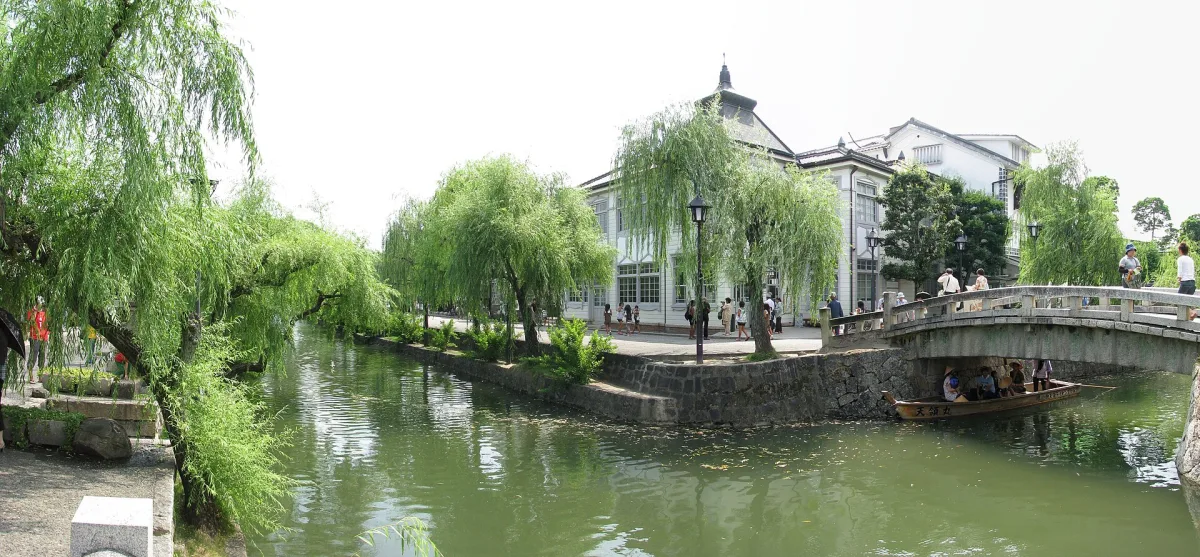
A historic quarter of Kurashiki, Okayama, with white-walled storehouses along a willow-lined canal, and Japan's first private museum focused on Western art.
A merchant town under direct shogunate rule
Until about 400 years ago, the Kurashiki area was a shallow sea known as Kibi no Anaumi. In the Edo period it was steadily reclaimed (kantaku: filling in sea or lakes to create land), and crops that tolerate salt, such as cotton, began to be grown. In 1642 Kurashiki became tenryo (land ruled directly by the Edo shogunate), and it flourished as a merchant town by shipping goods along the Kurashiki River.
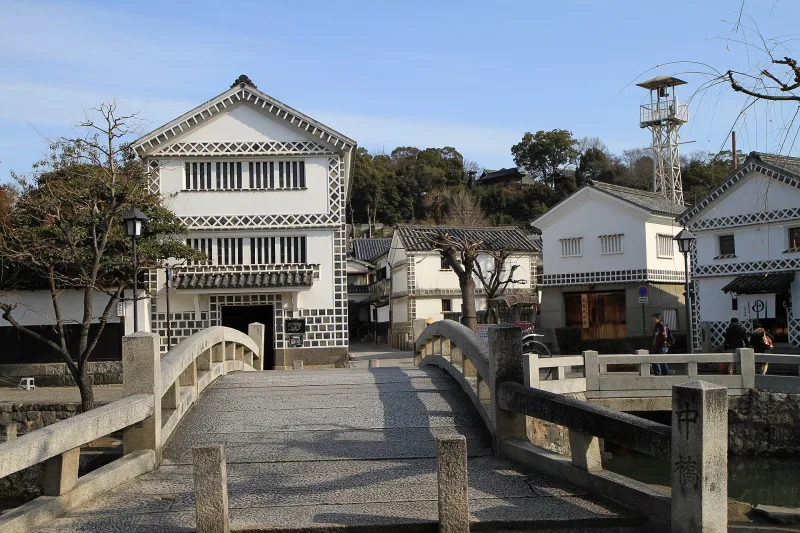
From the Meiji era onwards, cotton spinning (turning cotton into thread) boomed, and Western-style factories and buildings went up. The mix of Japanese machiya townhouses and Western-style architecture that resulted is what defines the Bikan Historical Quarter today. In 1979 it was selected as a national Important Preservation District for Groups of Traditional Buildings (districts the national government chooses to protect historic streetscapes). Kurashiki has also been recognised as Japan Heritage, with stories including the tale of cotton and textiles.
The Kurashiki River and white-walled streets
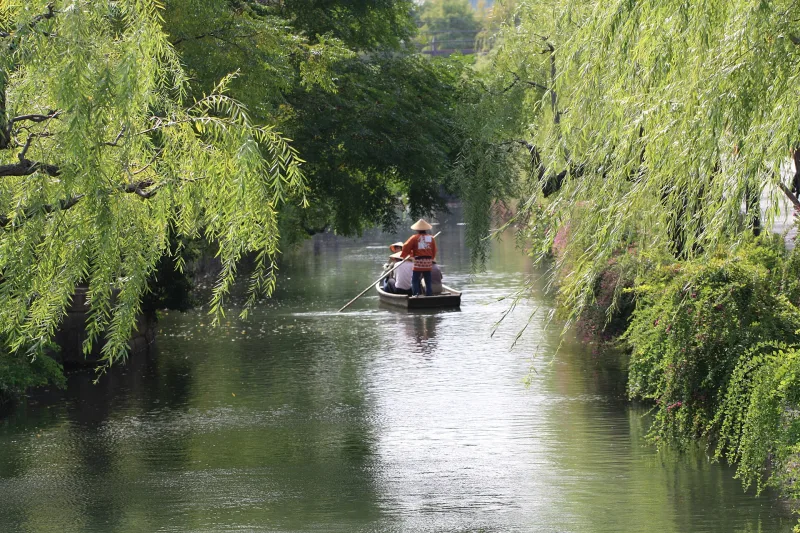
Willows line both banks of the Kurashiki River, which runs through the middle of the district, along with white-walled kura (storehouses) and buildings with namako-kabe, walls of black tiles laid in a grid with raised joints of white plaster. The river was once a waterway for moving goods; today you can take a river boat ride and see the streets from the water.
Night-time illumination began in 2005. After a daytime stroll, it is well worth walking along the lit-up riverside too.
Ohara Museum of Art and Ivy Square
The Ohara Museum of Art, on the bank of the Kurashiki River, was opened in 1930 by the businessman Ohara Magosaburo and was Japan's first private art museum focused on Western art. Its collection, headed by El Greco's Annunciation, covers Western art, modern Japanese art, crafts, Asian art and more.
Kurashiki Ivy Square is a complex that makes use of old cotton-spinning mill buildings, keeping alive the story of how Kurashiki grew as a textile town.
Getting there
It is about a 15-minute walk south from JR Kurashiki Station. From the Tokyo direction, take the shinkansen (bullet train) to Okayama Station, then change to a conventional line for Kurashiki Station.
If you are driving, the city hall car park is the recommended place to park. The museum's opening days and hours can change, so check the official website.
Tips
- As of September 2026, the Ohara Museum of Art's main building is open, but its annexe is closed for a long period. Check the calendar on the official website before you go, including closing days.
- After dark, the illuminations show the streets in a different light. Give yourself plenty of time and walk the area both by day and by night.
- The quarter is only about 15 minutes' walk from the station, so you can easily get there on foot without a taxi or bus.
Sources
Updated 28 September 2026. Opening hours and prices change, so check the official site before you go.

.jpg)
