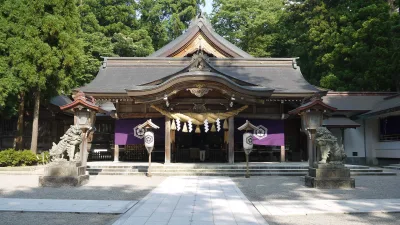
Ichijodani Asakura Family Historic Ruins
一乗谷朝倉氏遺跡
A valley where a warring-states castle town, burned in 1573, was found whole underground. Walk its rebuilt streets and glimpse life 450 years ago.
A warring-states castle town called "Kyoto of the North"
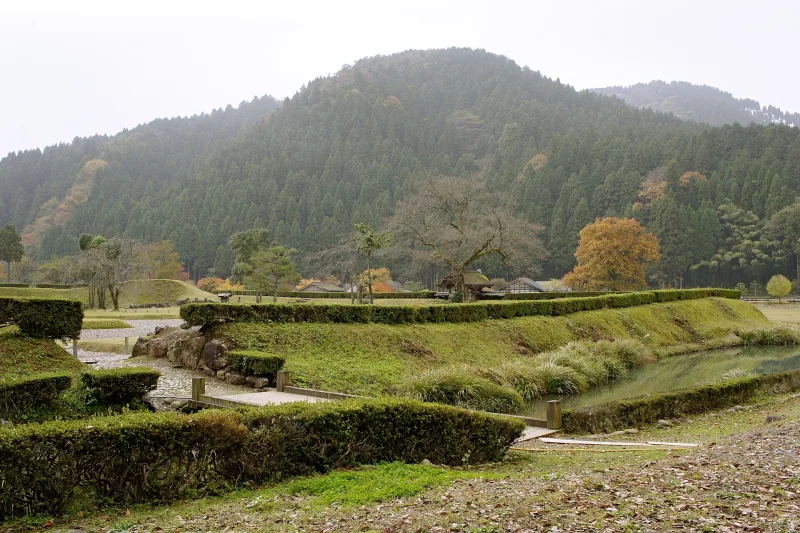
The Ichijodani Asakura Family Historic Ruins lie in a mountain valley in Fukui City. In the Sengoku period (the late 15th to 16th century, when feudal lords across Japan fought one another), the Asakura clan made this valley their base from around 1471, ruling Echizen Province (today's northern Fukui Prefecture) for five generations, about 100 years.
Court nobles, scholars and others fled here from Kyoto, which had been ravaged by the Onin War, and the castle town flourished so much that it was called "Kita no Kyo", the Kyoto of the North. But in 1573 Asakura Yoshikage was defeated by Oda Nobunaga, and Nobunaga's army set the town on fire and burned it to the ground.
A town asleep under the soil
The remains of the burned town were buried and protected by the soil that later built up over them. Excavations began in 1967 and have continued for more than 50 years, uncovering samurai residences, temples, townhouses, craftsmen's homes and even roads, laid out almost exactly as the town was. The site covers about 278 hectares.
It was designated a national Special Historic Site in 1971, and in 1991 the remains of four gardens were designated a national Special Place of Scenic Beauty. Of the items dug up here, 2,343 are national Important Cultural Properties.
The restored street, the Karamon gate and the museum
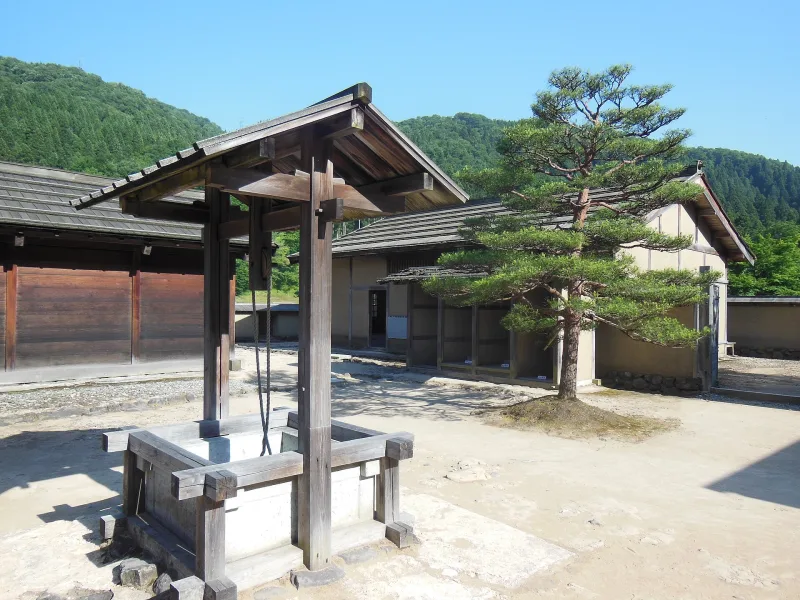
One highlight is the "Restored Townscape". Along a street of about 200 m, samurai residences and craftsmen's townhouses have been rebuilt on the basis of the soseki (foundation stones that held up the pillars) and earthen walls found in the dig, so you feel as if you are walking through a Sengoku-period town (admission charged).
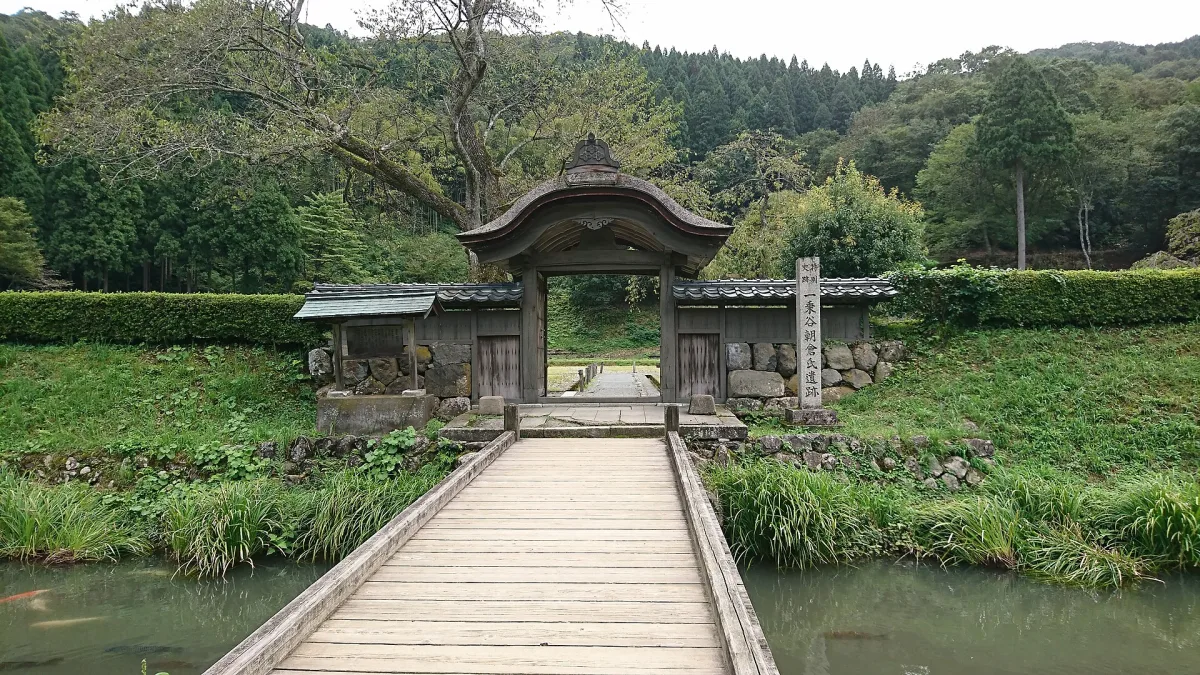
The Karamon gate stands on the site of Asakura Yoshikage's residence. It is not from the Sengoku period but was built in the Edo period, yet it has become the signature view of the ruins. At the entrance and the far end of the valley you can also see the remains of the Shimo-kido and Kami-kido, checkpoint-like fortified gates that defended the town.
In October 2022 the Fukui Prefectural Ichijodani Asakura Family Site Museum opened. As well as finds from the excavations, it has a life-size reconstruction of the Asakura residence, which helps you grasp the whole picture before you walk the ruins.
Getting there and getting around
From the east exit of Fukui Station, take the Asakura-Eiheiji Direct Bus and get off at the Fukugen Machinami (Restored Townscape) stop, right by the site. You can also walk from Ichijodani Station on the JR Etsumi-Hoku Line (Kuzuryu Line), about 15 minutes. By car it is about 10 minutes from Fukui IC on the Hokuriku Expressway.
The ruins stretch along the valley, so a rental bicycle makes them easier to get around. Check the official website for prices and hours.
Tips
- See the overall layout of the town at the museum first, then walk the ruins: what looks like plain grass or a stone wall becomes "this was a house", and it gets far more interesting.
- If you come by train or bus, check your return times first. On weekends and holidays a free shuttle bus also runs between the museum and the ruins.
- The valley is large and you will spend a long time walking outdoors. Wear comfortable shoes.
Sources
- 一乗谷朝倉氏遺跡|ICHIJO-DANI 一乗谷朝倉氏遺跡公式ポータルサイト
- 福井県立一乗谷朝倉氏遺跡博物館
- 一乗谷朝倉氏遺跡|ふくいドットコム(福井県公式観光サイト)
- 一乗谷朝倉氏遺跡 - Wikipedia
Updated 29 September 2026. Opening hours and prices change, so check the official site before you go.