Kehi Jingu Shrine
氣比神宮
An ancient shrine guarding Hokuriku, in the heart of port town Tsuruga. Its 11 m vermilion gate is one of Japan's three great wooden torii.
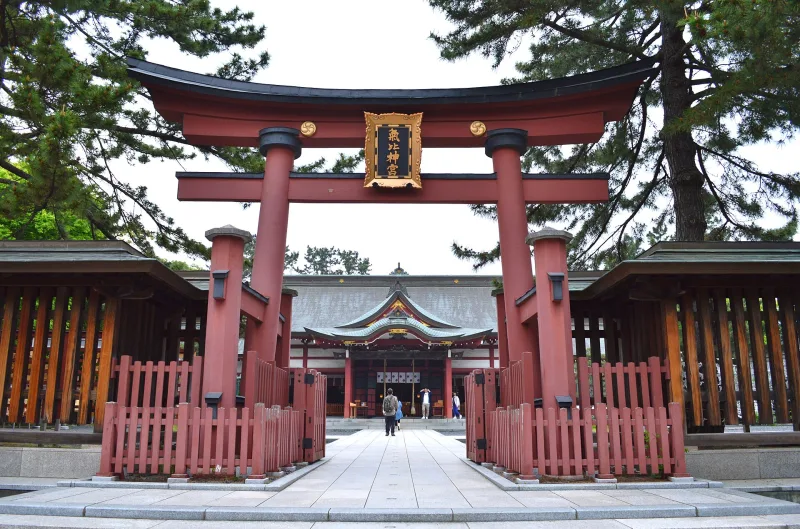
The shrine called guardian of the Hokurikudo
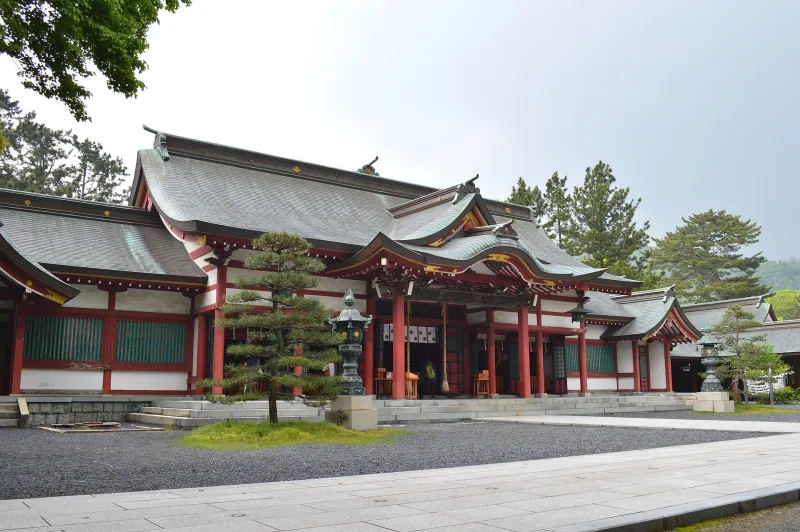
Kehi Jingu is a Shinto shrine in Tsuruga City, Fukui Prefecture. According to shrine tradition its buildings were erected in 702 (the 2nd year of the Taiho era). It was the "Echizen Ichinomiya", the highest-ranking shrine of the old Echizen Province (today's northern Fukui Prefecture), and has long been called the "Hokurikudo Sochinju", the guardian of the whole Hokuriku region.
Its main deity is Izasawake-no-Mikoto, also known as Kehi-no-Okami, said to be the god of food. Six other deities are enshrined too, including Emperor Chuai and Empress Jingu.
Tsuruga was badly damaged in air raids in 1945, and many of the shrine's buildings burned down at that time, but they were later rebuilt.
The great torii, one of Japan's three great wooden gates
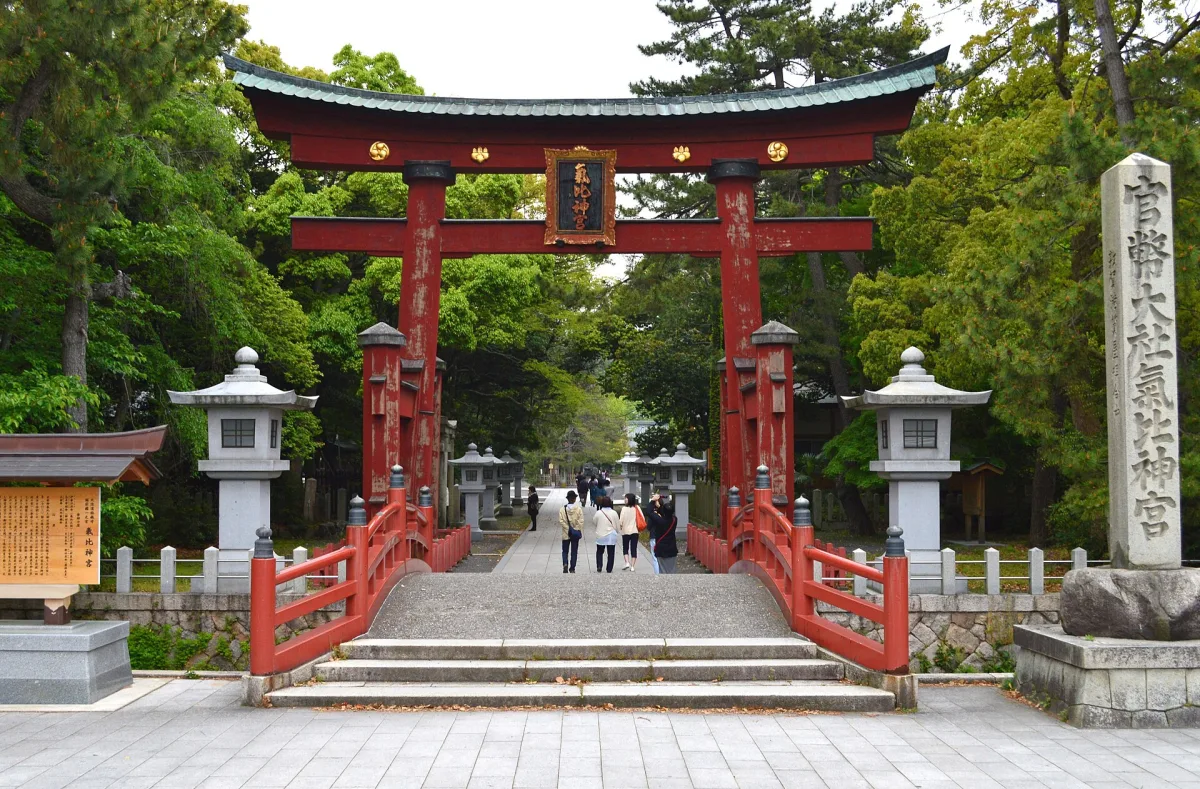
The vermilion great torii (the gate that marks a shrine) at the entrance was built in 1645 and is about 11 m tall. Together with the torii of Kasuga Taisha in Nara and Itsukushima Shrine in Hiroshima, it is counted among Japan's three great wooden torii, and it is a national Important Cultural Property. It survived the air raids and has stood on this spot for more than 370 years.
Beyond it is a middle torii, and further in stands the haiden (worship hall).
The water of long life, and Matsuo Basho
In the grounds is a spring called Choumeisui, the "water of long life". It is said to have gushed out when the shrine buildings were put up, and people believe it brings health and long life.
Matsuo Basho, the haiku poet of the Edo period, visited Tsuruga on the journey he recorded in "The Narrow Road to the Deep North" (Oku no Hosomichi), and wrote a verse at Kehi Jingu on a moonlit night. The grounds have a stone carved with his poem and a statue of him, and the shrine is also known as a place for moon viewing.
Getting there, and seasonal events
It is about a 15-minute walk from JR Tsuruga Station (Hokuriku Shinkansen and Hokuriku Main Line). A community bus from the station reaches the Kehi Jingu-mae stop in a few minutes. By car it is about 10 minutes from Tsuruga IC on the Hokuriku Expressway, and there is a free car park.
Every September the Tsuruga Festival is held, with dashi (large decorated floats pulled through the streets) and plenty of food stalls lining the approach.
Tips
- Step back a little from the front of the great torii to take in its full size.
- If you come to Tsuruga on the Hokuriku Shinkansen, the shrine is within walking distance of the station. It makes an easy stop between trains or a first stop on a walk around Tsuruga.
- During the Tsuruga Festival in September, the grounds and surrounding streets get crowded. For a quiet visit, it is best to avoid this time.
Sources
Updated 29 September 2026. Opening hours and prices change, so check the official site before you go.