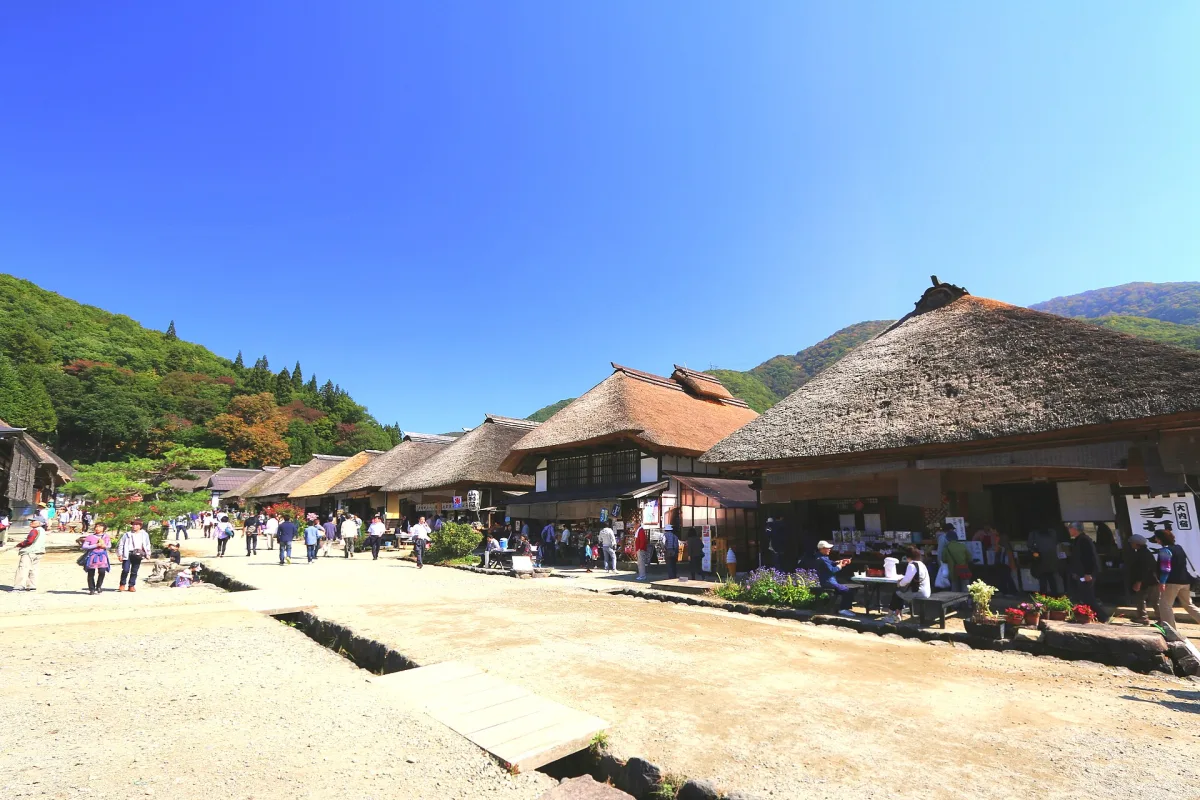
Ouchi-juku
大内宿
A mountain village in Minami-Aizu that still looks like an Edo-period post town, lined with thatched houses and famous for soba eaten with a leek.
A post town on the road between Aizu and Nikko
Ouchi-juku is a post town in Shimogo, Minami-Aizu District, Fukushima Prefecture. Post towns were towns set up along the highways in the Edo period where travellers could stay the night and change the horses that carried their loads. Ouchi-juku was established around the start of the Edo period as a post town on the Shimotsuke Kaido (also called the Aizu Nishi Kaido), the road linking the castle town of Aizuwakamatsu with the area of today's Nikko in Tochigi Prefecture.
Feudal lords' processions and people carrying rice paid as tax all used the town. The people who lived here led a "half farming, half innkeeping" life, running the inns and working the land at the same time.
From the Meiji era onwards, the railway and the national road were built along routes far away from the village, so its old streetscape survived intact. In 1981 it was selected as an Important Preservation District for Groups of Traditional Buildings (a national scheme for protecting historic townscapes).
Walking among the thatched roofs
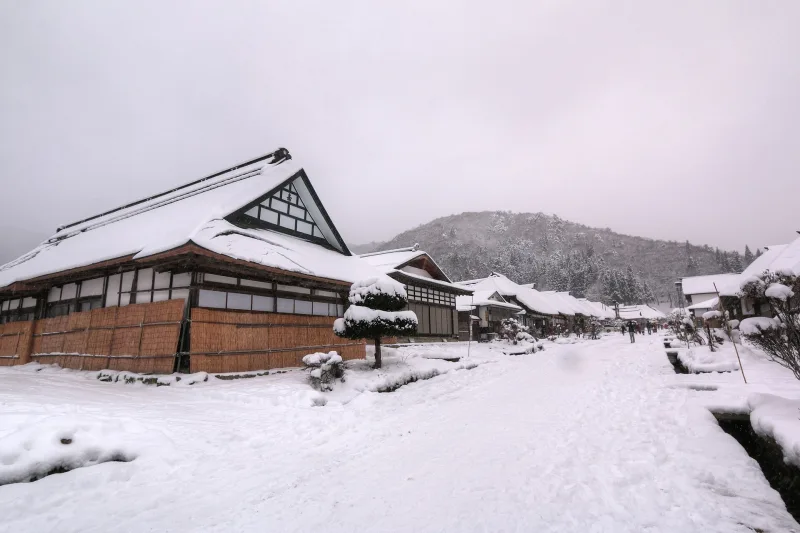
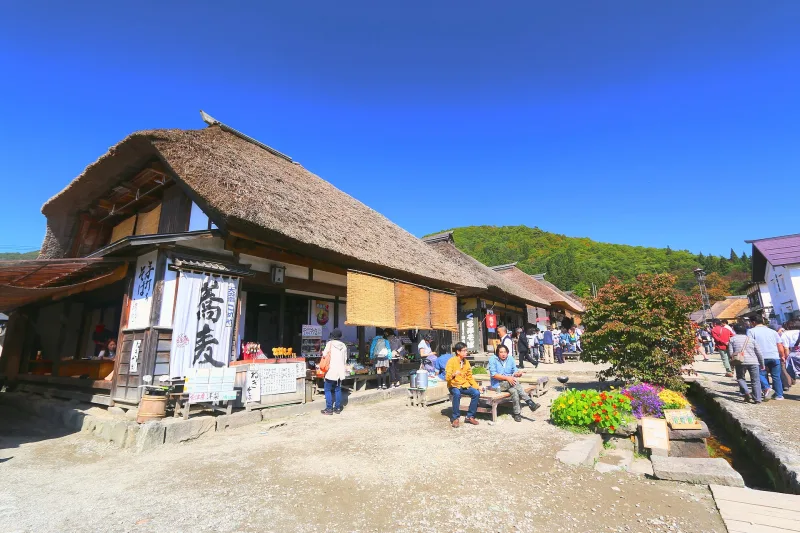
Along both sides of the roughly 450 m street, houses with kayabuki roofs (roofs thatched with grasses such as Japanese pampas grass) stand at almost even intervals. Many are souvenir shops and places to eat, so you can wander along taking in the scenery.
The thatched roofs have been kept up for generations through yui, a tradition of neighbours helping one another. In the middle of the town is the Ouchi-juku Townscape Exhibition Hall, a reconstruction of the honjin, the inn where lords and other dignitaries stayed.
On the high ground at the far end of the village is a lookout from which you can see the whole post town and its rows of thatched roofs from above.
Negi soba and seasonal events
Ouchi-juku's speciality is negi soba. It is famous for being eaten in an unusual way: instead of chopsticks, you use a whole long leek to eat your soba. You can also try a local dish called shingoro.
On the second Saturday and Sunday of February, the Ouchi-juku Snow Festival is held, and yukidoro (snow lanterns) light up the snowy streets. On 2 July the long-standing Hange Festival takes place.
Getting there
The nearest station is Yunokami-Onsen Station on the Aizu Railway, about 5 km from Ouchi-juku. From the station, take a taxi or other transport.
Tips
- Roads in the area get extremely busy during long holidays such as Golden Week, so give yourself plenty of time.
- Opening hours vary from shop to shop, and many close before the evening. It is best to visit earlier in the day.
Sources
- 大内宿観光協会 公式サイト
- 大内宿|いで湯と渓谷の里 下郷町
- 江戸時代に栄えた宿場町「大内宿」をやさしく照らす雪灯籠|ふくしまほんものの旅
- 下郷町大内宿|日本遺産ポータルサイト(文化庁)
- 大内宿|地域観光資源の多言語解説文データベース(観光庁)
- 大内宿 - Wikipedia
- 大内宿見晴台|フォートラベル
Updated 28 September 2026. Opening hours and prices change, so check the official site before you go.
.jpg)
.jpg)
.jpg)