Nikko Toshogu Shrine
日光東照宮
Tokugawa Ieyasu's shrine, heart of the World Heritage Nikko shrines and temples. Admire Yomeimon's carvings, the Three Monkeys and the Sleeping Cat.
A shrine that worships Tokugawa Ieyasu as a god
Nikko Toshogu is a Shinto shrine in the city of Nikko, Tochigi Prefecture. It enshrines Tokugawa Ieyasu, who founded the Edo shogunate and laid the foundations for the Edo period, roughly 260 years of peace. Ieyasu died in 1616, and the following year, 1617, he was enshrined at Nikko as a god, Tosho Daigongen. It is the head of all the Toshogu shrines across Japan.
Most of today's lavish shrine buildings date from the Kan'ei no Daizotai (the Great Rebuilding of the Kan'ei era), a large-scale reconstruction carried out from 1634 to 1636 by Ieyasu's grandson Iemitsu, the third shogun. In 1999, together with Futarasan Shrine and Rinnoji Temple, it was added to UNESCO's World Heritage list as the "Shrines and Temples of Nikko".
Yomeimon, a gate you could gaze at all day
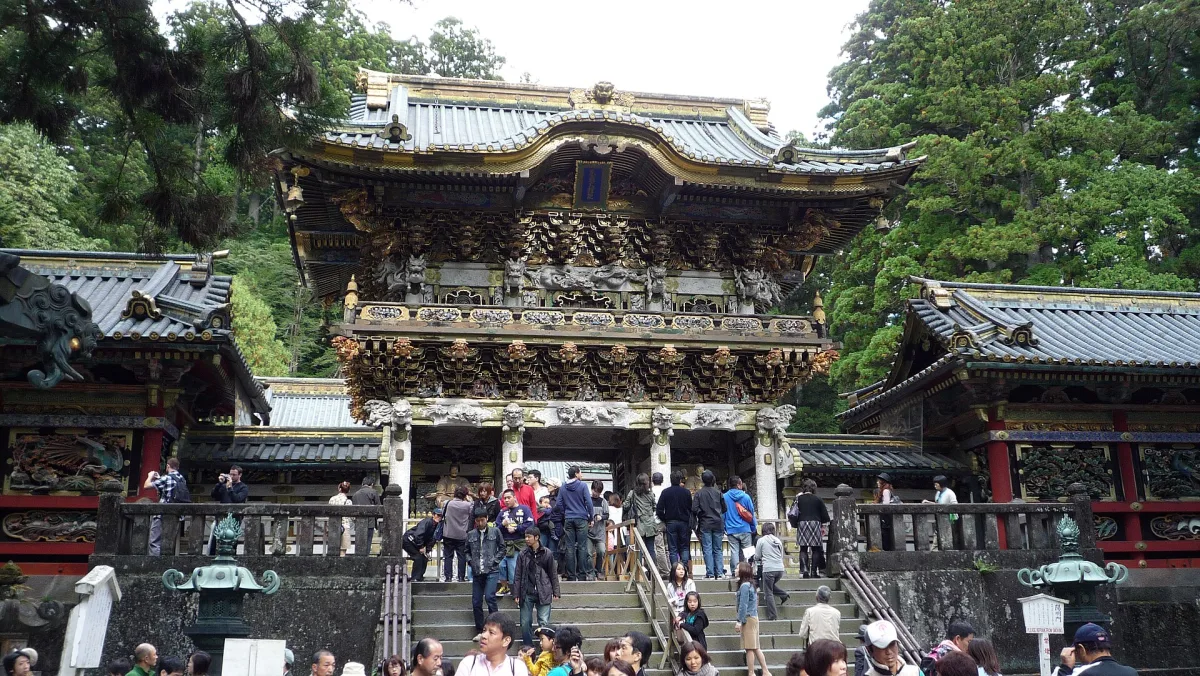
The building that best represents Toshogu is Yomeimon, a National Treasure. It is decorated with more than 500 carvings of Chinese sages, children, imaginary creatures and more. It is also called Higurashimon, the "sunset gate", because you could stare at it so long that you would not notice the day ending. Yomeimon was restored between 2013 and 2017, bringing its vivid colours back to life.
On the wall of the Kamijinko (the Upper Sacred Storehouse) in the grounds, there is also a carving known as the "imagined elephants", made by an artist who had never seen a real elephant.
The Three Monkeys, the Sleeping Cat and Ieyasu's tomb
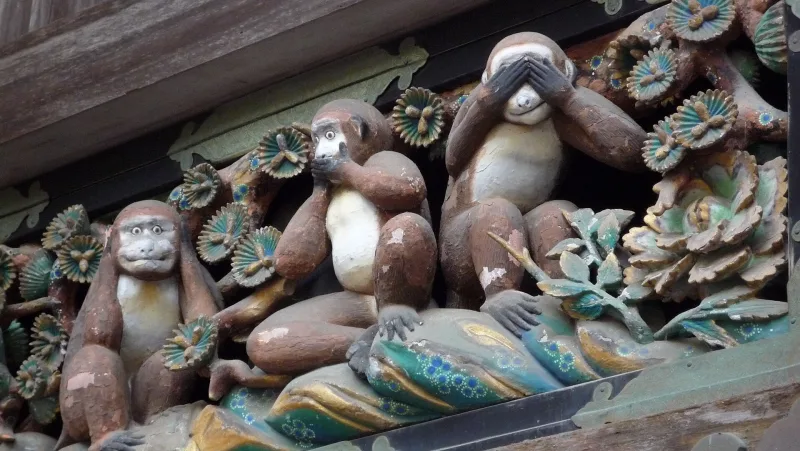
On the Shinkyusha (the stable for the gods' sacred horse) are the carvings of the Three Monkeys, famous for "see no evil, speak no evil, hear no evil". They are said to express a lesson for life: do not look at, speak of or listen to bad things.
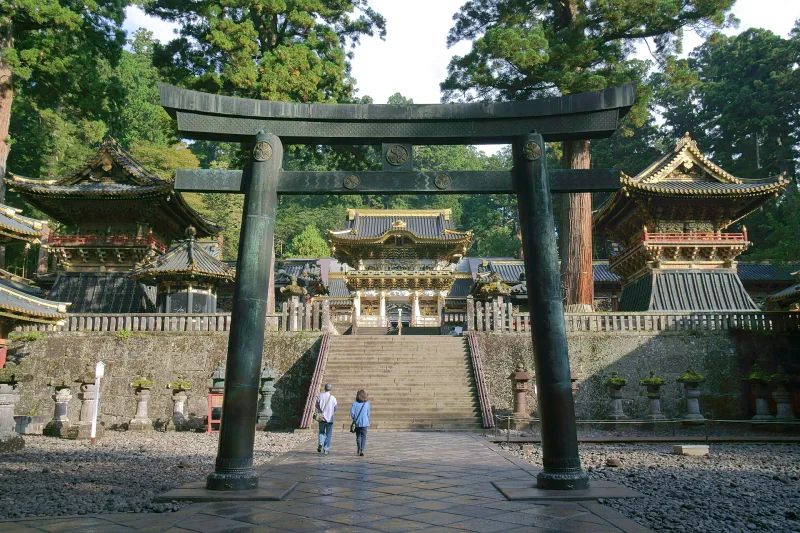
On Sakashitamon, the gate to the right of the main sanctuary, is the Nemuri-neko ("Sleeping Cat"), traditionally attributed to Hidari Jingoro. Two sparrows are carved on its reverse side: the cat sleeps and the sparrows play without fear, a scene said to express the hope for a peaceful world after the country was unified. Beyond this gate, a long flight of stone steps climbs to the Okumiya, where Ieyasu's tomb is.
Getting there
The nearest stations are JR Nikko and Tobu-Nikko. From the station, the World Heritage Meguri bus, which loops around the World Heritage shrines and temples, takes about 15 minutes.
Opening hours and admission fees may change with the seasons, so check them on the official website.
Tips
- Reaching the Okumiya means climbing a long flight of stone steps. Wear comfortable shoes and leave yourself plenty of time.
- Conservation work on Toshogu's cultural properties goes on continually, and depending on when you go, some buildings may be under protective covers. If there is a building you particularly want to see, check the official website or the information from the Nikko Shrines and Temples Cultural Properties Preservation Society before your visit.
- Besides Toshogu, nearby Futarasan Shrine and Rinnoji Temple are also part of the same World Heritage site. Visit them together to get a fuller picture of Nikko's history.
Sources
- 日光東照宮 公式サイト
- Nikko Toshogu Shrine | Travel Japan - Japan National Tourism Organization (Official Site)
- 日光東照宮 - Wikipedia
Updated 28 September 2026. Opening hours and prices change, so check the official site before you go.