Kairakuen Garden
偕楽園
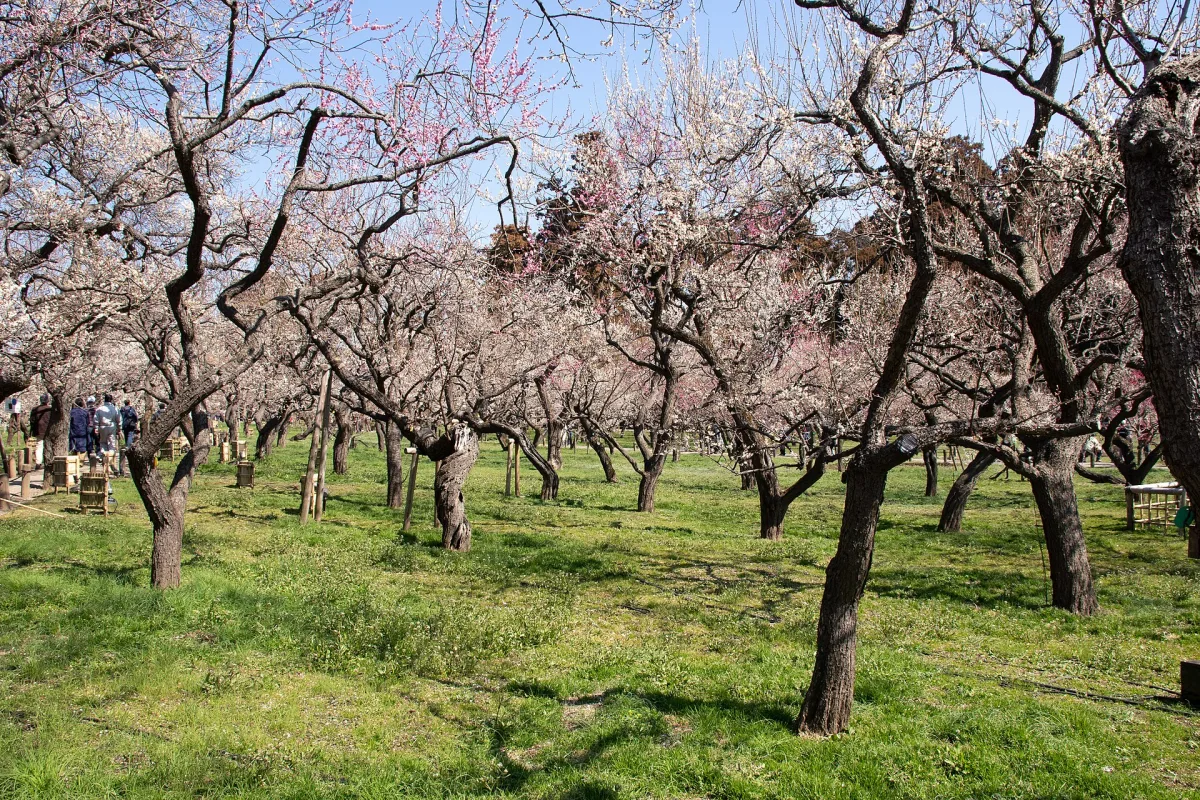
One of Japan's three great gardens, made by a Mito lord to enjoy with his people. In early spring about 3,000 plum trees of some 100 varieties bloom.
A garden to enjoy together with the people
Kairakuen is a garden in Mito city, Ibaraki Prefecture. It was created in 1842 (the 13th year of the Tenpo era) by Tokugawa Nariaki, the ninth lord of the Mito domain. Together with Kenrokuen in Kanazawa and Korakuen in Okayama, it is counted as one of Japan's three great gardens.
Its name comes from a passage in the Chinese classic Mencius: "The people of old could truly enjoy themselves because they shared their enjoyment with the people." Nariaki planned the garden as a partner to Kodokan, the domain school, as a place where samurai who threw themselves into study and martial arts there could rest body and mind. What is more, he meant it to be open not only to his samurai but to the people living in his domain. On the back of the Kairakuen-ki stone monument in the garden are carved rules for visitors, a sign that it was something close to a public park.
Walking through yin and yang
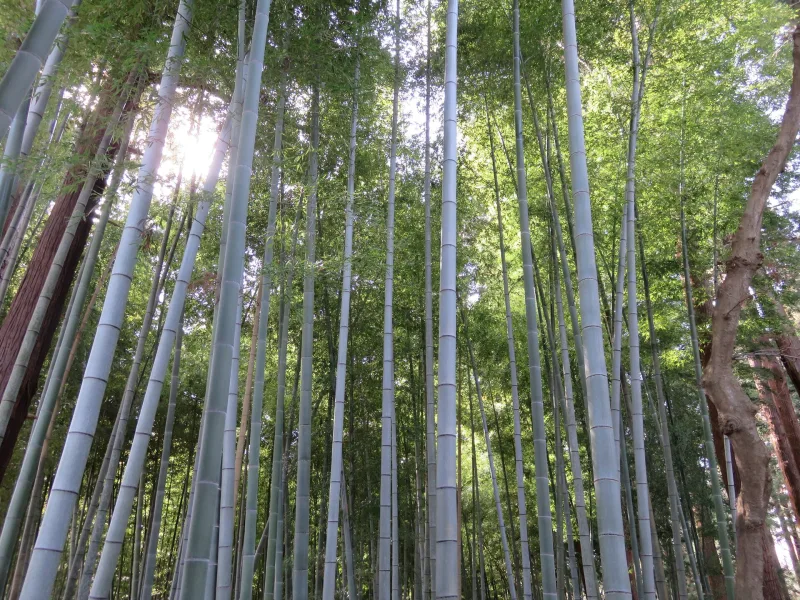
Kairakuen is said to have been designed around the contrast of in and yo, yin and yang. Enter through the Omotemon Gate (also called the Kuromon, or Black Gate), the main gate since the garden opened, and you are straight away surrounded by a forest of more than 1,000 moso bamboo (the largest bamboo in Japan) and tall cedars: a quiet, dim world of yin. Come out the other side and the scene turns into the sunlit plum groves, the world of yang. The route recommended on the official website also starts at this gate.
The garden has many springs. Down through the bamboo from the Omotemon Gate is Togyokusen, where water wells up from a white marble well frame. The water has long been said to be good for eye complaints, and it has been used for the tea ceremony.
Kobuntei, designed by Nariaki
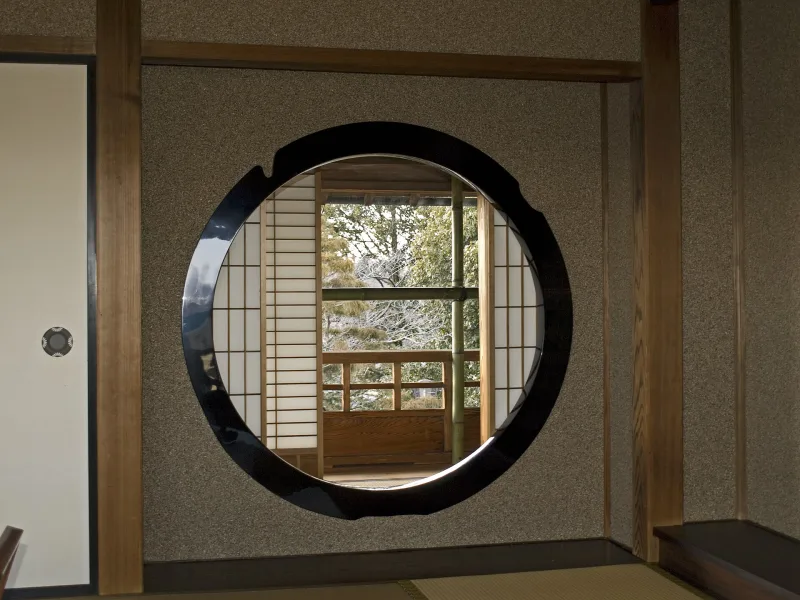
Kobuntei, standing near the middle of the garden, was Nariaki's villa. Kobun is another name for the plum tree, and Nariaki himself is said to have chosen everything from its location to its design. It consists of a main wooden building, two-tiered with three storeys, and a single-storey inner residence. Nariaki invited his retainers and people from his domain here, holding poetry gatherings and "Yoro no Kai", gatherings to honour and entertain elderly retainers and townspeople.
Kobuntei burned down completely in the air raid on Mito in August 1945 and was rebuilt over three years from 1955. It has its own admission fee and closing days, separate from the garden.
Seasonal flowers and getting there
Kairakuen is most famous for its plum blossoms, with about 3,000 trees of around 100 varieties. The Mito Plum Festival is held from mid-February into March. After that come cherry blossoms and azaleas, bush clover (hagi) in autumn and, in early winter, nikizakizakura, a cherry that flowers twice a year, so there is something in bloom every season. The bush clover is said to have come as a gift from the Sendai domain and been planted when the garden opened.
From the north exit bus terminal at JR Mito Station, take a bus towards Kairakuen; it takes about 20 minutes. Outside the plum festival period, entry is free from opening time until 9 a.m.
Tips
- To experience the yin-and-yang effect, go in through the Omotemon Gate rather than the East Gate. Passing through the bamboo forest before stepping out into the plum groves is the route Nariaki had in mind.
- During the plum festival the car parks get crowded and some cannot be used. Check the latest news on the official website for how to park.
- It is worth visiting outside plum season too. Bush clover is at its best from September to early October, and in some years it is lit up at night.
Sources
- 日本三名園 偕楽園(公式)
- 歴史を知る|日本三名園 偕楽園(公式)
- 好文亭|日本三名園 偕楽園(公式)
- 偕楽園の歩き方 routeA(公式)
- アクセス|日本三名園 偕楽園(公式)
- 偕楽園|観光いばらき公式ホームページ
- 偕楽園|水戸旅(水戸観光コンベンション協会)
Updated 29 September 2026. Opening hours and prices change, so check the official site before you go.



.jpeg)