Kasama Inari Shrine
笠間稲荷神社
One of Japan's three great Inari shrines, in Kasama, Ibaraki, known for its intricately carved main hall, 400-year-old wisteria and autumn chrysanthemums.
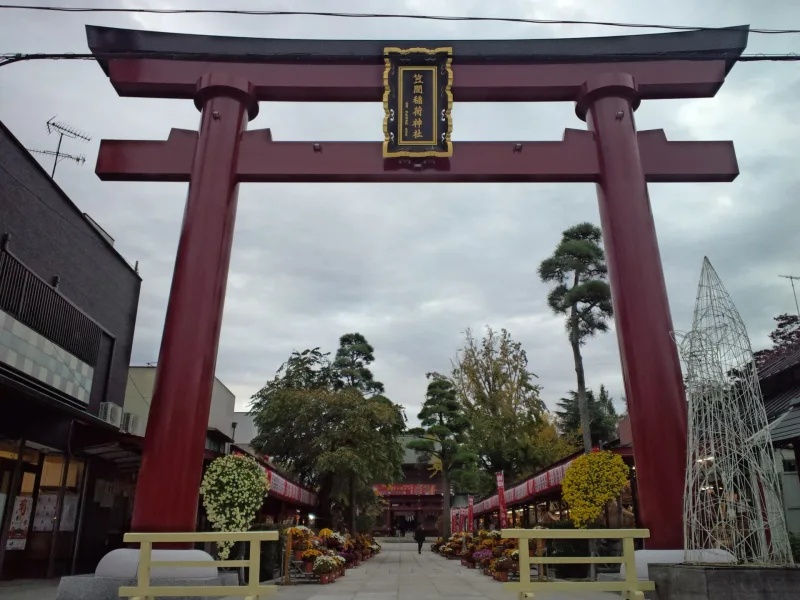
An Inari shrine with more than 1,300 years of history
Kasama Inari Shrine is a Shinto shrine in Kasama city, Ibaraki Prefecture. It enshrines Ukanomitama-no-Kami, the deity who protects rice and other food, and industry, known affectionately across Japan as "O-Inari-san". According to the shrine's tradition, it was founded in 651 (the second year of the Hakuchi era). It is counted as one of Japan's three great Inari shrines, and according to the shrine, more than 3.5 million people visit each year.
Because the Inari deity was once worshipped here in a grove of walnut trees, the shrine is also called Kurumigashita Inari, "the Inari under the walnuts". It also goes by the name Monzaburo Inari, after Monzaburo, a member of the family of the lords of Kasama who spread the faith. In the Edo period, one Kasama lord after another was deeply devoted to it.
The carved main sanctuary and the two-storey gate
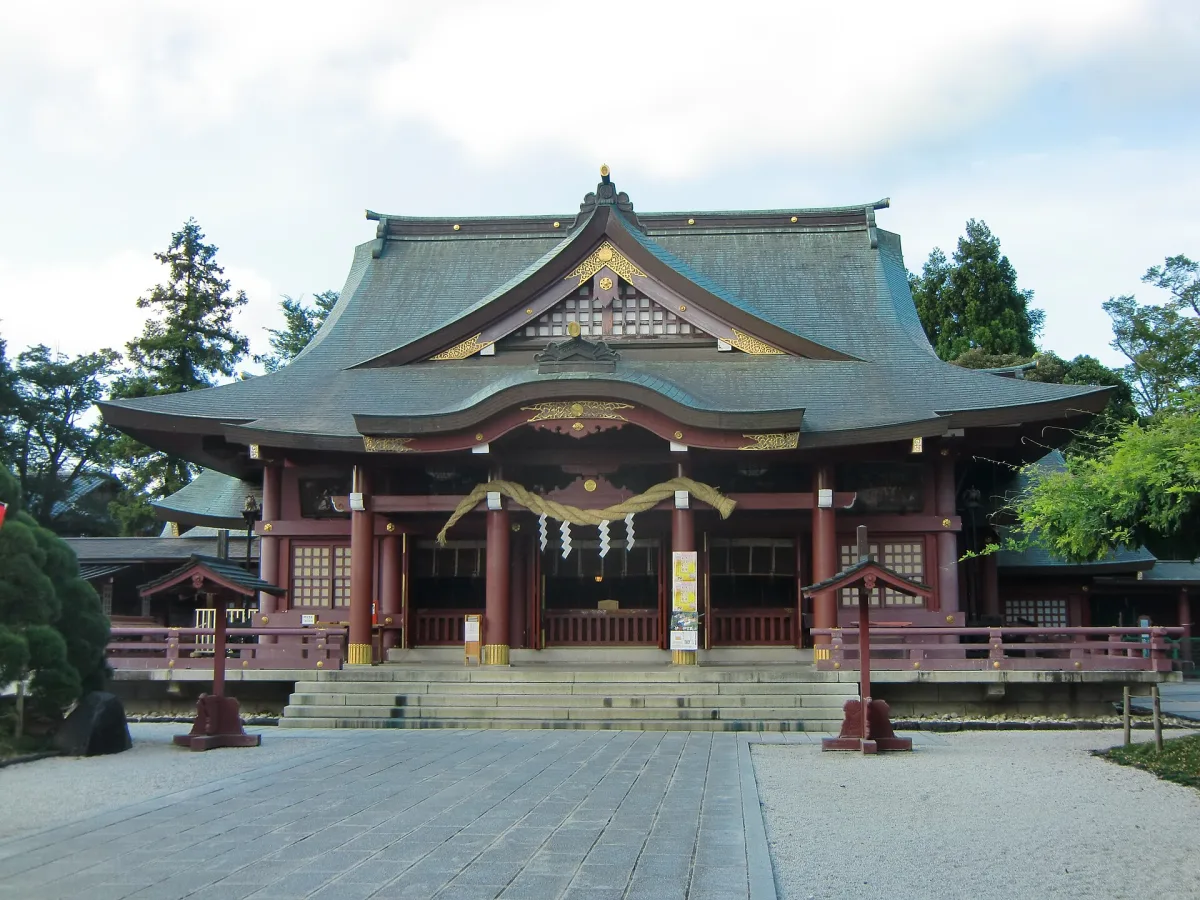
The main sanctuary (honden) was rebuilt at the end of the Edo period (1854 to 1860). Roofed with copper sheets and built entirely of zelkova wood, it is in the gongen-zukuri style, and it was designated a national Important Cultural Property in 1988. Its walls are covered in detailed carvings by master craftsmen of the day, such as "the three-headed dragon glaring in all directions" and "Chinese lions among peonies".
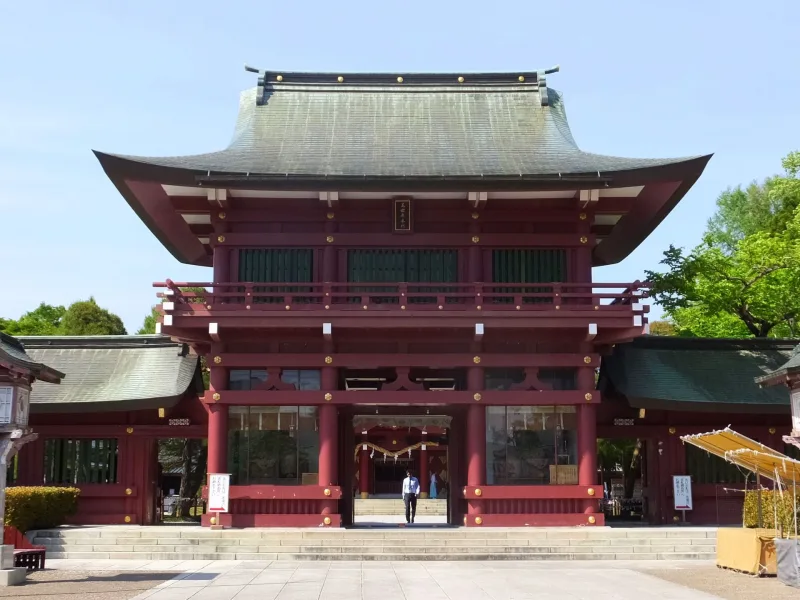
The two-storey romon gate, called the Bansei Taiheimon, was completed in 1961.
Beside the worship hall grow two wisteria plants said to be 400 years old. One of them is a rare double-flowered wisteria whose blossoms cluster together like bunches of grapes, and it is designated a natural monument of Ibaraki Prefecture.
A chrysanthemum festival over 100 years old
The Kasama Chrysanthemum Festival, held in autumn, began in 1908 (Meiji 41). It grew out of a morning glory show held in the shrine grounds, and it started when chrysanthemums were lined up in the grounds. In 1949, Kasama Inari's chrysanthemums won the top prize at an international chrysanthemum show in Seattle in the United States. Since 1948 the festival has also displayed kiku ningyo, figures dressed in costumes made of chrysanthemum flowers.
In the Great East Japan Earthquake of 2011, the main sanctuary, torii (the gates that mark a shrine), lanterns and more were badly damaged, but repairs went ahead thanks to donations from worshippers.
Getting there
The nearest station is Kasama on the JR Mito Line, about 2km from the shrine. From Tomobe Station, the city's sightseeing loop bus takes about 20 minutes; get off at Inari Jinja and the shrine is right there.
By car, it is about 15 minutes from the Tomobe IC (interchange) on the Kita-Kanto Expressway. The shrine's own car park is small, and the Jizo-mae car park a little way off (about a five-minute walk) charges a fee on festival weekends, at New Year and at other busy times.
Tips
- Kasama is also a pottery town, home of Kasama-yaki ware, with many potteries around the city. After your visit, browsing for tableware is a nice way to spend some time.
- It gets crowded at New Year and on chrysanthemum festival weekends. If you are driving, check the official website for temporary traffic restrictions and parking information.
- If you want to see the chrysanthemum figures, visit during the autumn chrysanthemum festival.
Sources
- 笠間稲荷神社(公式)
- 笠間稲荷神社について(公式)
- 境内のご案内|笠間稲荷神社(公式)
- 笠間の菊まつり|笠間稲荷神社(公式)
- 笠間稲荷神社復興奉賛会|笠間稲荷神社(公式)
- アクセス|笠間稲荷神社(公式)
- 笠間稲荷神社|笠間観光協会
Updated 29 September 2026. Opening hours and prices change, so check the official site before you go.