Okinawa World
おきなわワールド
Gyokusendo cave with over a million stalactites, a Ryukyu town of red-tiled old houses and powerful eisa dance: Okinawa's nature and culture in one day.
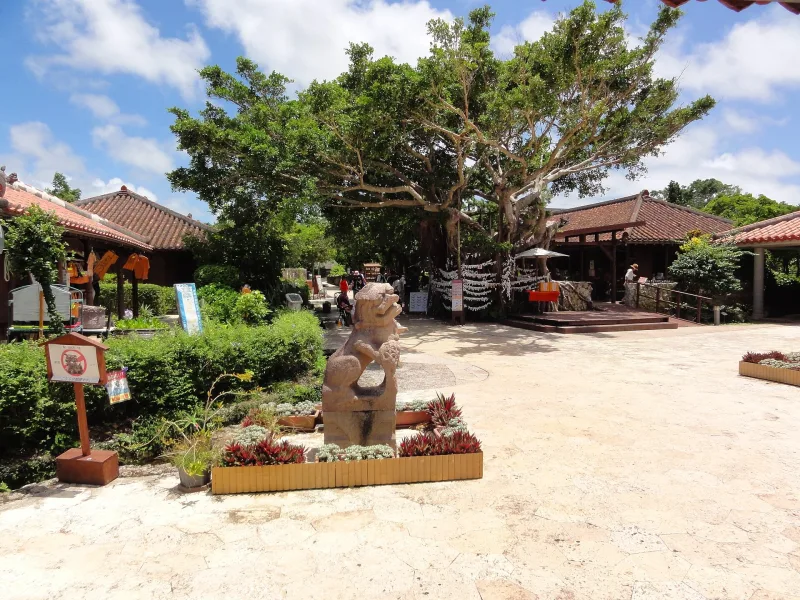
Okinawa's nature and culture in one place
Okinawa World is a theme park in Nanjo City, in the south of Okinawa's main island. At its heart is Gyokusendo, one of the largest limestone caves in Japan, and around it are an area recreating a town from the days of the Ryukyu Kingdom (the independent kingdom that once ruled Okinawa), traditional performing arts shows, and a facility where you can learn about the habu, Okinawa's venomous snake.
There is a lot to see, so the official website suggests allowing about 3 to 5 hours. It also sets out a route that takes you round the highlights in numbered order.
Gyokusendo, a cave 300,000 years in the making
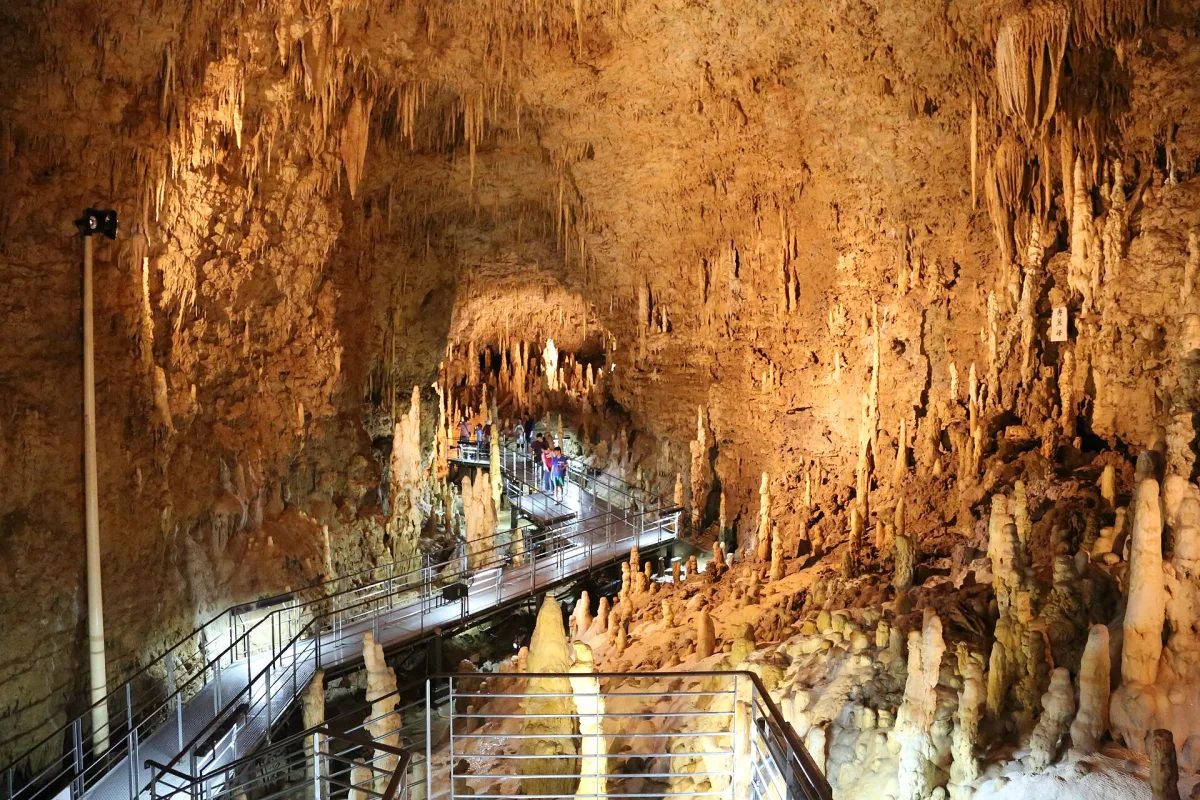
Gyokusendo is a limestone cave that is thought to have started forming about 300,000 years ago. It is about 5km long in total, of which about 890m is open to visitors. It first opened to the public in 1972. Inside are more than a million stalactites, said to be the most in any cave in Japan.
A limestone cave (shōnyūdō in Japanese) is one carved out as rainwater and groundwater slowly dissolve limestone over a very long time. The icicle-like stones hanging from the ceiling are called stalactites.
The Ryukyu Kingdom Castle Town and Super Eisa
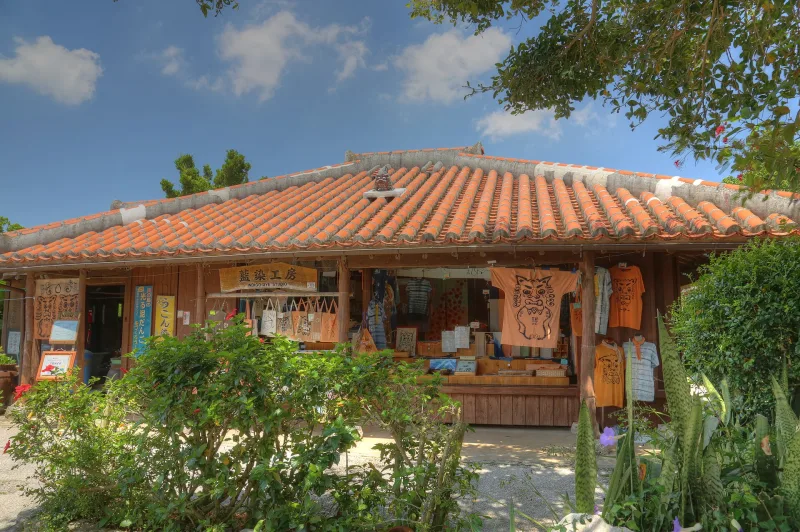
In the Ryukyu Kingdom Castle Town, old houses with red-tiled roofs have been moved here and rebuilt side by side. Four of the houses, plus one old structure called a fūru, are Registered Tangible Cultural Properties of Japan. In the old houses you can try your hand at crafts such as bingata (Okinawa's traditional dyed textiles), Ryukyu indigo dyeing and Ryukyu glass.
Super Eisa is a show lasting about 30 minutes. Eisa is a traditional Okinawan dance performed on the last day of Obon (the summer festival of the ancestors) to send the ancestors' spirits back on their way. Here it has been arranged for the stage.
There is also the Habu Park, with habu, mongooses and other creatures, an orchard growing tropical fruit, and a brewery that makes habu-shu (liquor with a habu snake in it) and more.
Getting there
It is about 30 to 45 minutes by car from Naha Airport, and roughly the same from Shuri Castle. There is a car park.
Tips
- Right after a show ends, the audience all heads for Gyokusendo at once, so the cave tends to get crowded. It's better to go in at a different time.
- The open section of Gyokusendo is about 890m, so there's a fair bit of walking. Wear comfortable shoes.
- Opening hours and show times can change, so check the official website before you go.
Sources
Updated 29 September 2026. Opening hours and prices change, so check the official site before you go.