Yutoku Inari Shrine
祐徳稲荷神社
A Kashima shrine whose vermilion main hall stands on a tall hillside stage. One of Japan's three great Inari shrines, called the "Nikko of Kyushu".
One of Japan's three great Inari shrines
Yutoku Inari Shrine is in the city of Kashima, Saga Prefecture. It enshrines Inari Okami, the deity worshipped at Inari shrines all over Japan as the protector of food, clothing and shelter.
The shrine dates back to 1687. It is said to have begun when Lady Manko, who married into the Nabeshima family, lords of the Kashima domain, received a bunrei (a portion of a deity's spirit) of Inari Okami with links to the imperial court in Kyoto and enshrined it here.
Today it is counted among Japan's three great Inari shrines, and about 3 million people a year visit to pray for things like thriving business, family prosperity and safe travel.
A main hall on a stage, the "Nikko of Kyushu"
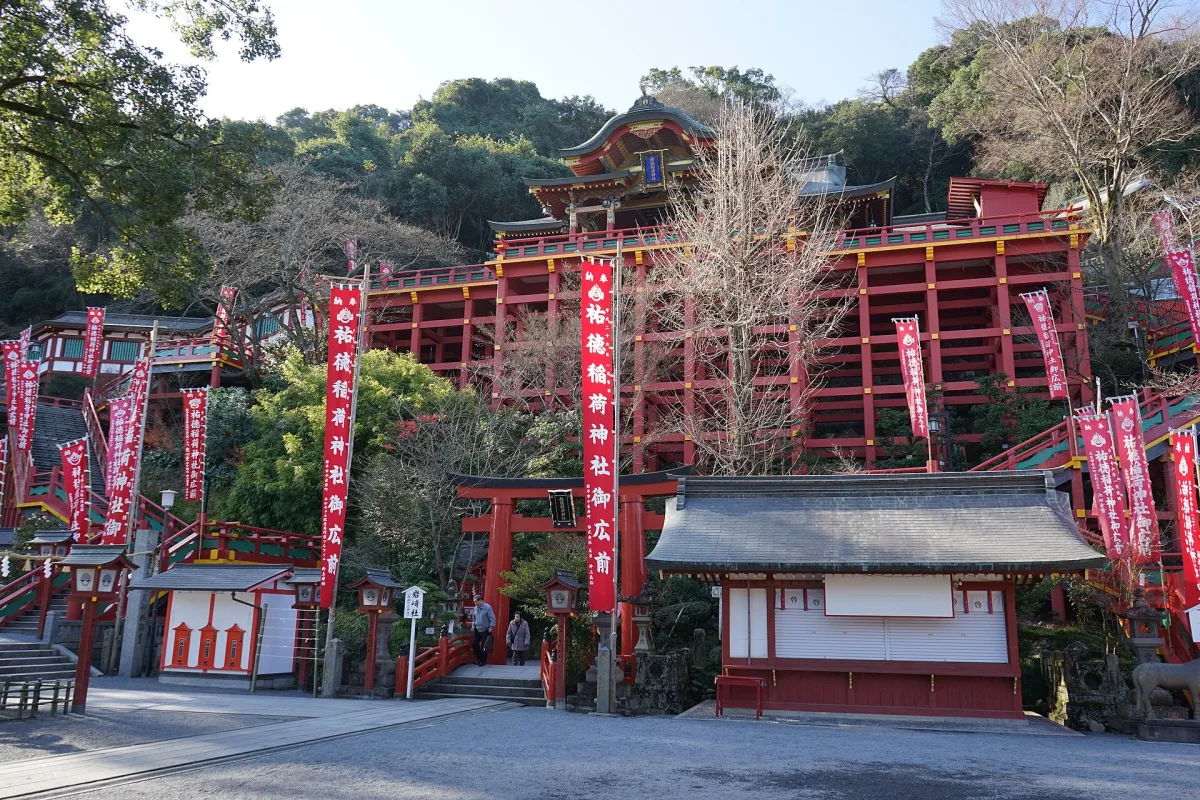
The main hall stands on a tall stage built from timber on the hillside, so when you look up from below the vermilion building seems to jut out from the mountain. The previous main hall burned down in 1949 and was rebuilt in 1957.
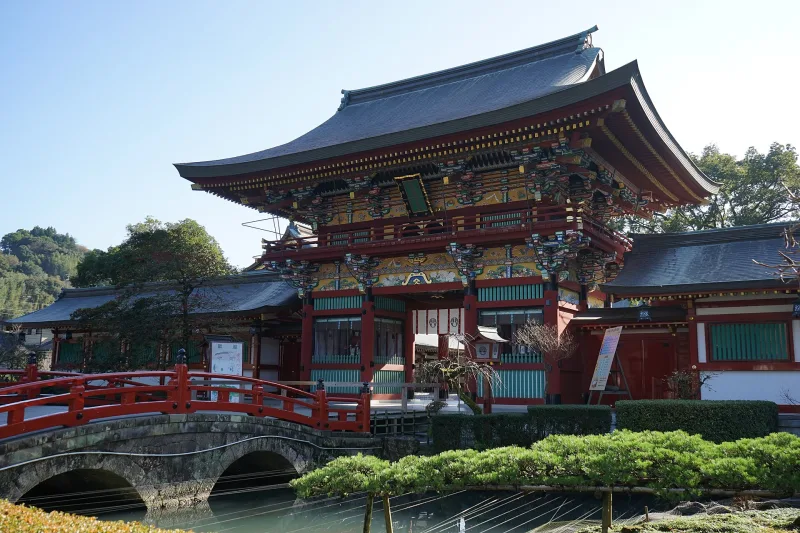
The main hall and the other buildings are decorated in bright lacquer, and their splendour has earned the shrine the name "Chinzei Nikko". Chinzei is an old name for Kyushu and Nikko refers to Nikko Toshogu in Tochigi Prefecture, so it means "the Nikko of Kyushu".
Stone steps lead up to the high ground where the main hall stands, but there is also a lift for people who find stairs difficult.
The inner shrine, the garden and the museum
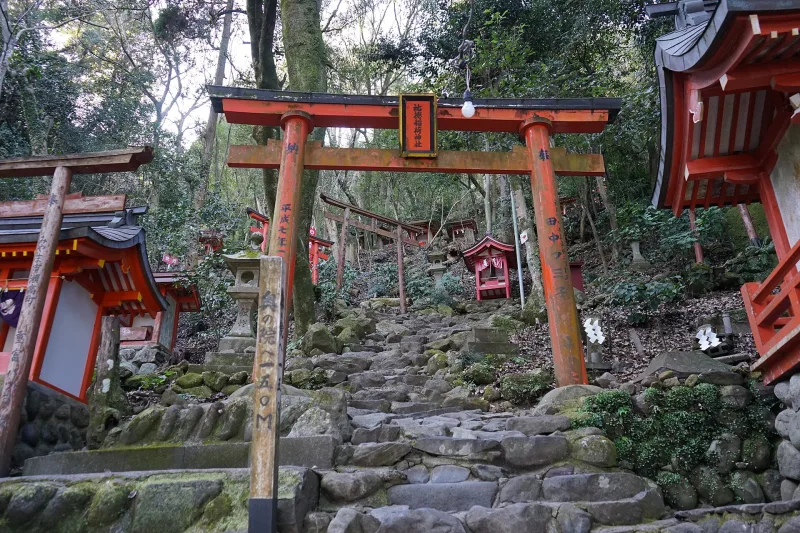
Further up the mountain above the main hall is the Oku-no-in (inner shrine), reached by a mountain path lined with a row of vermilion torii (the gates that mark a shrine).
The grounds also have a Japanese garden and the Yutoku Museum, which displays armour, swords, local crafts and more. The best times for the seasonal flowers are listed in the "four seasons flower calendar" on the official website.
Getting there
The nearest station is Hizen-Kashima on the JR Nagasaki Main Line. It takes about an hour by limited express from Hakata Station, or about 20 minutes by limited express from Saga Station. From the station to the shrine is about 10 minutes by bus or taxi.
By car it takes about 30 to 40 minutes from the Takeo-Kitagata IC or the Ureshino IC (motorway interchanges) on the Nagasaki Expressway.
Tips
- On 27 September 2026, fallen trees and damage to torii and handrails caused by heavy rain led to the path up to the Oku-no-in being closed for the time being. You can still visit the main hall and the Myobu-sha shrine as usual. Check the notices on the official website for news of its reopening before you go.
- The path to the Oku-no-in is a mountain trail. Once it reopens, wear comfortable walking shoes if you plan to climb it.
- If the stone steps are hard for you, you can use the lift that goes up close to the main hall.
Sources
Updated 28 September 2026. Opening hours and prices change, so check the official site before you go.