Hikone Castle
彦根城
One of five National Treasure castles, its early Edo keep still stands by Lake Biwa, with turrets, moats, a lord's garden and old town to explore.
The Ii family castle, built over about 20 years
Hikone Castle stands in Hikone, Shiga Prefecture. On the orders of Tokugawa Ieyasu, work began in 1604 on a castle to replace nearby Sawayama Castle, and it was finished about 20 years later, around 1622. Construction was led by Ii Naotsugu and then taken over by his younger brother Ii Naotaka. Naotaka distinguished himself in the Siege of Osaka, and the Ii became one of the powerful lord (daimyo) families that supported the Tokugawa shogunate.
In the Meiji era many castles across Japan were torn down, but in 1878 the Emperor Meiji ordered that Hikone Castle be preserved. Its keep was designated a National Treasure in 1952. Only five castles have a keep with National Treasure status: Himeji, Matsumoto, Inuyama, Matsue and Hikone.
The National Treasure keep and the Tenbin Yagura
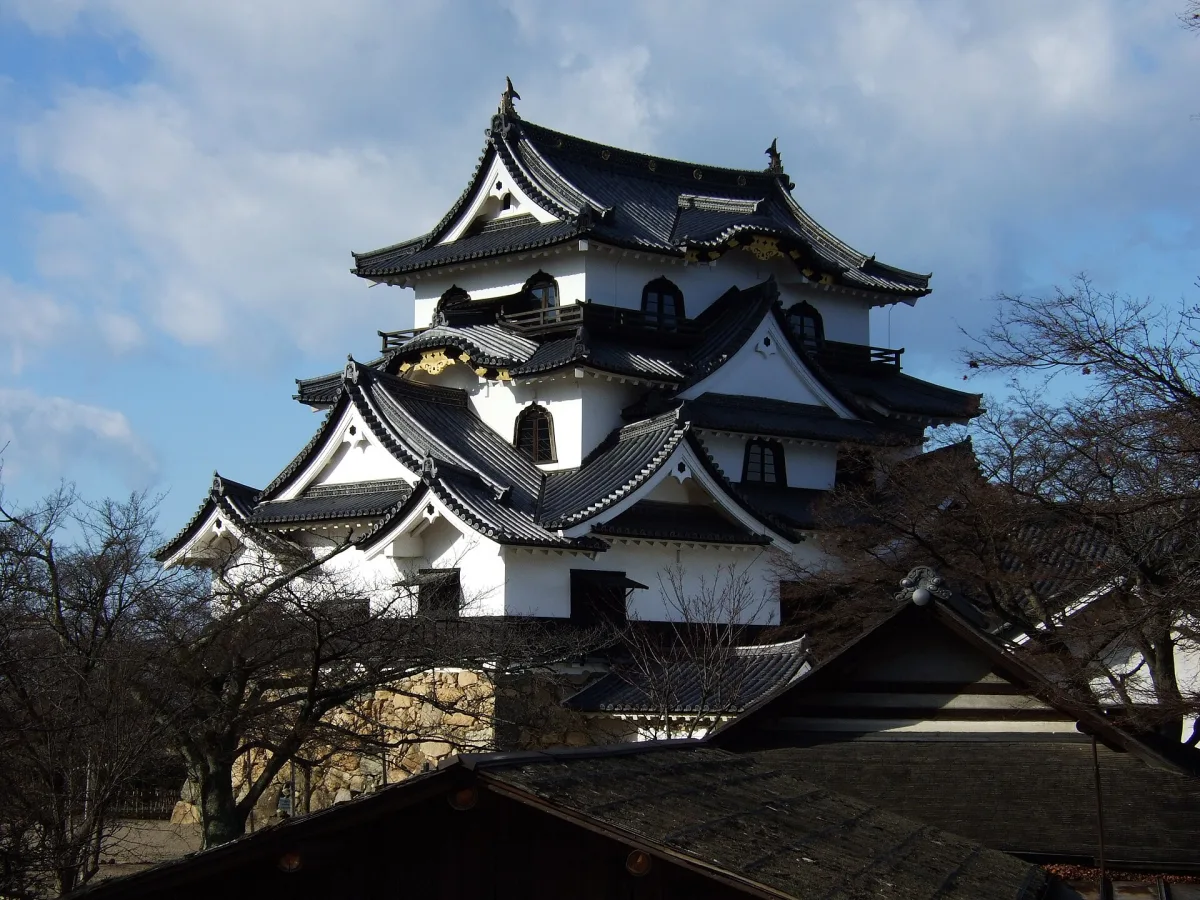
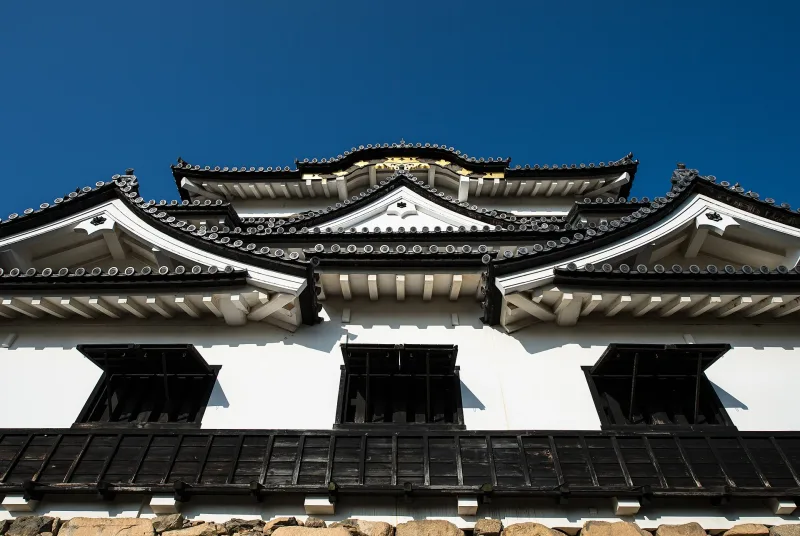
The keep (tenshu, the tallest central building of a castle) has three storeys under three tiers of roof and is 20.5m tall. Its look comes from the way it combines gables (hafu, the triangular decorative ends of the roof) of several different shapes, and it is said to have been moved here from the keep of Otsu Castle.
On the way up to the keep you pass the Tenbin Yagura. A yagura is a turret or tower used for lookout and defence; this one has towers on either side of a central bridge, which makes it look like a set of scales (tenbin). The bridge could be dropped in an emergency to cut off the route to the honmaru, the castle's inner core. According to Hikone City, Hikone is the only castle in Japan where a turret of this shape survives. Also still standing are the Taikomon Yagura, which was the main gate to the honmaru, and the three-tiered Nishinomaru turret that guarded the west side.
Genkyu-en garden and the museum
Genkyu-en is an early Edo-period daimyo garden that you stroll around, centred on a large pond, and from it you can look up at the keep across the water. Next to it is Raku-raku-en, the lord's second residence (the Keyaki Goten), built in 1677.
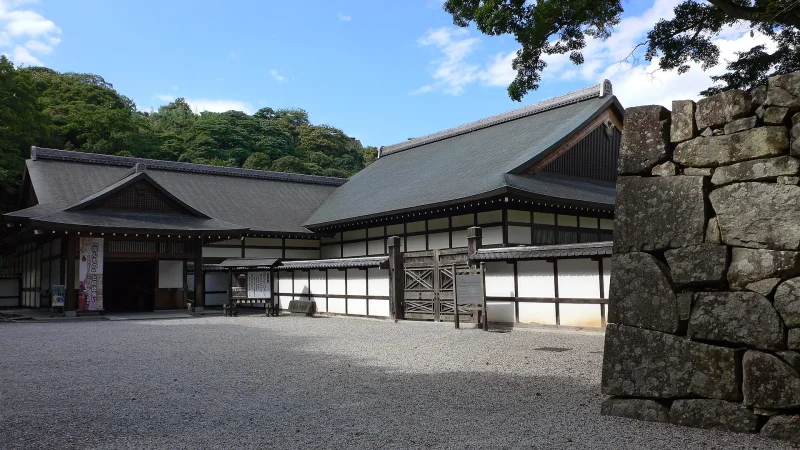
The Hikone Castle Museum within the grounds displays armour, swords, tea utensils and old documents handed down in the Ii family.
Seasonal highlights and getting there
Around mid-March about 400 plum trees bloom in the castle's plum grove, and in November the autumn leaves in Genkyu-en are at their best. Near the inner moat there is also an unusual cherry tree that flowers twice a year, in spring and in winter.
The nearest station is JR Hikone. The entrance closest to the station is the ticket office at the Omote-mon gate, and from there it is about a 10-minute walk to the keep. The way up is by stone steps, so wear comfortable shoes. Check the official website for opening hours and prices.
Tips
- If you are coming from JR Hikone Station, the Omote-mon gate, the entrance closest to the station, is the easiest way in.
- From Genkyu-en you can look up at the keep across the pond. After climbing the keep, go and see the castle from the garden side too.
- Hikone Castle is on Japan's tentative list for World Heritage status, and efforts to get it inscribed are ongoing.
- Hikonyan, Hikone City's cat mascot, sometimes appears within the castle grounds. The official website shows where he will be on the day.
Sources
Updated 28 September 2026. Opening hours and prices change, so check the official site before you go.

.jpg)
