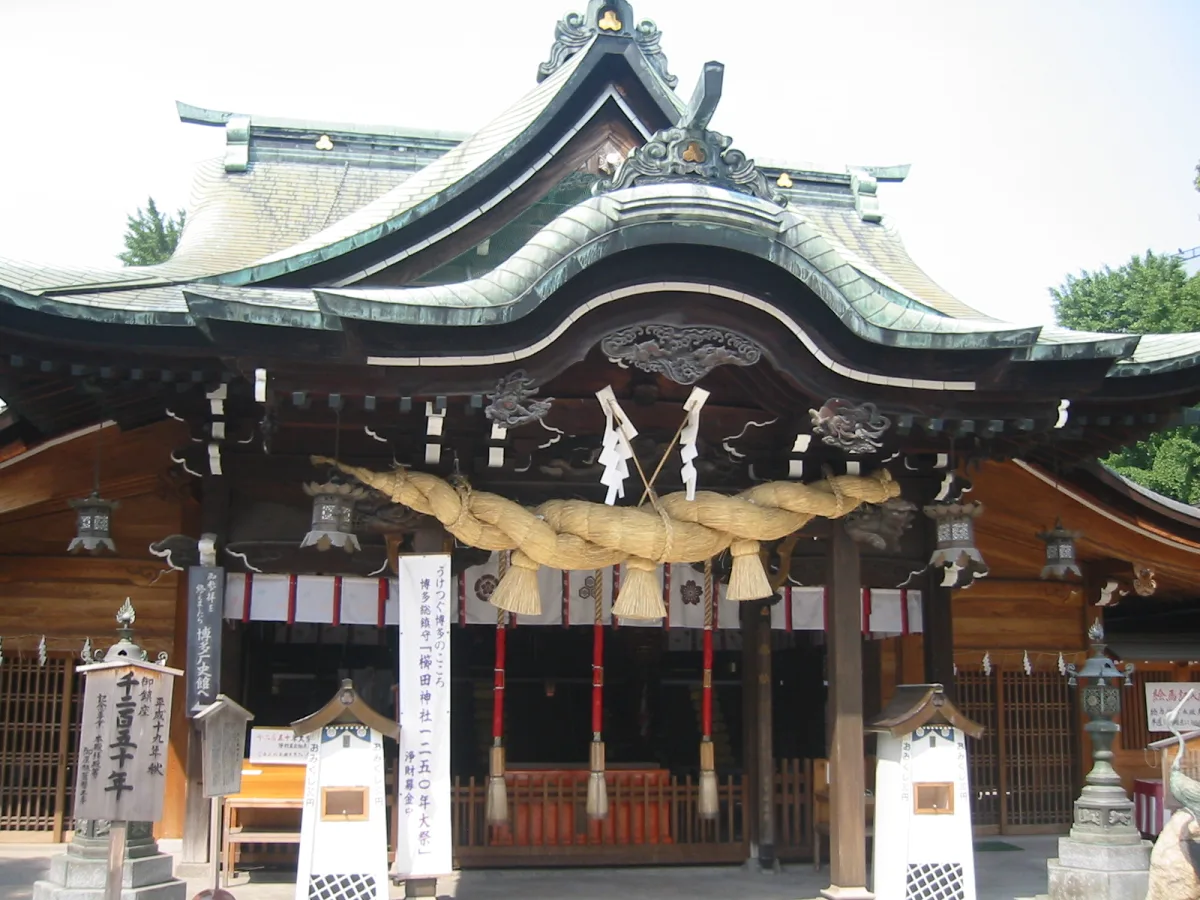
Kushida Shrine
櫛田神社
"Okushida-san", guardian shrine of Hakata and home of the Hakata Gion Yamakasa festival, where a lavish 13m float is on show for most of the year.
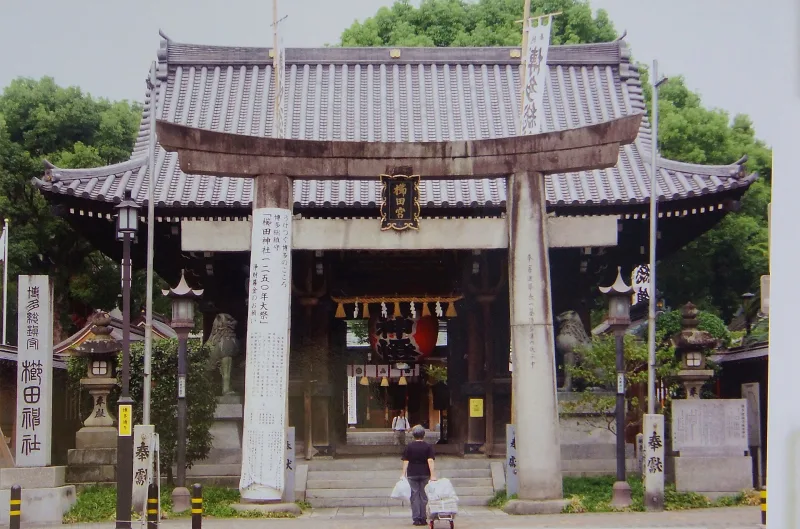
"Okushida-san", guardian of all Hakata
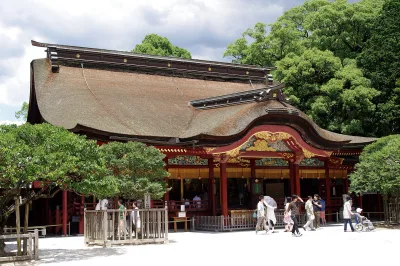
Kushida Shrine is a Shinto shrine in Hakata Ward, Fukuoka City. According to the shrine's own tradition, it began in 757, when the god of Kushida Shrine in Matsusaka, Ise (today's Mie Prefecture), was invited here and enshrined. As Hakata's sochinju (the shrine that protects the whole area), it is affectionately known locally as "Okushida-san".
Three gods are enshrined here: Ohatanushi no Mikoto in the centre, with Amaterasu Sume Okami and Susanoo no Mikoto. When Toyotomi Hideyoshi rebuilt Hakata after it had been ravaged by war, the shrine buildings were rebuilt too, in 1587. People worship here for prosperity in business and for a long, healthy life.
Hakata Gion Yamakasa and the decorative floats
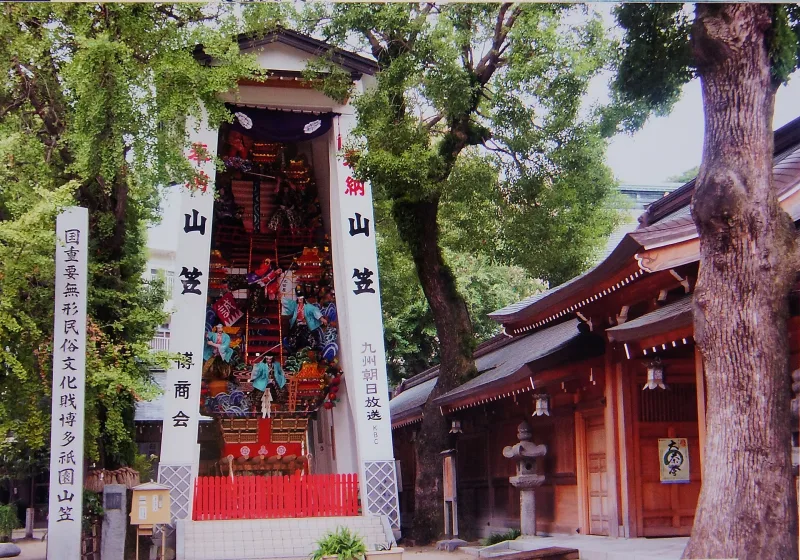
Kushida Shrine is the stage for the Hakata Gion Yamakasa, a summer festival held every year from 1 to 15 July. A yamakasa is a large dashi (a decorated float that is carried or pulled at a festival) adorned with figures and other decorations. The climax of the festival is the Oiyama, when men carry the floats at a run, shouting "Oisa!". The Hakata Gion Yamakasa is a national Important Intangible Folk Cultural Property, and in 2016 it was also inscribed on UNESCO's Intangible Cultural Heritage list.
In the shrine grounds, a kazari yamakasa (decorative float) about 13m tall is on display all year except in June, and you can look up at it from right beside it. It is replaced with a new one every year on 1 July.
Highlights of the shrine grounds
The shrine's sacred tree, the Kushida ginkgo, is said to be more than 1,000 years old and is a Natural Monument of Fukuoka Prefecture. At its base lie two Moko Ikariishi (Mongol anchor stones), said to have been used by Mongol warships during the Genko (the Mongol Empire's invasions of Japan in the 13th century).
On the ceiling of the romon (a two-storey gate) is the Eto Ehoban, a dial showing the twelve animals of the Chinese zodiac. Its arrow points to the lucky direction for the year, and it is turned to a new position on New Year's Eve. The grounds also keep a stretch of Hakata-bei, an earthen wall made by setting stones and roof tiles burnt in the fighting into the clay, from around the time of Hideyoshi's rebuilding.
Getting there
It is about a 2-minute walk from Kushida-jinja-mae Station on the Fukuoka City Subway Nanakuma Line, or about 6 minutes on foot from Gion Station or Nakasu-Kawabata Station on the Airport Line. It is right next to Canal City Hakata, so you can drop in while exploring Hakata. Allow about 30 minutes to an hour for your visit.
Tips
- The decorative float cannot be seen in June. The new float goes on show on 1 July.
- During the Yamakasa festival from 1 to 15 July, the area around the shrine gets very crowded. Come then if you want to see the festival, or at another time if you want a calm visit.
- At Setsubun in February (the festival marking the start of spring) there is a giant Otafuku mask (the face of a plump, smiling woman), and on 23 and 24 October there is the autumn festival, Hakata Okunchi.
Sources
- 櫛田神社 | 観光スポット一覧 | 【公式】福岡市観光情報サイト よかなび
- 博多の守り神「櫛田神社」とは? | 【公式】福岡県観光情報 クロスロードふくおか
- 櫛田神社 | 観光スポット | 【公式】クロスロードふくおか
Updated 29 September 2026. Opening hours and prices change, so check the official site before you go.

.jpg)
.jpg)
