Atomic Bomb Dome (Hiroshima Peace Memorial)
原爆ドーム
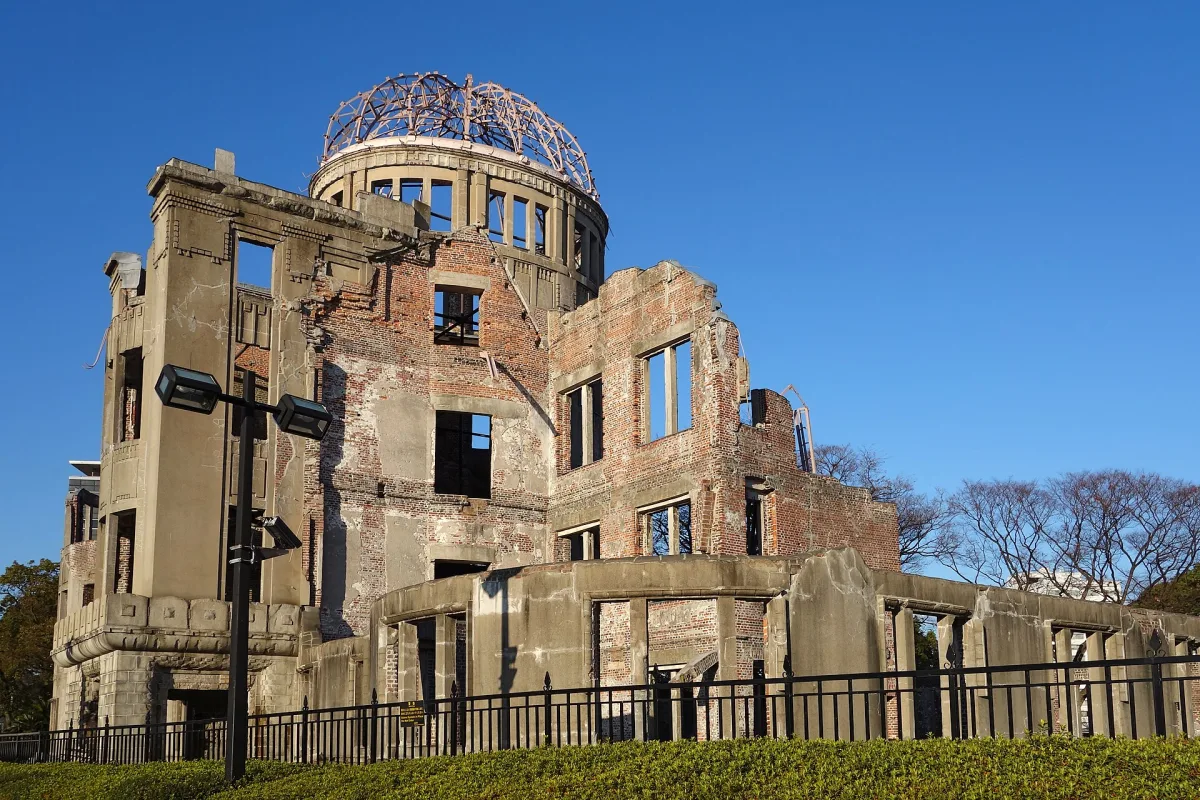
Left standing by the atomic bomb of 6 August 1945 and kept as it was, it shows the world the horror of nuclear weapons and why peace matters.
Originally Hiroshima Prefecture's Commercial Exhibition Hall
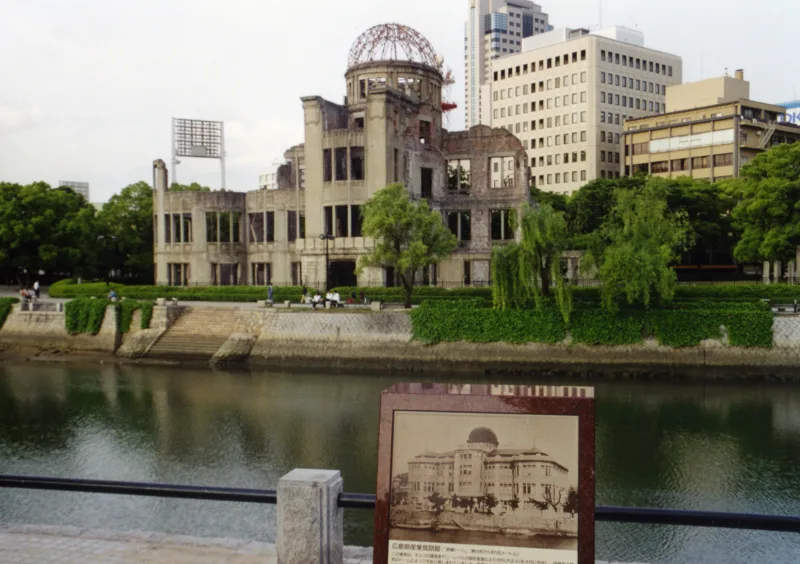
The Atomic Bomb Dome is the ruin of a building on the banks of the Motoyasu River in central Hiroshima. It was built in 1915 as a base for promoting sales of the prefecture's local products and was called the Hiroshima Prefectural Commercial Exhibition Hall. It was later renamed the Hiroshima Prefectural Products Exhibition Hall, and then the Hiroshima Prefectural Industrial Promotion Hall.
It was designed by Jan Letzel, a Czech-born architect. A bold, European-style building, it not only displayed and sold local products from around the prefecture but also served as a museum and art gallery. In March 1944, as the war intensified, it stopped working as the Industrial Promotion Hall and was used as offices for government agencies and companies.
6 August 1945
On 6 August 1945, the atomic bomb exploded about 600 m in the air, about 160 m south-east of this building. Everyone inside was killed instantly, and the building was badly wrecked by the blast and heat rays and completely burned out.
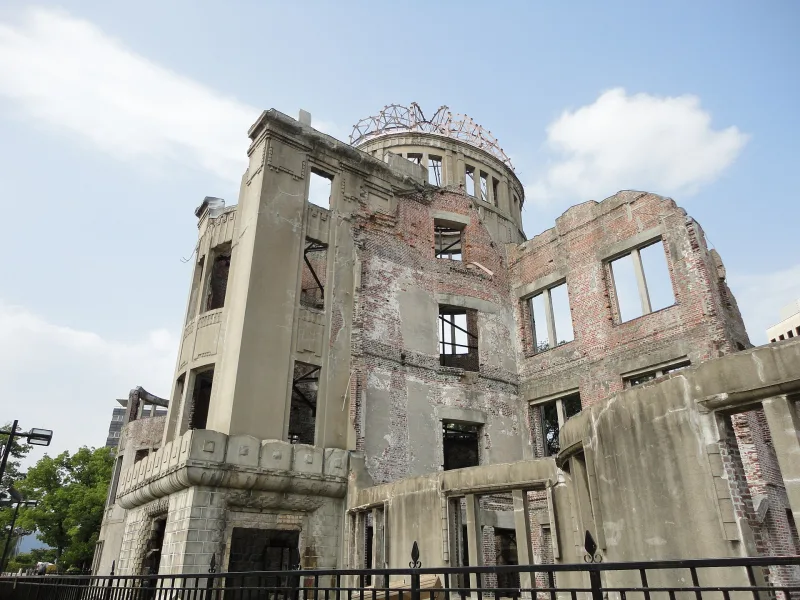
According to Hiroshima City, much of the roof and dome, apart from the steel frame, was made of wood, so it was crushed by the blast coming from directly above. The thick side walls, on the other hand, were not completely crushed and stayed standing. That is how the dome, with its steel frame laid bare, survives to this day.
The campaign to preserve it, and World Heritage listing
After the bombing the building kept deteriorating, and from 1962 it was fenced off with wire mesh so no one could go inside. As calls to preserve it grew, Hiroshima City Council decided in 1966 to keep it, and the first preservation work was carried out in 1967, paid for with donations from all over Japan. Its condition has been checked every few years since, with repeated work to protect it against earthquakes and deterioration.
In December 1996 the Atomic Bomb Dome was inscribed as a UNESCO World Cultural Heritage site. It was recognised as a "peace memorial" that conveys the devastation caused by the first nuclear weapon ever used in human history, and that continues to speak for the abolition of nuclear weapons and the importance of lasting peace.
When you visit
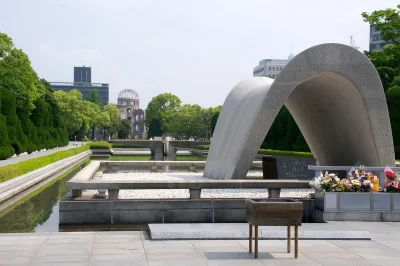
The Atomic Bomb Dome is part of the Peace Memorial Park, which spreads out on both sides of the Motoyasu River. You cannot go inside the building, but you can walk around it outside the fence and see it from many angles. It is lit up at night.
It is right by the Genbaku Dome-mae stop on the Hiroden (Hiroshima Electric Railway) tram. The Peace Memorial Park also contains the Hiroshima Peace Memorial Museum, which shows the reality of the bombing; visiting it as well will give you a much deeper understanding of what happened here.
Tips
- This is a symbol of remembrance and peace, standing where a great many people died. Please visit quietly, without raising your voice or climbing over the fence.
- It is lit up at night, so you can also reflect on it in a calmer atmosphere than during the day.
- Every year on 6 August, Hiroshima City holds its Peace Memorial Ceremony. If you are visiting on that day, check the ceremony information on Hiroshima City's official website.
Sources
- 原爆ドームは、原爆が投下される前は何だったのですか? | 広島市公式ウェブサイト
- 原爆ドームは爆心地にとても近いのに、どうして崩れずに残ったのですか | 広島市公式ウェブサイト
- 原爆ドームの保存工事について教えてほしい | 広島市公式ウェブサイト
- 原爆ドームはいつ世界遺産に認定されたんですか。 | 広島市公式ウェブサイト
- 原爆ドーム - Wikipedia
- 原爆・平和 | 広島市公式ウェブサイト
Updated 28 September 2026. Opening hours and prices change, so check the official site before you go.

.jpg)
.jpg)