Itsukushima Shrine
嚴島神社
A Miyajima shrine famous for vermilion halls and a great torii that seem to float at high tide. A World Heritage Site that changes completely with the tides.
A shrine built on the sea of a sacred island
Itsukushima Shrine stands on Miyajima (also called Itsukushima), an island in Hatsukaichi City, Hiroshima Prefecture. According to the shrine's own history, in 593 Saeki no Kuramoto, who governed the island, chose this spot where the tide ebbs and flows and built the shrine here. It is dedicated to three goddesses who have long been worshipped as, among other things, guardians of the sea.
In the past the whole island was considered sacred, so the shrine was built not on land but over the sea, where the tide comes and goes. Miyajima is known as one of the Three Views of Japan (Nihon Sankei), alongside Matsushima in Miyagi Prefecture and Amanohashidate in Kyoto Prefecture, and the shrine was added to the UNESCO World Cultural Heritage list in 1996.
Taira no Kiyomori's palace-style shrine on the water
The shrine owes its present form to Taira no Kiyomori, a warrior of the Heian period. A devoted follower of the shrine, in 1168 he rebuilt it in shinden-zukuri, the style of the mansions of Heian-era aristocrats. Retired emperors and nobles came to worship many times after that, bringing the culture of the capital to Miyajima.
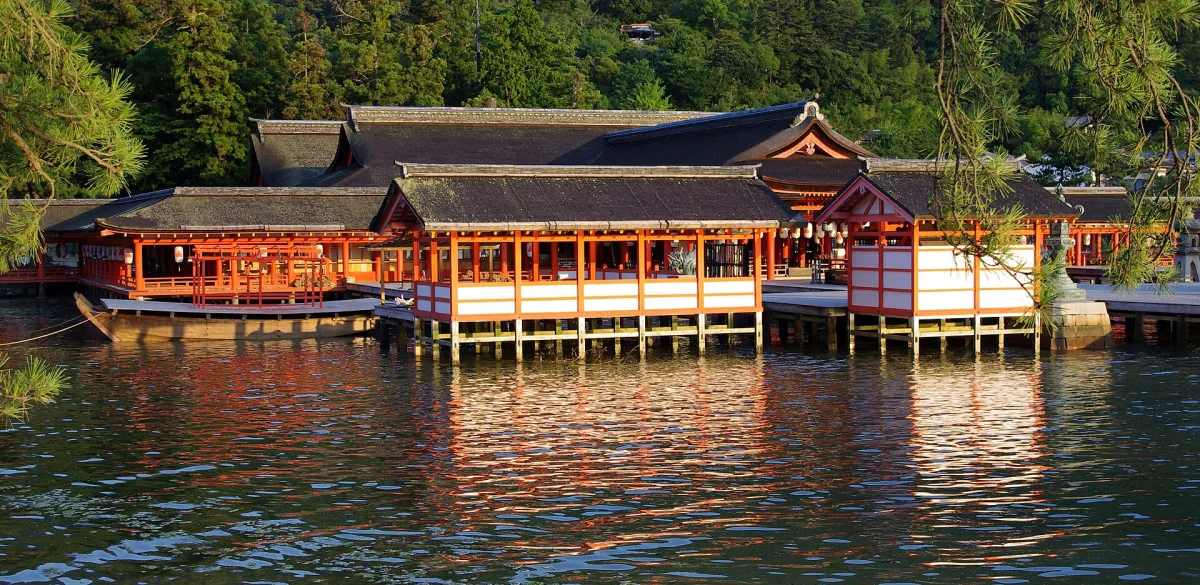
Many of the buildings, starting with the main sanctuary, are designated National Treasures, and they are linked by vermilion kairo (long roofed corridors). The corridor floorboards are laid with gaps between them so that the pressure of the water can escape during storm surges. The Noh stage standing over the sea is said to be the only one of its kind in Japan.
The great torii in the sea and the rise and fall of the tide
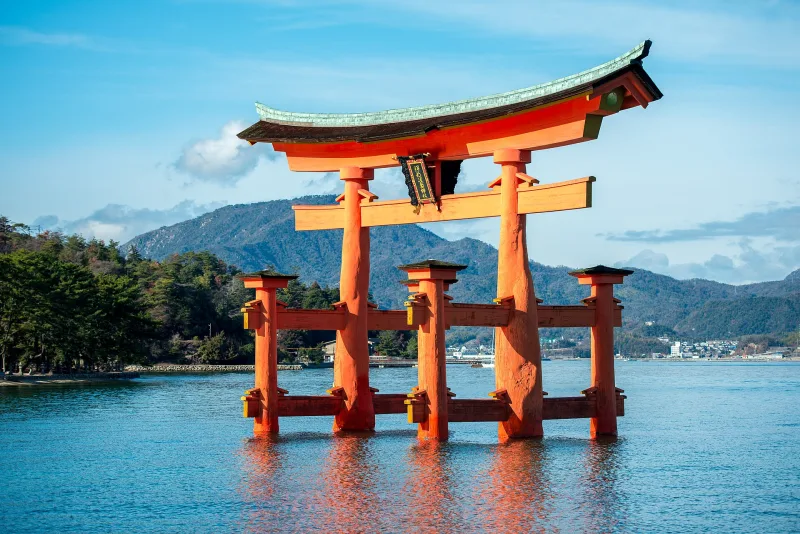
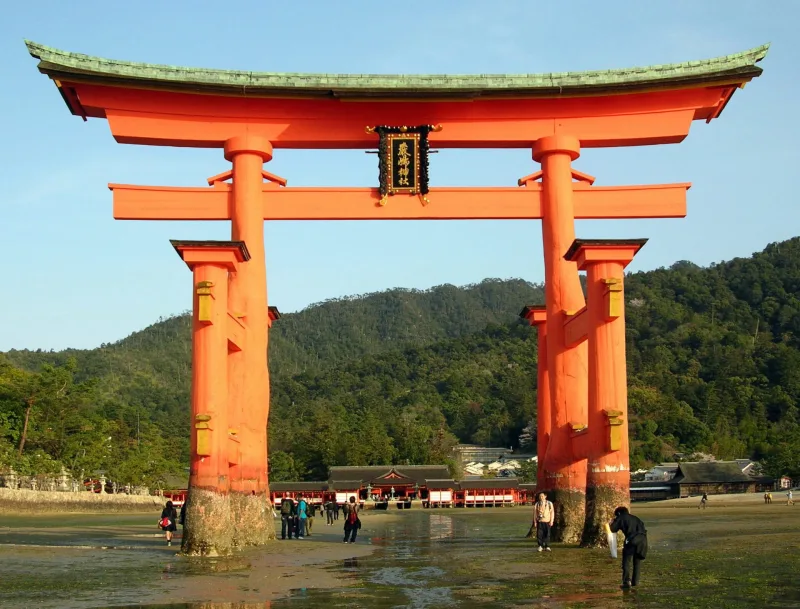
Offshore from the shrine stands the Otorii, its great torii (the gate that marks the entrance to a shrine), about 16.6 m tall. Its main pillars are natural camphor trunks. It is not sunk into the seabed: it stands by its own weight. Repair work ran from June 2019 to December 2022 and is now finished.
At high tide, both the shrine buildings and the great torii look as if they are floating on the sea. At low tide, you can walk right up to the foot of the torii. The view changes dramatically over the course of a single day, so check the tide times before you plan your visit.
Getting there
From JR Miyajimaguchi Station or Hiroden Miyajimaguchi Station (Hiroshima Electric Railway), head to Miyajimaguchi Pier. The ferry takes about 10 minutes to Miyajima Pier, and from there you can walk to the shrine. Two companies run ferries between Miyajimaguchi and Miyajima: JR West Miyajima Ferry and Miyajima Matsudai Kisen.
The shrine has no car park. If you come by car, park around Miyajimaguchi and take the ferry. Check the official website for visiting hours.
Tips
- Since October 2023, everyone crossing to Miyajima by boat pays the Miyajima Visitor Tax. It is collected on top of the ferry fare, so you do not need to do anything special.
- There are gaps between the corridor floorboards, and high heels and similar shoes can get caught in them. Wear comfortable walking shoes.
- Repair work may be under way on the five-storey pagoda and other buildings in the grounds. Check the latest status on the official website's page on construction work and plans.
Sources
Updated 28 September 2026. Opening hours and prices change, so check the official site before you go.