Shiroyone Senmaida Rice Terraces
白米千枚田
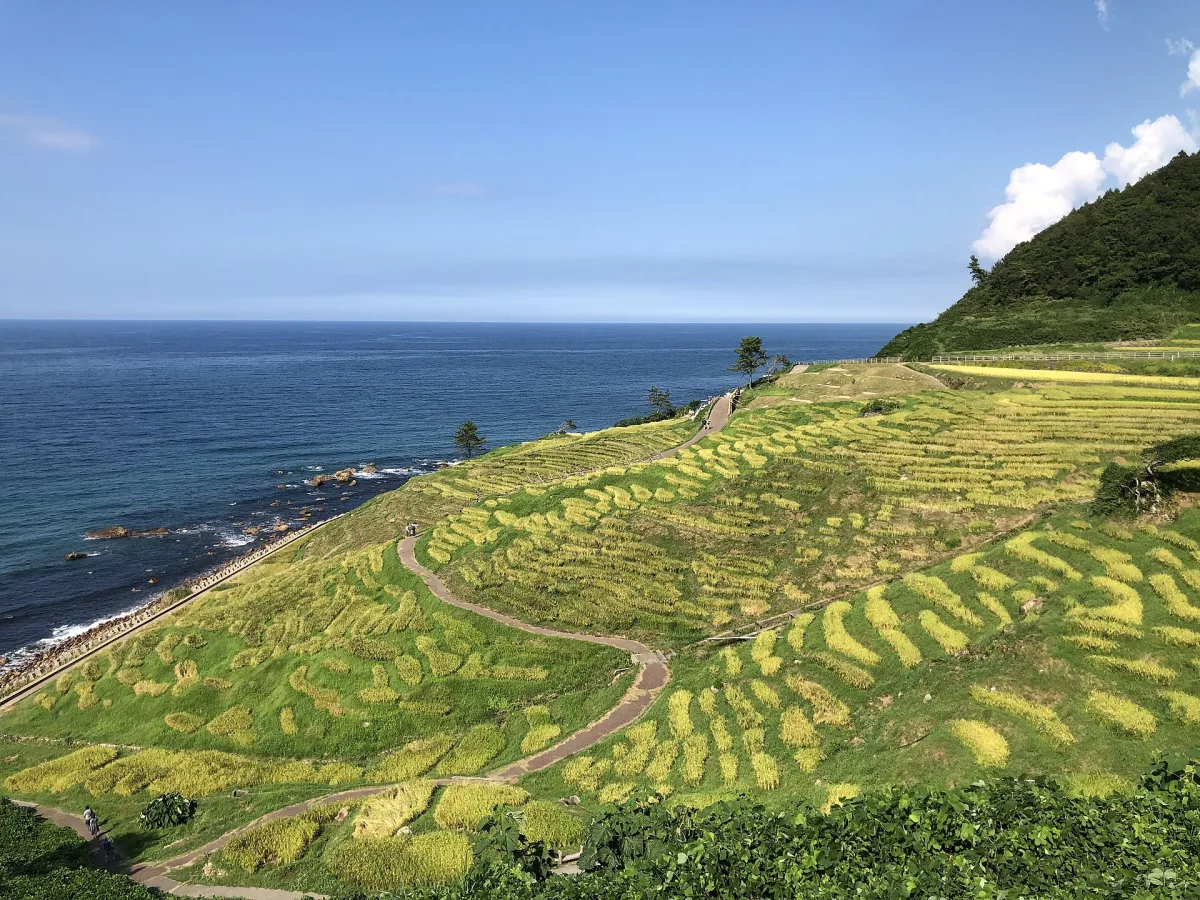
Tiny rice paddies step down to the Sea of Japan at Wajima, Noto. Hit by a 2024 quake and floods, they are being slowly restored by locals and volunteers.
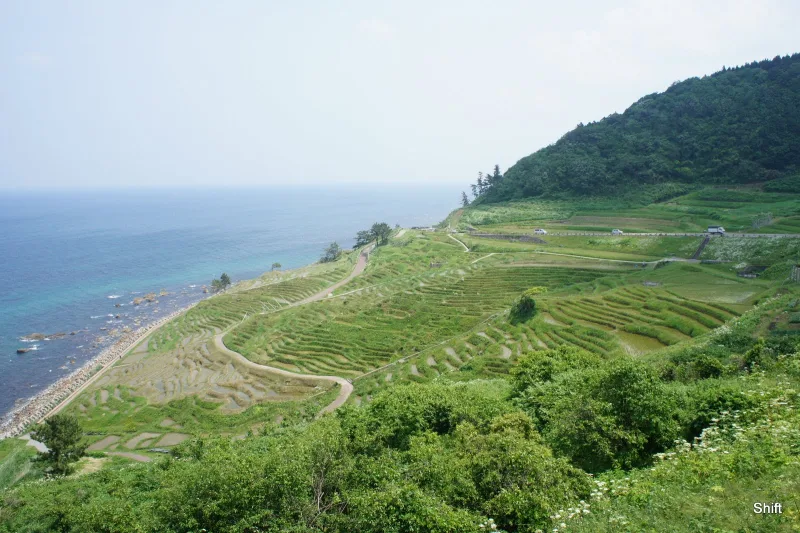
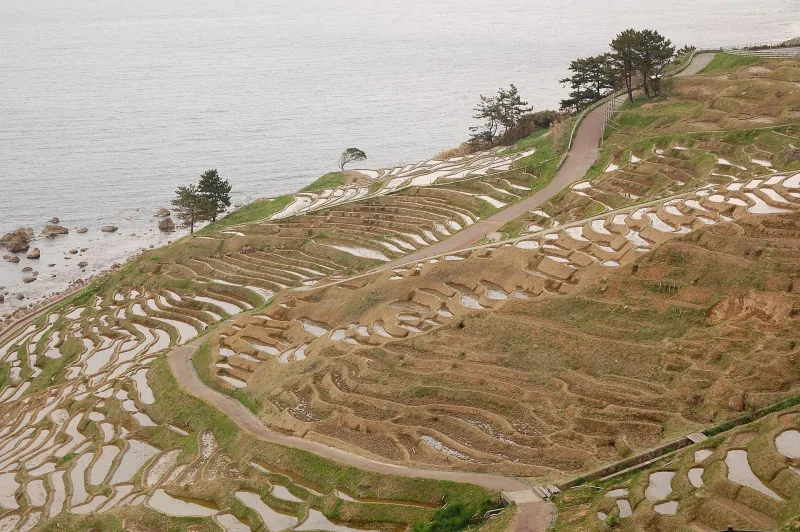
1,004 paddies tumbling into the sea
Shiroyone Senmaida is a set of tanada (rice paddies built like steps into a hillside) on a steep slope facing the Sea of Japan in Shiroyone-machi, Wajima City, Ishikawa Prefecture. Before the earthquake, 1,004 small paddies covered this slope of about 4 hectares.
In 2001 it was designated a national Place of Scenic Beauty (a cultural property recognised by the state for its outstanding scenery), and in 2011 it was also recognised by the UN Food and Agriculture Organization (FAO) as a Globally Important Agricultural Heritage System, as part of "Noto's Satoyama and Satoumi".
Rice grown by hand where machines cannot go
Each paddy is small and oddly shaped, and the slope is steep, so large farm machinery cannot be used. Both planting and harvesting are done by hand by local people and volunteers.
Part of the charm is how the view changes with the seasons. From spring to early summer the flooded paddies reflect the sky and the sunset; in summer they are green, and in August and September, as the rice ripens, they turn gold. After the harvest you may see hazaboshi, where the cut rice is hung on wooden frames to dry in the sun.
Recovering from earthquake and floods
In the Noto Peninsula Earthquake on 1 January 2024, about 80 per cent of the paddies cracked or collapsed, and the water channels were damaged. In September the same year, torrential rain in Oku-Noto brought landslides on the slope and made the damage worse.
Even so, the preservation society and volunteers have kept up the repairs, and the number of paddies that could be planted has risen step by step, from about 120 in 2024 to about 240 in 2025 and about 480 in 2026. Around half of the whole has come back, but recovery is still under way. "Aze no Kirameki", a winter evening event that lights up the terraces with LEDs, was not held in fiscal 2025 because of the earthquake.
Getting there and visiting
National Route 249 runs right beside the terraces, next to the Michi-no-Eki Senmaida Pocket Park roadside station. Viewing is free, and the roadside station has a large car park.
According to JNTO, there are buses from Kanazawa Station towards Wajima, but you need to change and services are infrequent, so a car or hire car is recommended. In Noto, road works are still going on in some sections after the earthquake and floods, so check road information and Wajima City's tourism information before you set out.
Tips
- The terraces are still used to grow rice, and some sections are under repair. Do not step into the paddies or onto the aze (the narrow earth banks between them); enjoy the view from outside.
- In spring, when the paddies are flooded, they reflect the sky and the sunset; at harvest time the whole slope turns gold. Choose your season and the same terraces show you a different face.
- When travelling in Noto, it is reassuring to check in advance whether your accommodation and places to eat have reopened since the disaster.
Sources
- Senmaida Rice Fields | Travel Japan (JNTO)
- Shiroyone Senmaida Rice Terraces | Official Ishikawa Travel Guide
- あぜのきらめき(白米千枚田) 2025-2026 千枚田ライトアップ | 能登輪島.jp
- 輪島「白米千枚田」田植えに汗 昨年から倍増、480枚 | 北國新聞
- 輪島の千枚田復旧…「道のりは長い。でもこのままじゃ終われない」 | 東京新聞
- 白米千枚田 - Wikipedia
Updated 29 September 2026. Opening hours and prices change, so check the official site before you go.