Fossa Magna Museum
フォッサマグナミュージアム
An Itoigawa museum on the Fossa Magna rift and jade, Japan's national stone, with a 7-tonne jade boulder and 300-million-year-old fossils to find.
A museum about Japan's "great ditch"
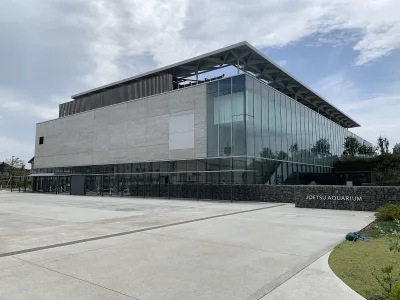
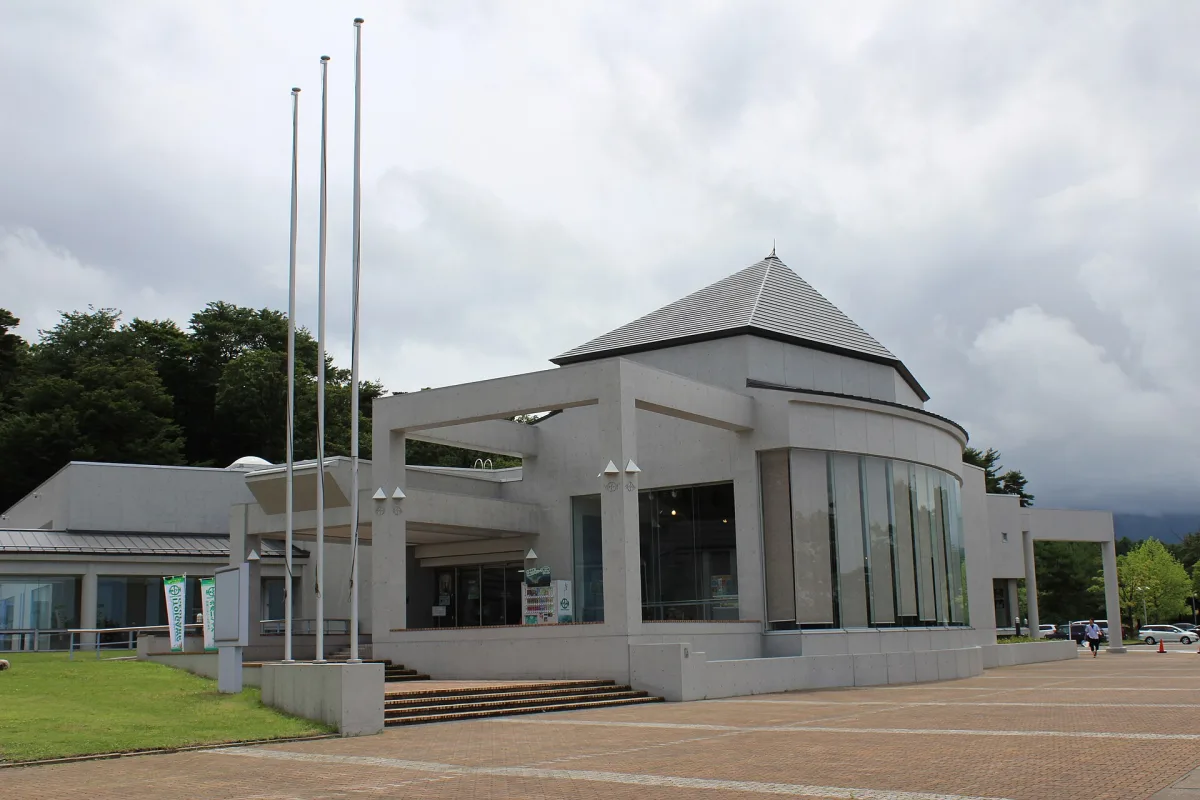
The Fossa Magna Museum is a museum of rocks and the earth in Miyama Park, Itoigawa City, Niigata Prefecture. It opened on 25 April 1994 and reopened on 9 March 2015 with completely new exhibits, timed with events such as the opening of the Hokuriku Shinkansen (bullet train).
Fossa Magna is Latin for "great ditch". Dr Naumann, a German geologist who came to Japan in the Meiji era, noticed a huge trench in the ground across the middle of the Japanese archipelago and gave it this name. It is thought to be a rift that formed when the Japanese islands split away from the Asian continent. Its western edge, the Itoigawa-Shizuoka Tectonic Line, is the geological boundary that divides Japan into northeast Japan and southwest Japan.
Jade, the national stone, and six galleries
Itoigawa and the area around it are Japan's largest source of jade (hisui). Jade is a gemstone that has been used in Japan since ancient times, and partly because it forms only where one tectonic plate sinks beneath another, as it does in Japan, the Japan Association of Mineralogical Sciences chose it in 2016 as Japan's "national stone" (kokuseki).
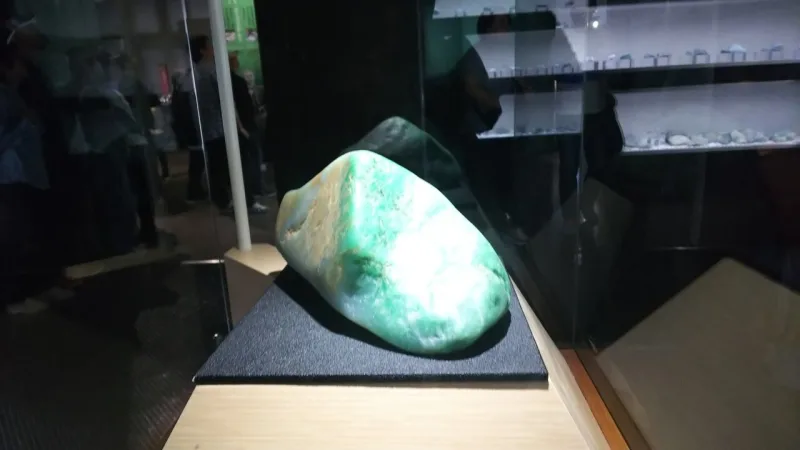
As you enter, you are greeted by giant pieces of jade found in the Kotaki and Omi rivers; the largest weighs 7 tonnes. The six galleries take you in turn through beautiful raw jade, the birth of the Japanese archipelago, earthquakes and volcanoes, fossils and minerals. You can also see a fossil of Nipponites, a strangely shaped ammonite named after Japan.
In Gallery 3, a 200-inch screen that wraps from the wall onto the floor shows films of how the Japanese archipelago, the Fossa Magna and the Sea of Japan were formed.
Fossil hunting in the Fossil Valley
At the Fossil Valley, an outdoor area on the museum grounds, you can hunt with a hammer for fossils of crinoids (sea lilies), corals, brachiopods and other creatures that lived in coral reef seas about 300 million years ago (for a fee; ages 4 and up). You can take home the fossils you find, up to a set number.
Sign up inside the museum on the day, first come, first served; you cannot book by phone. The valley is closed in rain or other bad weather, and it shuts for the winter from December. You need non-slip work gloves, and you cannot take part in sandals or other shoes that leave skin exposed.
Getting there
From Itoigawa Station, where the Hokuriku Shinkansen and other trains stop, it is about 10 minutes by taxi or by the Miyama Park and Museum Line bus. You can also cycle, but it takes about 30 minutes and there are hills. Check opening hours and closing days (there are more closing days in winter) on the official website.
Tips
- The museum has announced a temporary closure on 9 and 10 November 2026, and that the Fossil Valley will be closed on 1 November. Check the notices on the official website before you go.
- In June 2026 the official website warned of bear sightings (the museum is open). Take care when walking outdoors nearby, for example in Miyama Park.
- If you are going to the Fossil Valley, bring old newspaper and a bag to wrap your fossils in so they do not get damaged on the way home.
Sources
- フォッサマグナミュージアム(公式)
- 沿革|フォッサマグナミュージアム
- 常設展|フォッサマグナミュージアム
- ヒスイって何だろう|フォッサマグナミュージアム
- フォッサマグナと日本列島|フォッサマグナミュージアム
- 化石の谷|フォッサマグナミュージアム
- アクセス|フォッサマグナミュージアム
- フォッサマグナミュージアム - Wikipedia
Updated 29 September 2026. Opening hours and prices change, so check the official site before you go.