Kumamoto Castle
熊本城
Kato Kiyomasa's great castle, famed for its curving stone walls. Still recovering from the 2016 quake, it shows off its restored keep and repairs in progress.
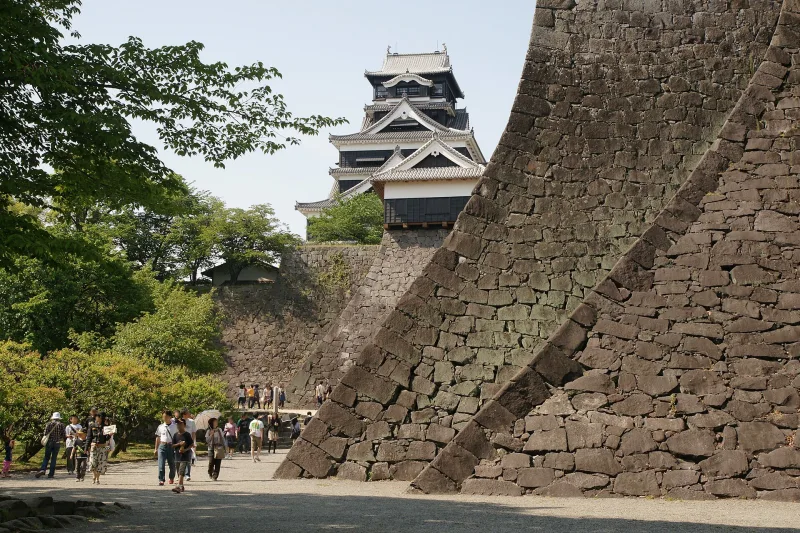
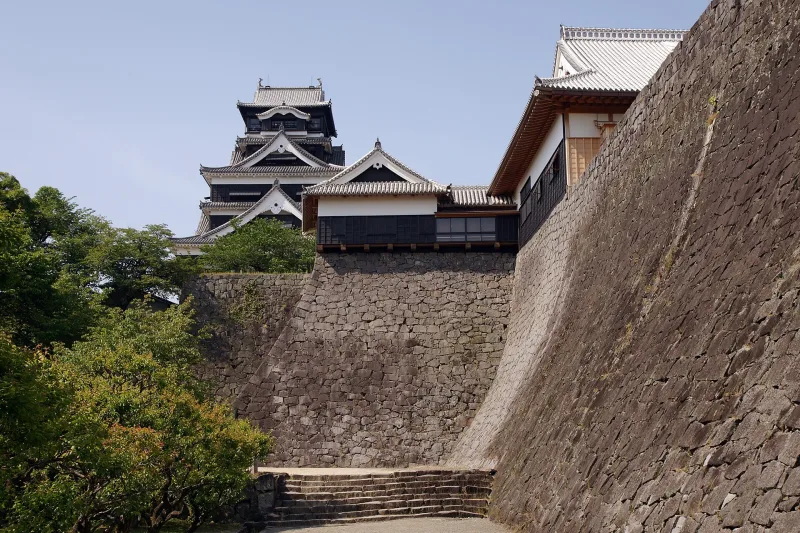
Kato Kiyomasa's castle and its musha-gaeshi walls
Kumamoto Castle was built by Kato Kiyomasa, a warlord of the late Sengoku (Warring States) period and early Edo period, and it is counted among Japan's three great castles.
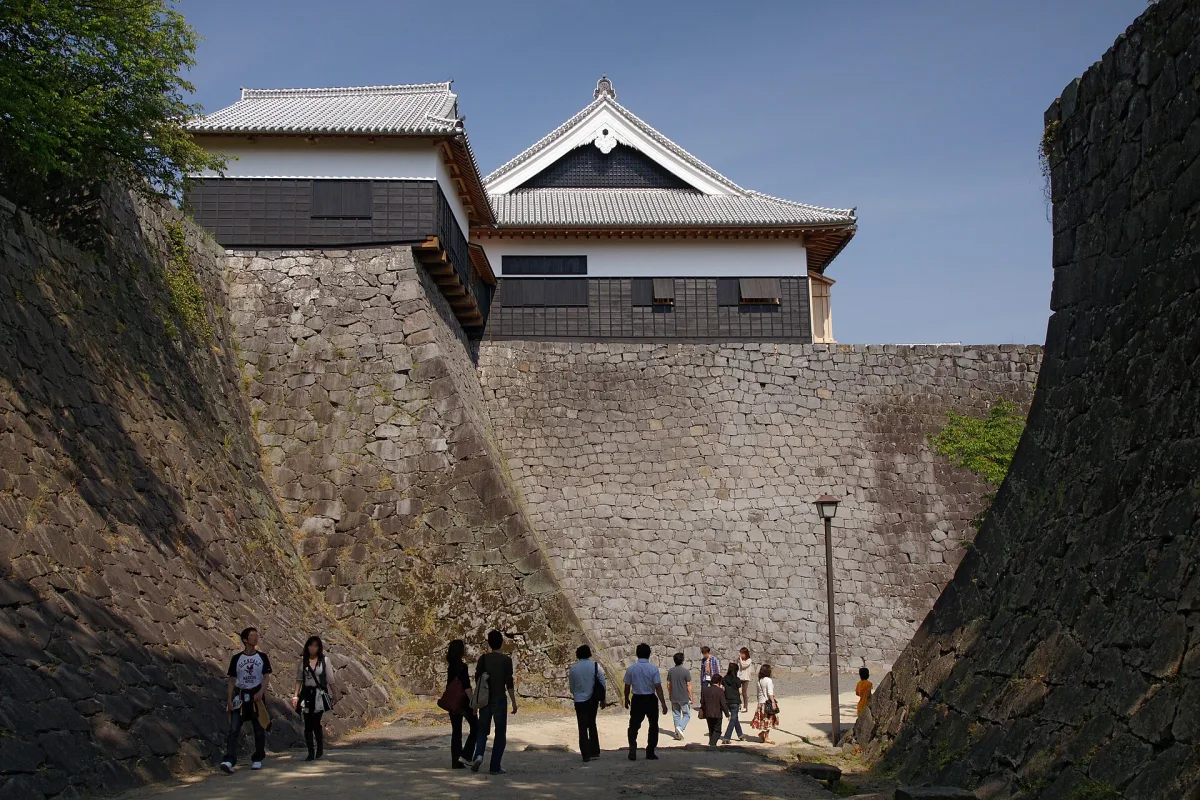
It is best known for its stone walls, called musha-gaeshi ("warrior repellers"). They rise gently at the bottom but curve back more and more steeply towards the top, so that attacking samurai could not climb them.
Fire, rebuilding and earthquakes
During the Satsuma Rebellion of 1877 (a civil war between the Meiji government and former samurai led by Saigo Takamori), Kumamoto Castle was besieged for 52 days. In the middle of it, the large and small keeps and other buildings burned down. The present keep was rebuilt in reinforced concrete in 1960.
In the 2016 Kumamoto Earthquakes, the keep, the yagura (turrets), gates and stone walls were badly damaged. Repairs to the keep were finished in 2021, and the inside reopened to visitors in June that year. Meanwhile the Uto Yagura, a precious building surviving from the Edo period, has been fully dismantled, with restoration due to be completed in fiscal 2032. Restoration of the castle as a whole is planned to continue until around 2052.
Seeing the restoration in progress
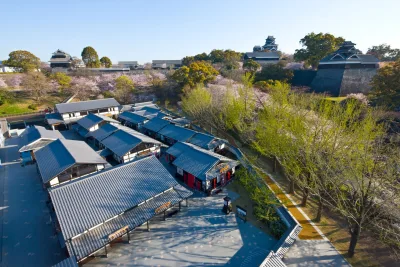
Inside the castle grounds there is a special viewing walkway for watching the restoration work. It is a temporary structure that will be removed when the work is finished, and it lets you see the repairs up close, such as the stone walls being rebuilt.
On 28 July 2026 an earthquake with a maximum seismic intensity of 7 on the Japanese scale struck Kumamoto Prefecture (the 2026 Kumamoto Earthquake), and Kumamoto Castle also suffered damage, including collapsed stone walls. According to the castle's official website, it was open as normal as of 18 September. However, the areas open to visitors may change depending on aftershocks and the results of safety checks, so always check the official website before you go.
Getting there
The nearest stop is Kumamotojo-Shiyakushomae on the Kumamoto City Tram. At the foot of the castle is Sakuranobaba Josaien, a cluster of restaurants and souvenir shops you can visit at the same time.
Check the official website for opening hours and admission fees.
Tips
- The entrance can get crowded, so it is worth buying your ticket online in advance. The official website also shows the current waiting time to get in.
- The castle grounds are very large, with plenty of slopes and steps, so wear comfortable shoes.
- There are no-entry zones around construction areas and stone walls. Follow the signs and the staff's directions.
- The Kumamoto Castle Festival is held in autumn. Check the dates on the official website.
Sources
- 【公式】熊本城
- 復旧状況 | 【公式】熊本城
- 令和8年熊本地震に伴う熊本城周辺施設の開園情報等について(9月18日時点)| 【公式】熊本城
- 熊本城宇土櫓の解体完了 2032年度復旧めざす | 熊本日日新聞
- 熊本城 - Wikipedia
- 熊本地震 (2026年) - Wikipedia
Updated 28 September 2026. Opening hours and prices change, so check the official site before you go.