Suizenji Jojuen Garden
水前寺成趣園
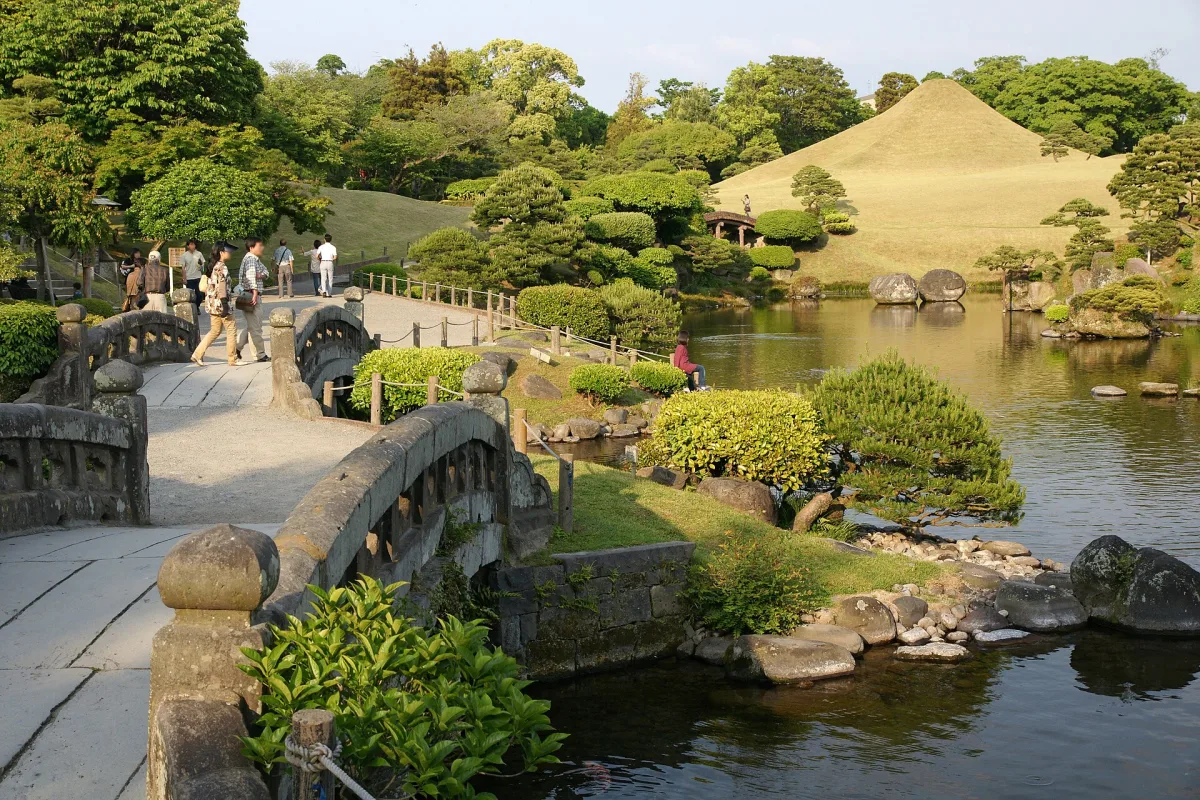
A stroll garden built by the Hosokawa lords of Kumamoto in the Edo period. Walk around a spring-fed pond past a small hill shaped like Mount Fuji.
A garden that began as a lord's teahouse
Suizenji Jojuen is a Japanese garden south-east of Kumamoto Castle, known locally as Suizenji Park. It began in 1632, when Hosokawa Tadatoshi, the first lord of the Kumamoto domain, took a liking to the spring water here while out falconry hunting and built an ochaya (a teahouse for resting) on the spot. It was named Suizenji Ochaya after a temple he built nearby.
Under the second and third lords, the garden was greatly expanded, and in 1671 a Momoyama-style stroll garden (a garden you walk around a pond, enjoying the changing views) was completed. The name Jojuen comes from Guiqulaici (Returning Home), a poem by the Chinese poet Tao Yuanming. The garden is designated a national Place of Scenic Beauty and Historic Site.
A spring-fed pond and a "little Mount Fuji"
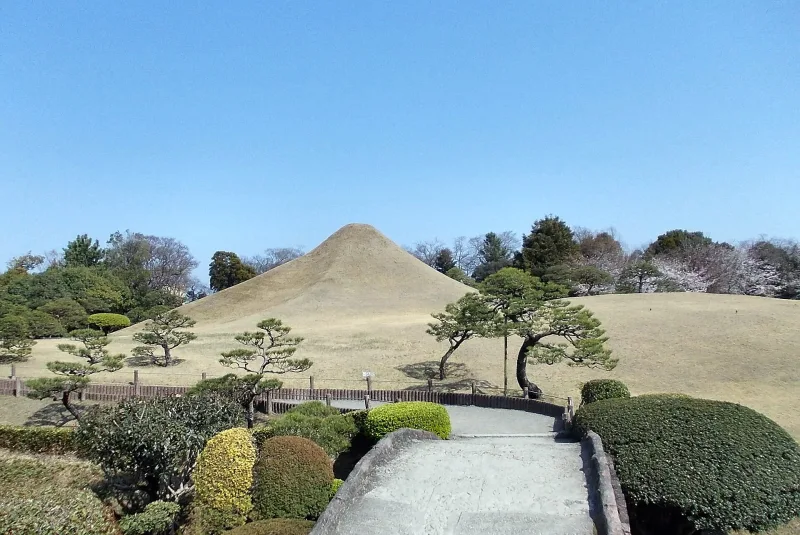
The pond is formed by water from Mount Aso that has flowed underground and wells up here. Around it is a tsukiyama (an artificial hill made of heaped earth) shaped like Mount Fuji, and the garden is said to represent scenes from the Fifty-three Stations of the Tokaido, the 53 post towns on the old highway linking Edo and Kyoto.
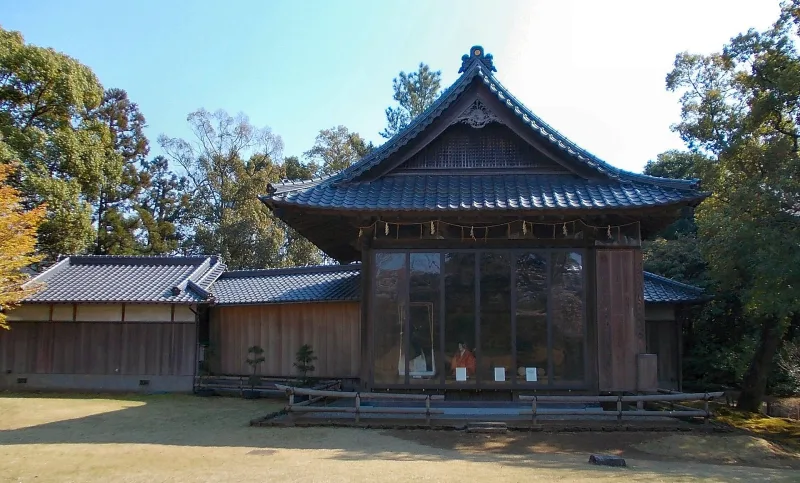
The garden also has a Noh theatre stage and the Kokin Denju no Ma, a building moved here from the Kyoto Imperial Palace in 1912. From around late March to early April, the cherry trees along the paths are at their best.
Izumi Shrine inside the garden
Inside the garden is Izumi Shrine, dedicated to the successive Hosokawa lords. It was founded in 1878, with the garden as its grounds. The garden is still part of the shrine grounds today, and seasonal festivals and offerings of traditional performing arts take place here.
At the grand autumn festival each year, performances such as traditional martial arts, kendo and yabusame (a ritual of shooting at targets from a galloping horse) are offered to the gods. In 2026 it is scheduled for 11 and 18 October.
Getting there and current status
It is about a 4-minute walk from the Suizenji Koen stop on the Kumamoto City Tram, or about 10 minutes on foot from Shin-Suizenji Station on the JR Hohi Line. There is no car park just for the garden, so public transport is the easy option.
After the earthquake of 28 July 2026 (the 2026 Kumamoto Earthquake), the garden closed temporarily the next day for safety checks, but the facilities were not damaged and it has been open as usual since 30 July. Since the 2016 Kumamoto Earthquake, the amount of spring water feeding the pond has fallen, and local people join in cleaning the pond in the hope that the springs will recover.
Tips
- The garden is designed as a loop around the pond, so take your time and enjoy how the view of the hill and pond changes as you walk.
- The admission fee was revised in April 2026. Check the official website for the latest prices and opening hours.
- Inns, cafés and wagashi (Japanese sweets) shops cluster around the garden, so you can explore the area together with it.
Sources
- 水前寺成趣園(公式)
- 歴史 | 水前寺成趣園
- 7月30日(木)より通常開園いたします | 水前寺成趣園
- 湧水復活大作戦 熊本地震10年 復興プロジェクト | 水前寺成趣園
- 水前寺成趣園(水前寺公園) | 【公式】熊本県観光サイト もっと、もーっと!くまもっと。
Updated 29 September 2026. Opening hours and prices change, so check the official site before you go.