Aso Shrine
阿蘇神社
A shrine over 2,000 years old that has revered Mount Aso's crater as a god. Its gate, toppled in the 2016 quake, took seven years to restore.
The chief shrine of Higo, bound up with the volcano
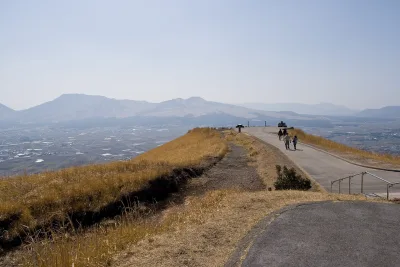
Aso Shrine stands in Ichinomiya-machi, Aso city, Kumamoto Prefecture, and is the head shrine of about 500 Aso shrines across Japan. According to the shrine's records, it was founded in 282 BC. It enshrines 12 gods: Takeiwatatsu-no-Mikoto, the god said to have opened up the Aso region, and members of his family.
The shrine has long been linked to a volcano faith that treats the crater of Mount Aso as a goshintai (an object in which a god dwells), and it was revered as the ichinomiya, the highest-ranking shrine of Higo Province (today's Kumamoto Prefecture). The post of chief priest, the highest rank of Shinto priest here, has been held by the Aso family for generations.
A gate and halls restored after the earthquake
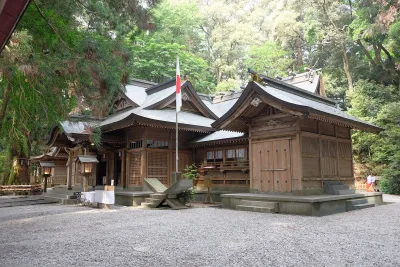
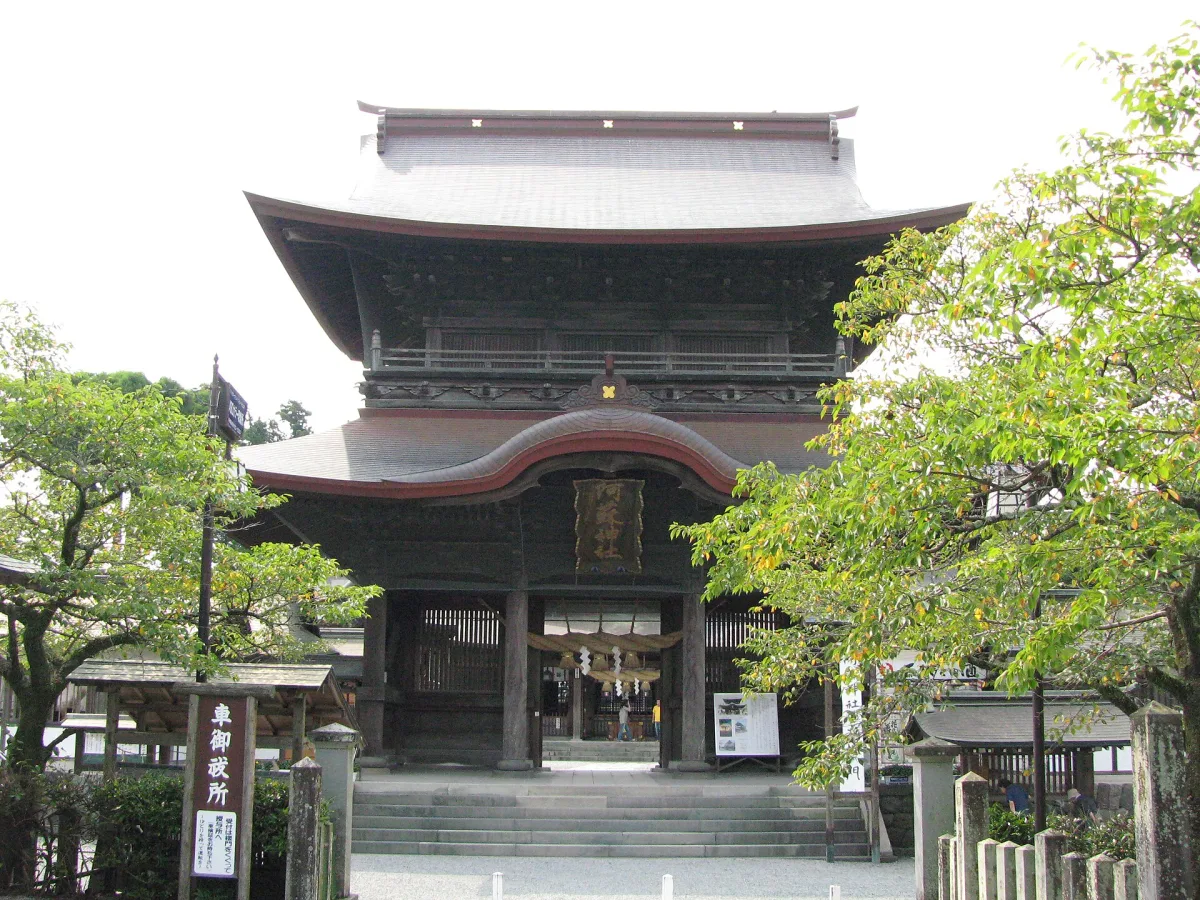
The present buildings were rebuilt between 1835 and 1850, at the end of the Edo period, with donations from the Kumamoto domain. Six structures, including the main hall and gates, are designated national Important Cultural Properties. The standout is the romon (a two-storey gate), about 18 metres tall, which is the largest double-roofed gate in Kyushu and is sometimes counted among the three great romon gates of Japan.
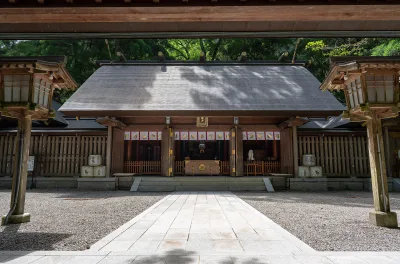
In the Kumamoto Earthquake of April 2016, nearly all the shrine buildings were badly damaged, and the romon and the haiden (the hall where visitors pray) collapsed. The fallen gate was taken apart and reassembled using about 70 per cent of its original timbers. Restoration was completed in December 2023, with improved earthquake resistance. The haiden was rebuilt using timber from Kumamoto Prefecture.
The side approach and the "mizuki" walk
The shrine's approach path does not lead straight towards the halls; instead it is a yoko-sando (side approach) running north to south, parallel to the buildings, which is rare anywhere in Japan. Along it is a monzenmachi, a shopping street in front of the shrine, lined with places to eat, sake shops and souvenir shops.
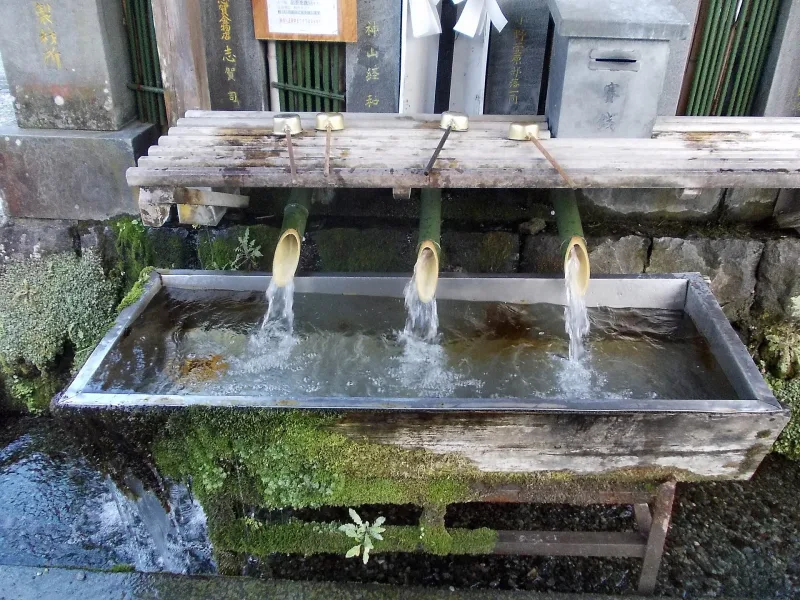
The area is blessed with plenty of good spring water, and along the shopping street there are 14 mizuki, drinking fountains made of wood or stone. Walking around the town looking for them, known as mizuki meguri, is popular. From early to late April, you can see the romon together with cherry blossom.
Rice-farming festivals and getting there
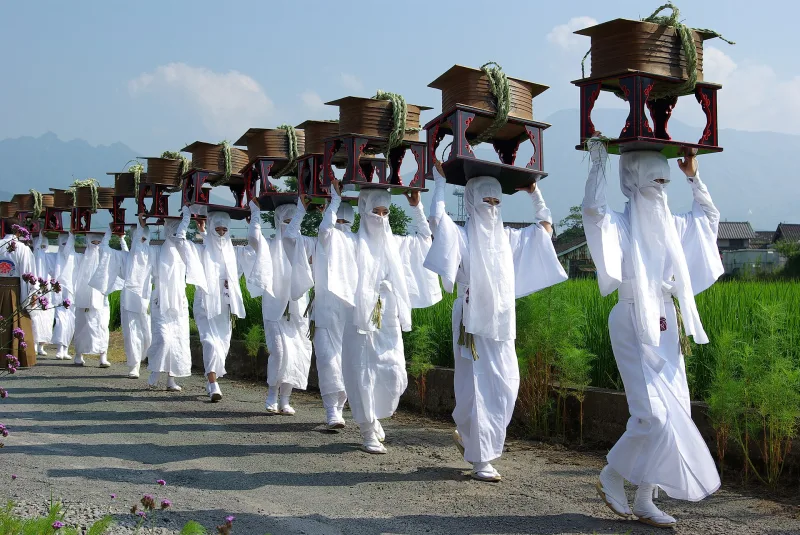
Throughout the year, Aso Shrine holds festivals marking the key stages of rice growing, which are designated a national Important Intangible Folk Cultural Property. They include the Tatsukuri Matsuri in spring, the Onda Matsuri on 28 July, and the Tanomi Matsuri on 25 September, which gives thanks for the harvest.
It is about a 15-minute walk from Miyaji Station on the JR Hohi Line, or take a bus to the Aso Jinja-mae stop. By car, it is about 60 minutes from the Kumamoto Interchange on the Kyushu Expressway via National Route 57.
Tips
- Most of the mizuki fountains face Nakamachi-dori, near the shrine's approach. Stroll the shrine town after your visit and you can take in several of them.
- On festival days and during big events, the shrine car park may be unavailable at certain times. If you are driving, check the notices on the official website (on 11 October 2026 there will be traffic restrictions for a cycle race).
- Individuals can receive an oharai (a purification and prayer performed by a Shinto priest) without booking. Goshuin (shrine seals) are handed out on separate sheets for you to stick into your book.
Sources
- 阿蘇神社(公式)
- 阿蘇神社について | 阿蘇神社
- 復旧の歩み | 阿蘇神社
- お祭り | 阿蘇神社
- 阿蘇神社参道 | 【公式】熊本県観光サイト もっと、もーっと!くまもっと。
- 水基めぐり・門前町散策 | 【公式】熊本県観光サイト
Updated 29 September 2026. Opening hours and prices change, so check the official site before you go.