Shiogama Shrine
鹽竈神社
One of northern Japan's great old shrines, dedicated to a god said to have taught people to make salt. Climb 202 steps to vermilion Edo-period halls.
The top shrine of Mutsu and its god of salt
Shiogama Shrine stands on Ichimoriyama hill in Shiogama, Miyagi Prefecture. Offerings to the shrine are already recorded in a document from 820, and in the Middle Ages it was revered as the ichinomiya of Mutsu Province, meaning the highest-ranking shrine in Mutsu, an old province in the Tohoku region of northern Japan. In the Edo period it was generously supported by the Date family, the lords of the Sendai domain.
The main deity, Shiotsuchi-oji-no-kami, is a guide who shows the way in Japanese mythology. Legend says he stayed in this area and taught people how to make salt, and the place name Shiogama (roughly "salt kettle") is tied to this belief. Today people come to pray for all kinds of things: safety at sea, a big catch, a safe childbirth and road safety among them.
The grounds also hold Shiwahiko Shrine, which was moved here from another site in the Meiji era (1868-1912), so the official name lists the two together: Shiwahiko Shrine and Shiogama Shrine.
202 stone steps and Edo-period halls
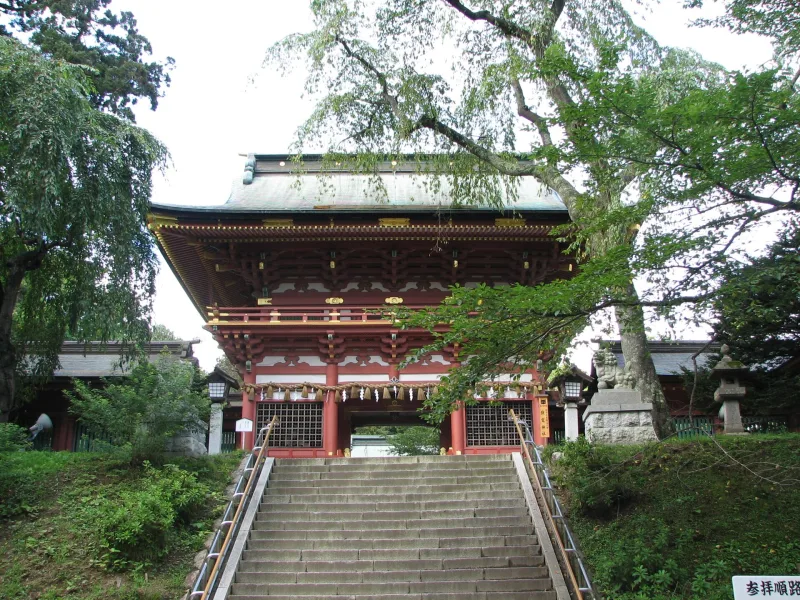
The main approach, Omotezaka, is a steep flight of 202 stone steps. Also called Otokozaka (the "men's slope"), it is one of the classic sights of Shiogama. There is also a gentler Onnazaka (the "women's slope"), with the museum partway along it.
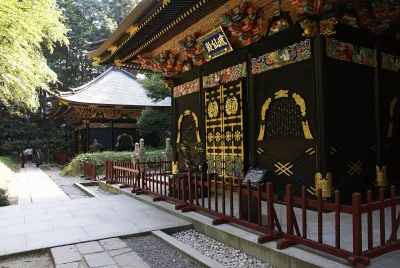
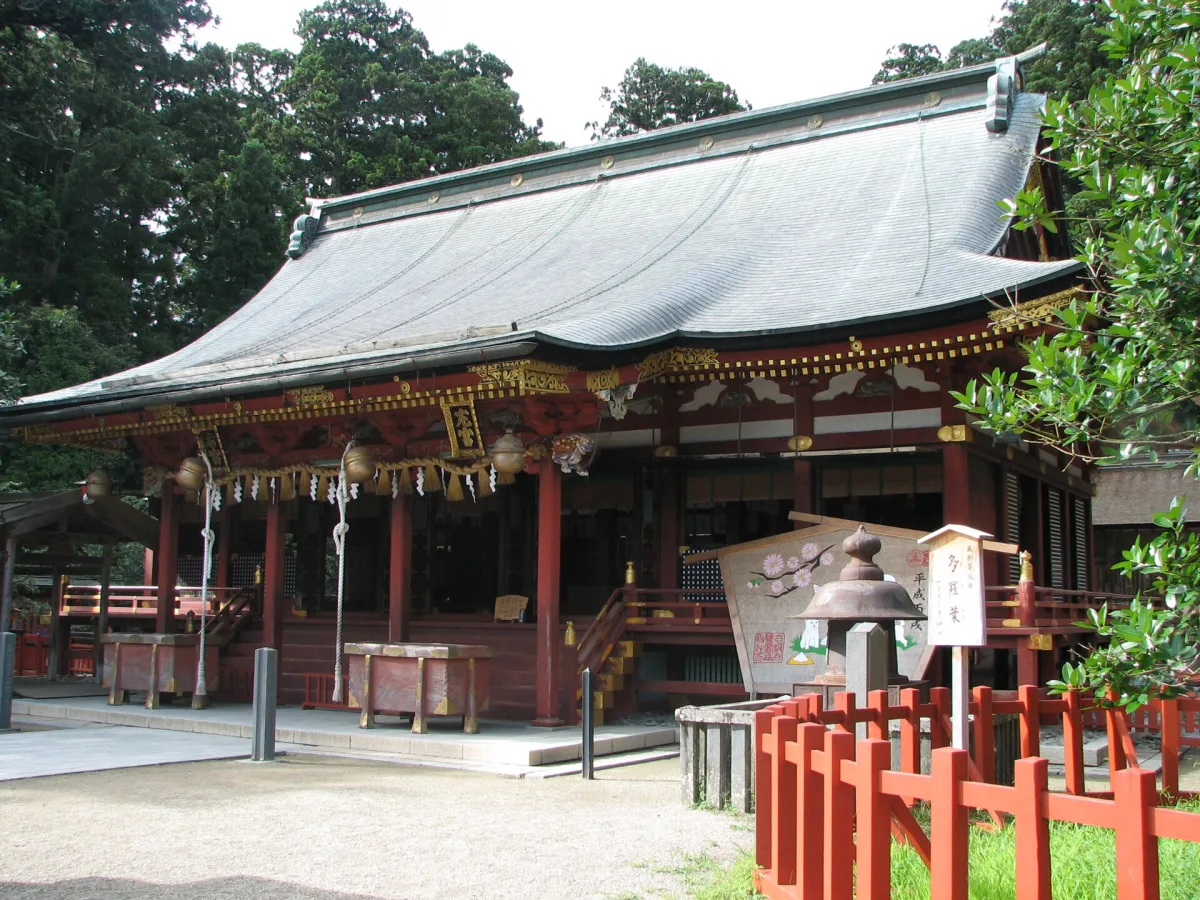
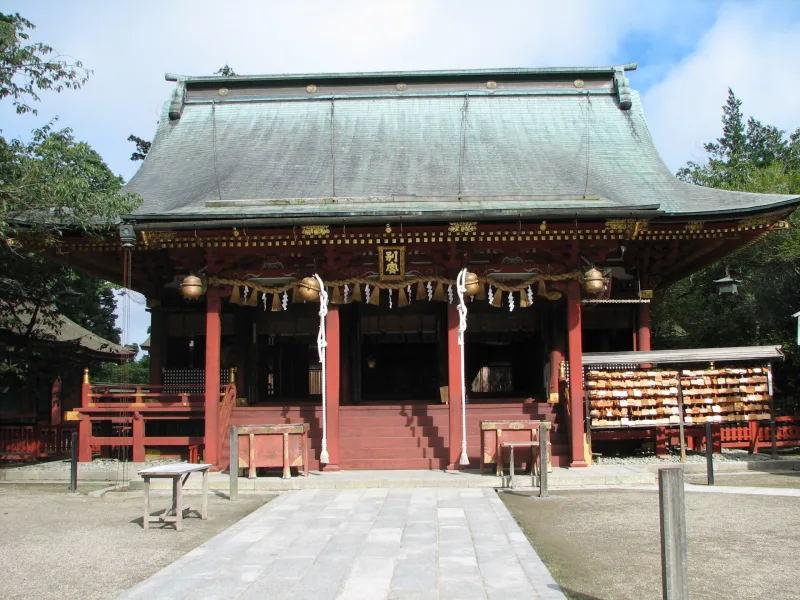
The present halls were begun by Date Tsunamura, lord of the Sendai domain, and completed in 1704 under his successor Yoshimura. The main hall, the worship hall, the stone torii (the gate that marks a shrine) and other structures are designated Important Cultural Properties of Japan. Within the shrine there are the Left and Right Shrines plus a separate Betsugu (detached shrine) dedicated to Shiotsuchi-oji-no-kami, which faces west, towards Matsushima Bay.
In spring the Shiogama-zakura, a cherry tree designated a national Natural Monument, blooms in the grounds. The Shiogama Shrine Museum, also inside the grounds, displays swords, old documents and other treasures handed down at the shrine.
Festivals and getting there
At the Hote Festival on 10 March, the Flower Festival on the fourth Sunday of April and the Port Festival on Marine Day, a mikoshi (portable shrine) weighing about a tonne is carried down the 202 steps. The Port Festival in July is a big event that also includes a procession of the mikoshi out on the water.
The nearest station is Hon-Shiogama on the JR Senseki Line: about 15 minutes on foot to the stone torii at the foot of Omotezaka, or about 7 minutes to the torii of the East Approach at the back. You can get there from Sendai Station on the Senseki Line. Visiting the shrine itself is free; check the official website for the museum's opening hours and fees.
Tips
- The stone steps of Omotezaka are very steep. If you are not confident on your feet, take the gentler Onnazaka or the East Approach instead.
- Don't miss the Betsugu, the separate shrine to Shiotsuchi-oji-no-kami. It stands apart from the Left and Right Shrines.
- The whole shrine is non-smoking, and flying drones is prohibited.
Sources
Updated 28 September 2026. Opening hours and prices change, so check the official site before you go.