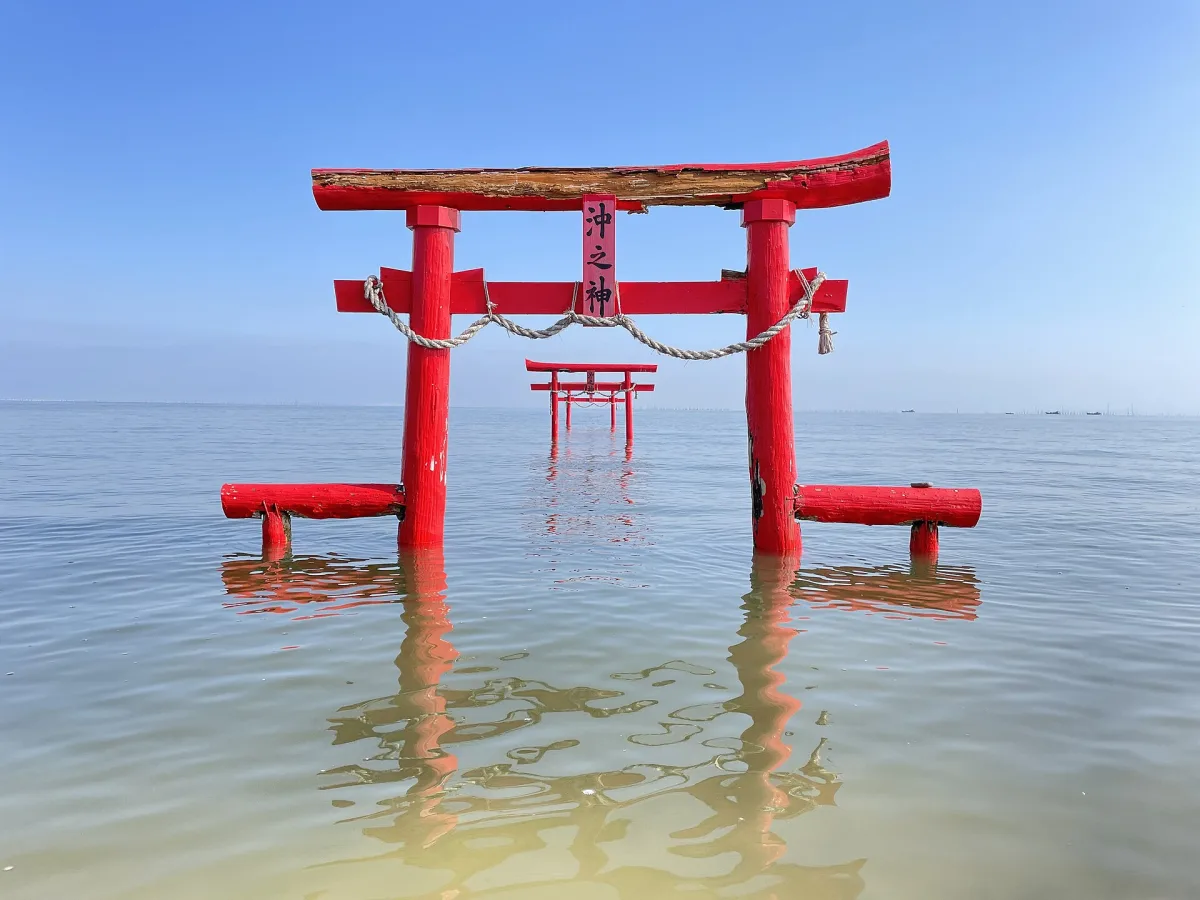
Ouo Shrine Sea Torii
大魚神社 海中鳥居
A line of vermilion torii gates marches out into the Ariake Sea at Ouo Shrine. At high tide they float on the water; at low tide you can walk beneath them.
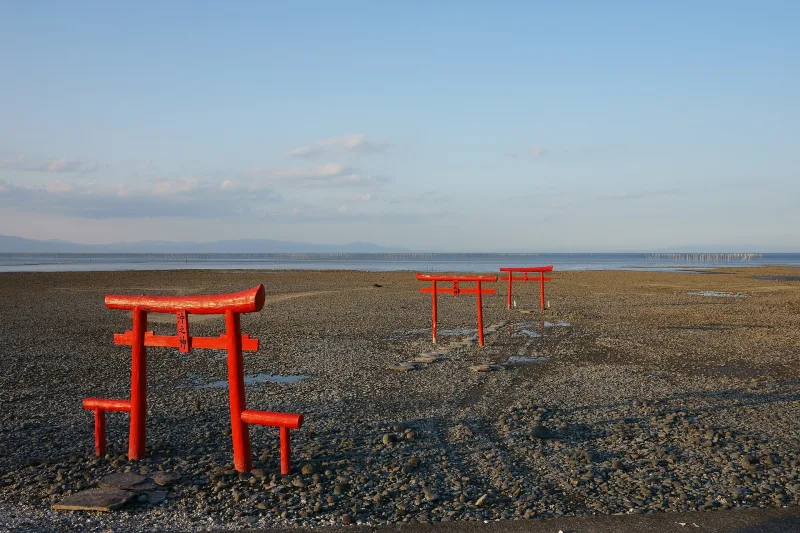
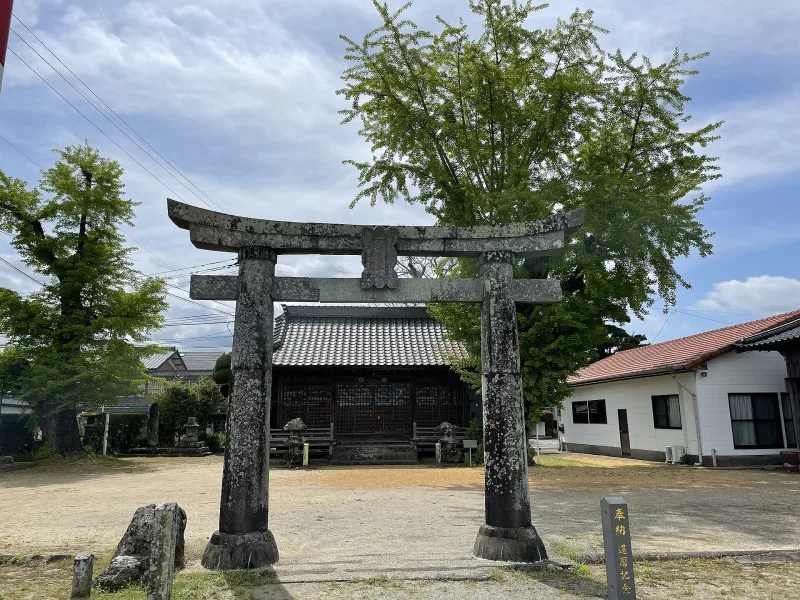
Vermilion gates in the Ariake Sea
The sea torii of Ouo Shrine stand in the shallows of the Ariake Sea at Tara, a town in Saga Prefecture. The Ariake Sea is said to have one of the largest tidal ranges in Japan, with the difference between high and low tide reaching about 6 metres at its greatest.
A torii is the gate that marks the entrance to a Shinto shrine. Here, several vermilion torii stand in a single line running from the shore out to sea. Saga Prefecture describes it not as a single gate standing in the water, as at Itsukushima Shrine in Hiroshima, but as a row of gates leading out into the sea, like an approach path to the god of the sea. At high tide they seem to float on the water, and at low tide you can walk right under them.
The wicked magistrate and the great fish
Locals tell this story. Long ago there was a cruel daikan (an official who governed the land on behalf of the feudal lord) who made the villagers' lives miserable. At their wits' end, the villagers invited him to a drinking party on Okinoshima island, then left him there once he was drunk. As the tide came in and the island began to sink beneath the water, the magistrate prayed to the gods. A huge fish appeared, and he rode home safely on its back.
The shrine is said to have begun when people enshrined this fish as the god Ouo Daimyojin, and torii were built in the sea between the shrine and Okinoshima. According to Saga Prefecture, the torii were first built in 1693 (the sixth year of the Genroku era), and the custom of rebuilding the wooden gates every 30 years still continues. Most recently, the ageing torii were rebuilt in February 2024.
In 2017 the sea torii were recognised as a "Saga Prefecture Heritage to Pass On to the 22nd Century", and in 2021 they were chosen as one of the "100 Best Moon-Viewing Spots in Japan".
When to go and how to get there
The same spot looks completely different depending on the height of the tide, the morning, evening or night light, and the moonlight. If you want to walk under the gates, go at low tide; if you want to see them floating on the sea, go at high tide. Check a tide table before you set out.
It is about a 10-minute walk from JR Tara Station, or about 5 minutes by car from the Michi-no-Eki Tara roadside station. Every August, local people hold the Senno Toro Matsuri, a lantern festival.
Tips
- The area around the torii is a workplace for local fishermen. In April, and from September to around the end of October, fishing work takes place here, so please keep out of their way (you can still look around and use the car park as usual).
- Next to the torii is a "sea road" that only appears at low tide. It is a working path used for landing the catch, and it is especially busy during the winter nori (seaweed) farming season. Remember that this is where the fishermen earn their living.
Sources
- 海中鳥居・大魚神社 | 太良町ホームページ
- 大魚神社の海中鳥居・海中道路 | 太良町観光協会
- 沖之神への参道 大魚神社と海中鳥居 | 佐賀県遺産データベース
- 大魚神社の海中鳥居・海中道路 | 【公式】佐賀県観光サイト あそぼーさが
Updated 29 September 2026. Opening hours and prices change, so check the official site before you go.