Jigokudani Monkey Park
地獄谷野猿公苑
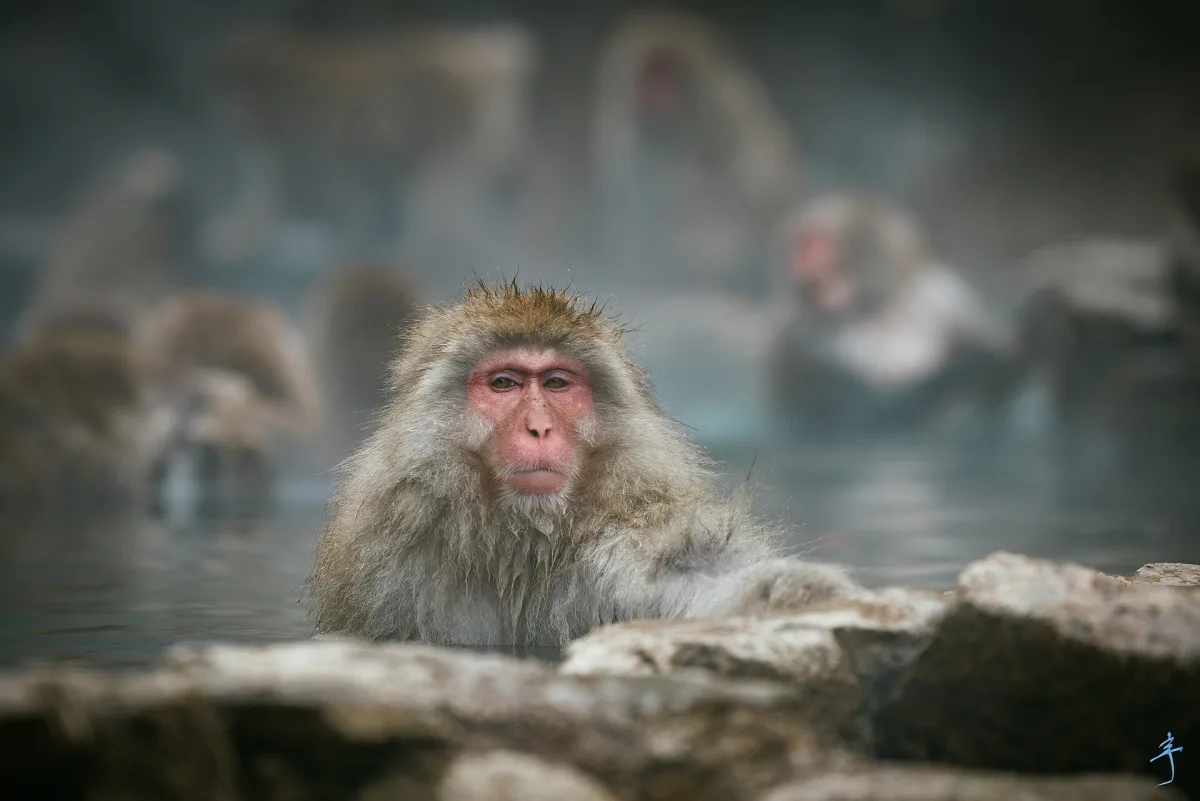
In a snowy mountain valley, wild Japanese macaques bathe in a hot spring, a rare sight. Known abroad as the "snow monkeys", they draw visitors worldwide.
Monkeys that take hot baths
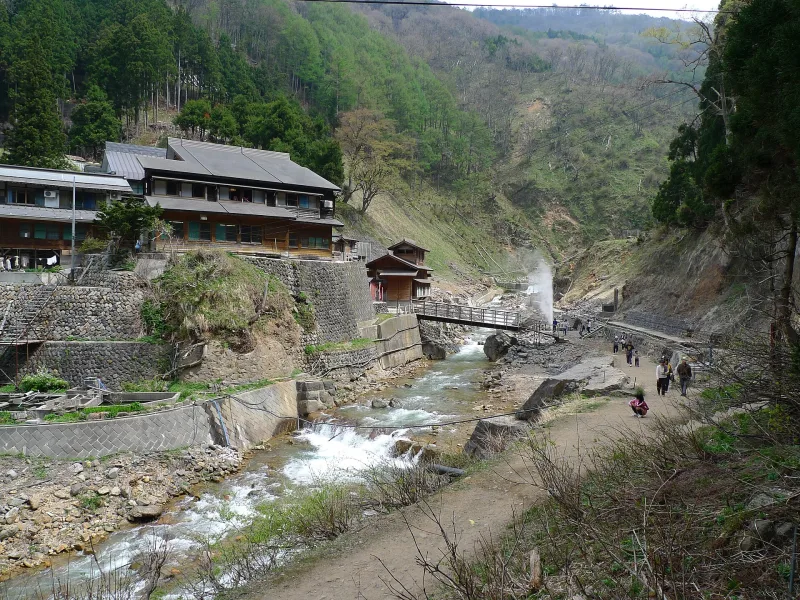
Jigokudani Monkey Park lies in a valley about 850 m above sea level at the foot of Shiga Kogen, in Yamanouchi Town, Nagano Prefecture. It opened in 1964 as a place to watch wild Japanese macaques (the monkeys native to Japan) in their natural surroundings. The valley is home to Jigokudani Onsen, where you can also see a geyser shooting up water close to 100°C.
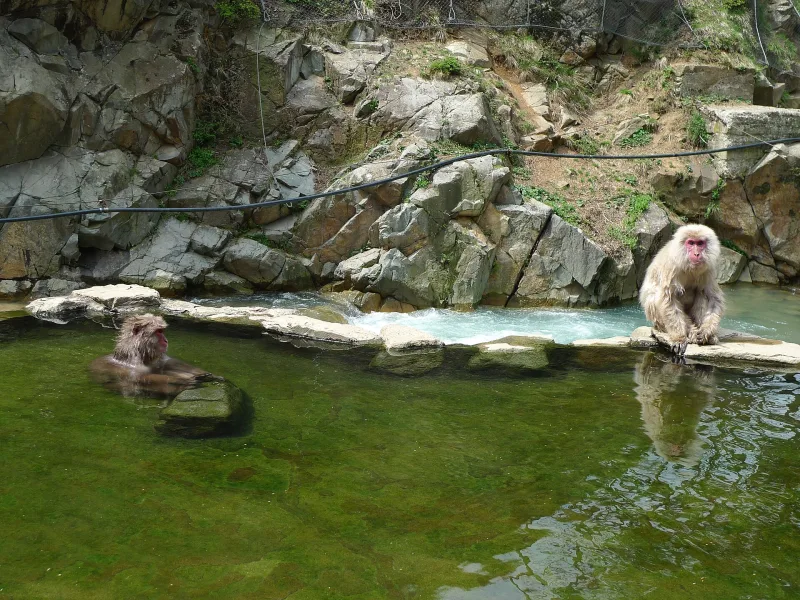
It is famous for its monkeys bathing in a hot spring. It started around 1963, when a young monkey got into the outdoor bath of a nearby ryokan (traditional inn), and other monkeys began to copy it. Later, for hygiene reasons, a hot spring just for the monkeys was built.
The monkeys bathe mainly in the cold months, from around December to March. In warmer seasons they may not go into the water at all.
How the "snow monkeys" became world famous
The bathing monkeys became known worldwide after appearing on the cover of the American photo magazine LIFE in the 1970s. After foreign media covered them during the 1998 Nagano Olympics, the number of overseas visitors grew even more.
The area is covered in snow for about a third of the year. The winter scene of monkeys soaking in the water amid the snow is especially well known.
How to behave around wild monkeys
These are not caged animals but wild monkeys. When and how many come down from the mountains varies by season and by day, and the official website posts forecasts of their visits and a live camera feed.
Feeding or touching the monkeys is forbidden. These rules exist to protect the monkeys' natural behaviour, so please always follow them.
Getting there: the last stretch is on foot
From Nagano Station, take a Nagano Electric Railway limited express to Yudanaka Station (about 40 minutes), then a bus for about 15 minutes to the Snow Monkey Park stop. You can also go direct from Nagano Station on an express bus towards Shiga Kogen. From the bus stop it is a further walk of about 35 minutes to the park.
From Kanbayashi Onsen to the park is a mountain path of about 2 km called the yuhodo (walking trail), about 30 minutes on foot. It is mostly level, but there are slopes, steps and bumpy unpaved stretches, and wheelchairs and pushchairs cannot be used. If you come by car, the usual option is the free car park at Kanbayashi Onsen. The narrow forest road from the Shibu Onsen side is closed in winter.
Opening hours and prices can change: for 2026, a price revision and online ticket sales have been announced. Check the official website before you go.
Tips
- In winter the mountain path gets slippery with packed snow and ice. Wear boots, ideally with slip-on traction devices, and come prepared for the cold with gloves and a hat.
- The round trip to the park is about an hour on foot. Work back from your return bus time when deciding when to set off.
- The number of monkeys and when they turn up differ from day to day. Checking the live camera on the official website before you go is reassuring.
Sources
Updated 29 September 2026. Opening hours and prices change, so check the official site before you go.

_2.jpg)
_1.jpg)