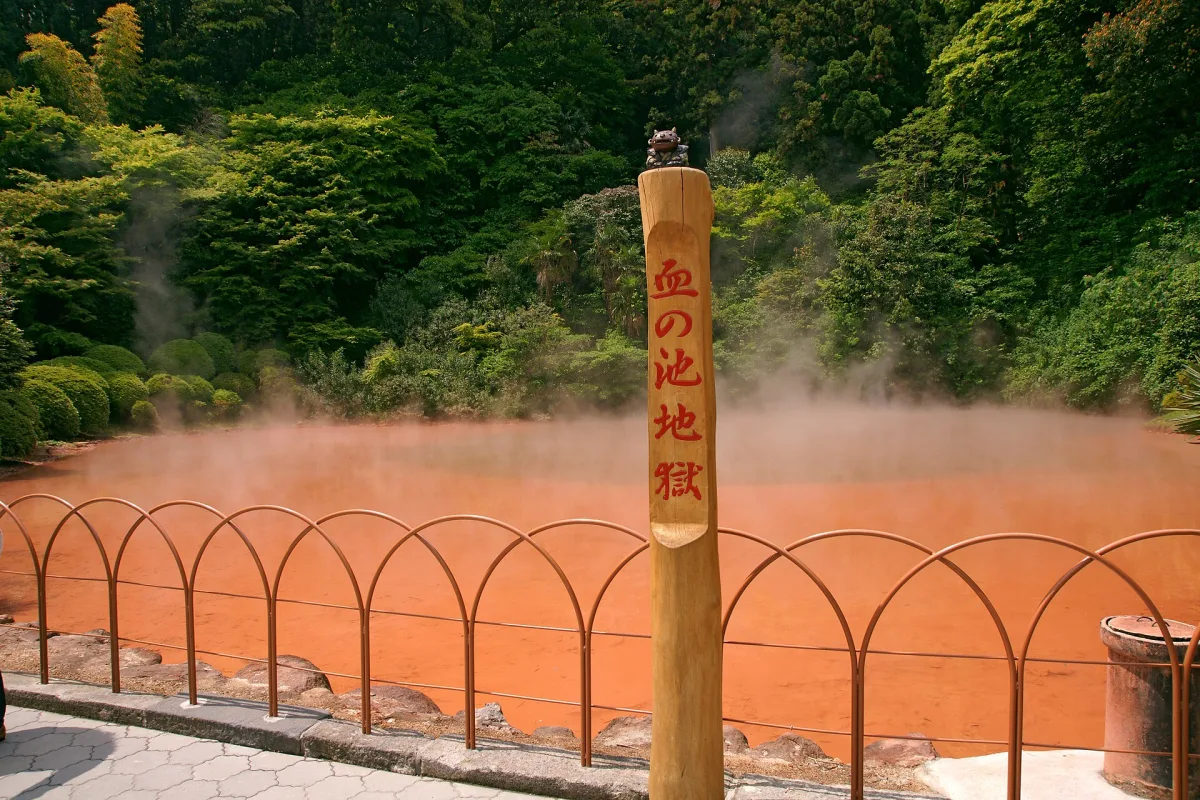
Chinoike Jigoku (Blood Pond Hell)
血の池地獄
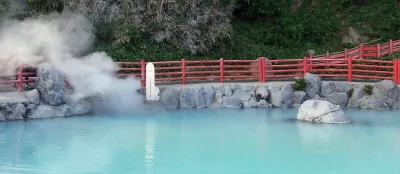
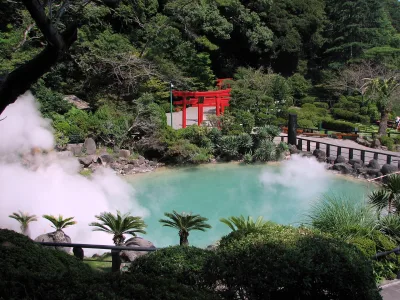
Steaming red hot mud: the most striking colour on Beppu's Hell Tour, and Japan's oldest natural "hell", recorded over 1,300 years ago.
What are Beppu's "hells"?
In Beppu, Oita Prefecture, places where steam, hot mud and boiling water burst out of the ground are called jigoku, meaning "hells". Here in the Kannawa and Kamegawa districts, steam and the like have been erupting for over a thousand years, and it is said the name came about because the land was too dangerous for people to approach.
The Beppu Jigoku Meguri (Hell Tour) takes you around seven hells, each with its own character. The hells are not for bathing: they are places to look at hot springs close to 100°C. Chinoike Jigoku is one of them, and in 2009 it was designated a national Place of Scenic Beauty as one of the "Hells of Beppu", along with Umi Jigoku, Tatsumaki Jigoku and Shiraike Jigoku.
A pond of red-hot mud
Chinoike Jigoku appears as the "red hot spring" (akayu) in the Bungo no Kuni Fudoki, a regional record compiled in the Nara period, and it is regarded as Japan's oldest natural hell.
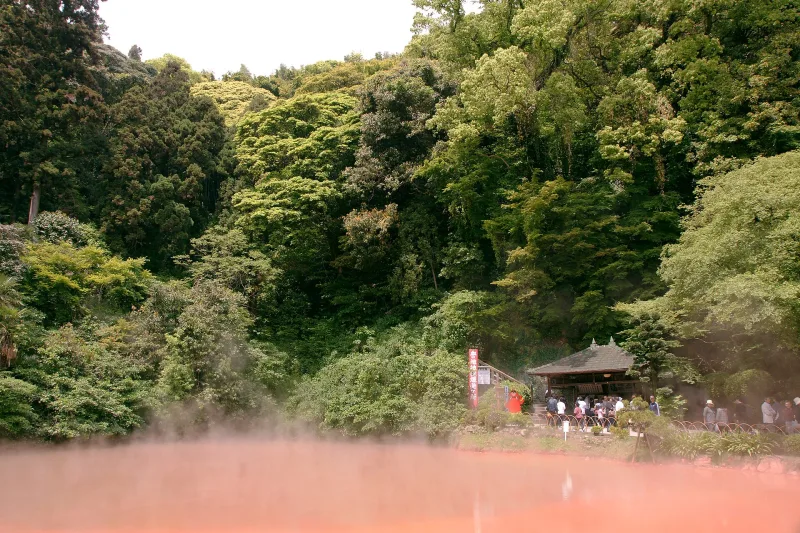
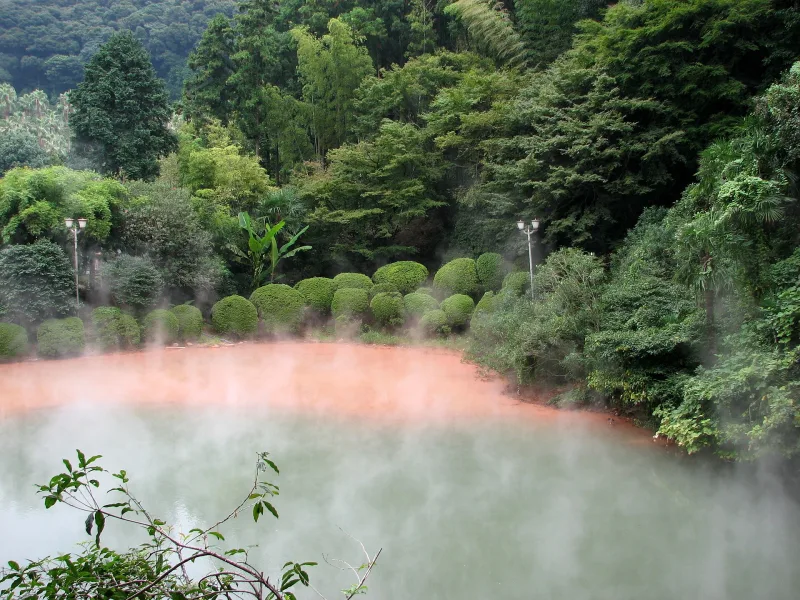
Deep underground, under high heat and pressure, natural chemical reactions produce red hot mud containing iron oxide, magnesium oxide and other substances, which bubbles up and settles, turning the whole pond red. Even the rising steam looks red. The pond is said to cover about 1,300 square metres and to be about 30 metres deep, but because of the mud, no one knows how deep its deepest point really is.
Footbath and famous souvenirs
Visitors can use the ashiyu (footbath) for free. The red mud has long been used as a remedy for skin complaints and to dye cloth and the pillars of houses. Chinoike Ointment, made from the clay here, is still sold today, only at Chinoike Jigoku.
The shop sells specialities from Oita and Beppu as well as original souvenirs, and at the restaurant next door you can try toriten (chicken tempura), an Oita speciality, and jigoku-mushi, food cooked in hot spring steam. You can also bring your dog in with you.
Getting there and getting around
The seven hells are split between two areas. Five of them, including Umi Jigoku, are in the Kannawa area and can be visited on foot, but Chinoike Jigoku and Tatsumaki Jigoku are on the Kamegawa side, about 3 kilometres away. Travelling between the two by car or bus is recommended.
The nearest station is JR Kamegawa; take Kamenoi Bus route 26 bound for Kannawa to the Chinoike Jigoku-mae stop, which takes about 7 minutes. The same route also runs from JR Beppu Station. By car, it is about 5 minutes from the Beppu Interchange on the Higashi-Kyushu Expressway, and each hell has a free car park. There is also a combined ticket covering all seven hells.
Tips
- Tatsumaki Jigoku, just nearby, is a geyser that shoots boiling water into the air at regular intervals. Visiting it together with Chinoike Jigoku saves time.
- According to the official website, visiting all seven hells takes around two hours.
- The recommended way to eat Chinoike Purin, a pudding topped with red jelly that evokes the pond, is while soaking your feet in the footbath.
Sources
- 別府血の池地獄(公式)
- 血の池地獄 | 別府地獄めぐり公式サイト(別府地獄組合)
- 別府地獄めぐり公式サイト(別府地獄組合)
- アクセス | 別府地獄めぐり公式サイト
- 国指定名勝 | 別府地獄めぐり公式サイト
- 血の池地獄 | 大分県の観光情報公式サイト
Updated 29 September 2026. Opening hours and prices change, so check the official site before you go.