Usa Jingu Shrine
宇佐神宮
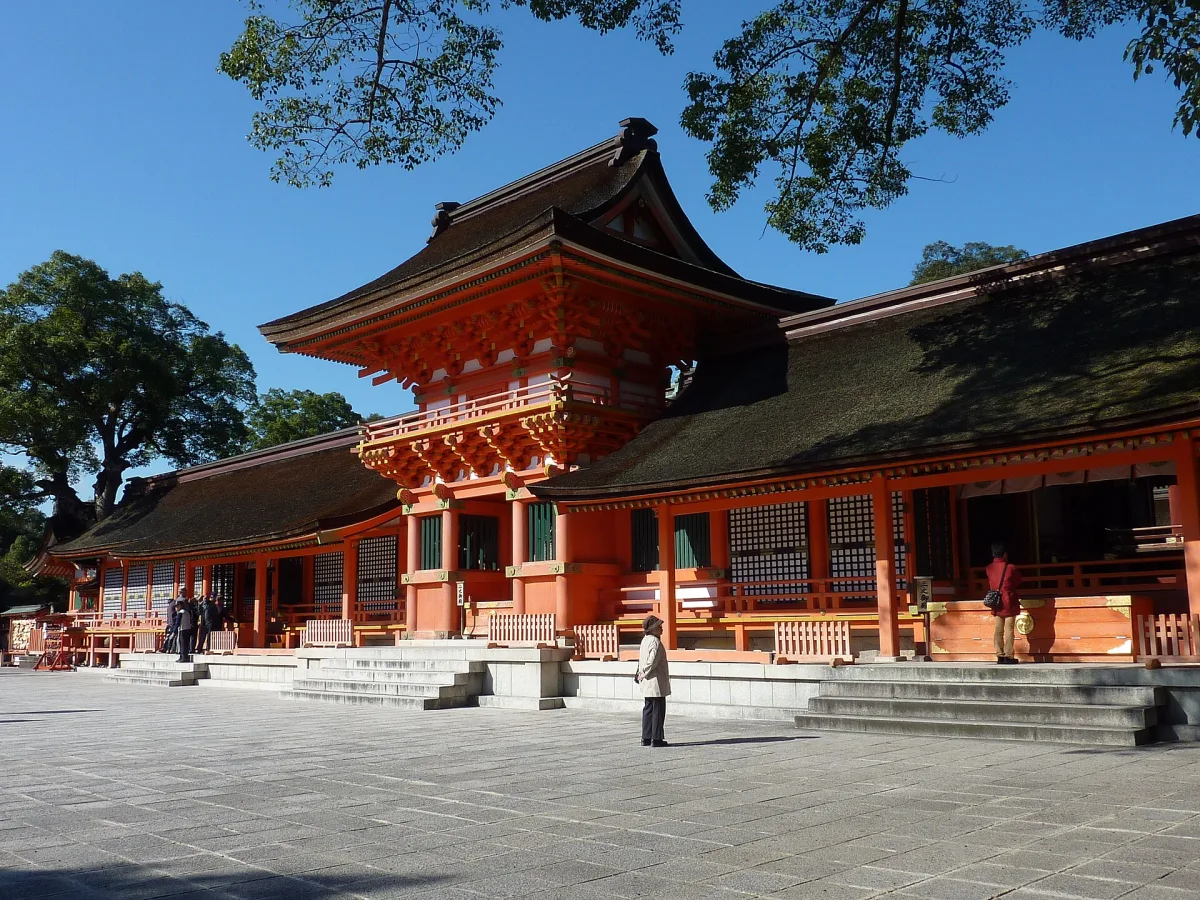
Head shrine of Japan's 40,000-plus Hachiman shrines. Vermilion halls stand in deep forest, and you pray with a clapping ritual found only here: four claps.
Home of Hachiman, Japan's most common shrine
Japan has about 110,000 shrines, and the most numerous are those dedicated to Hachiman, with more than 40,600 of them. Usa Jingu Shrine, in Usa city, Oita Prefecture, is the sohongu (the original head shrine) of every one of those Hachiman shrines.
The god enshrined here, Hachiman Okami, is said to be the spirit of the ancient Emperor Ojin, and according to tradition first appeared in Usa in 571. Usa Jingu began when a shrine was built on its present site in 725, and in 2025 it marked 1,300 years since the god was enshrined here. The imperial family has revered it as the "second sobyo" (a place where the imperial ancestors are worshipped), second only to Ise Jingu, and it is one of 16 chokusaisha nationwide: shrines to which the emperor sends an envoy.
Where gods and Buddhas met
Usa is also said to be where shinbutsu shugo began: the belief that treats Shinto gods and Buddhas as one. In 725 a temple called Miroku-ji was built nearby, and the shrine and temple stood side by side until the Meiji era.
The shrine also helped with the making of the Great Buddha at Todai-ji in Nara. When the Buddha was completed in 749, the god Hachiman travelled to Nara in a purple palanquin, and this is said to be the origin of the mikoshi (portable shrines) carried in Japanese festivals. By the 12th century the shrine was so powerful that it held more than a third of the shoen (private estates of powerful families) in Kyushu.
The National Treasure main hall and "two bows, four claps, one bow"
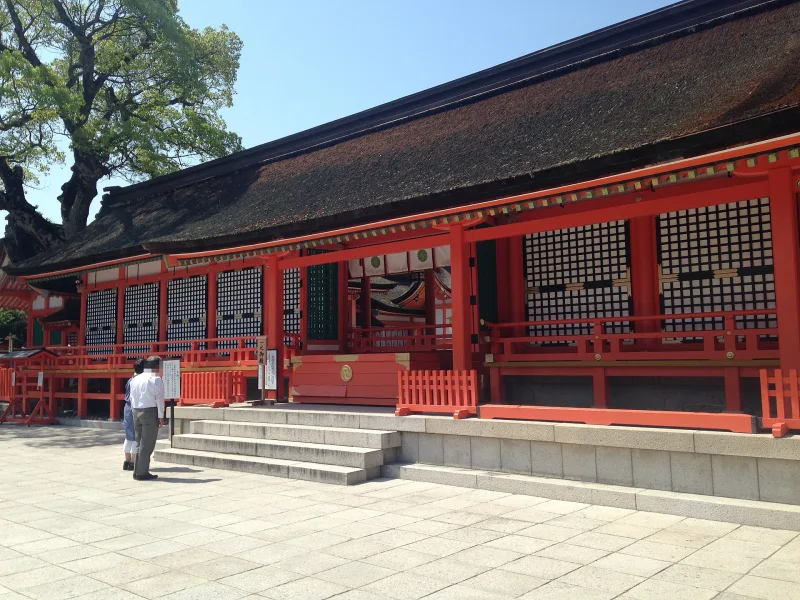
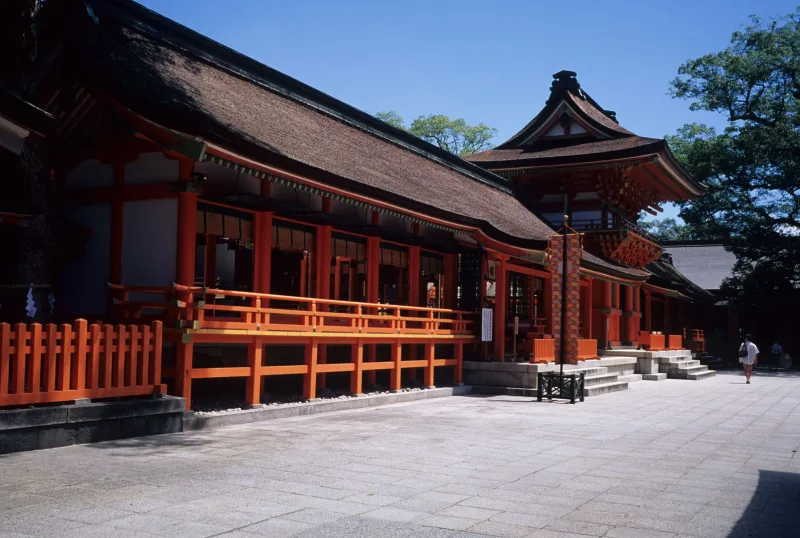
The grounds are vast, at about 500,000 square metres, and you walk to the halls through forest of trees such as ichiigashi oak and past lotus ponds where pale pink flowers bloom. The main hall is a National Treasure: inside the Minami Churomon gate stand three sanctuaries side by side, the Ichi-no-Goden, Ni-no-Goden and San-no-Goden, which enshrine Hachiman Okami (Emperor Ojin), Hime Okami and Empress Jingu.
At most shrines, the way to pray is "two bows, two claps, one bow" (bow twice, clap twice, bow once), but at Usa Jingu the long-standing custom is "two bows, four claps, one bow", with two extra claps.
Getting there
From JR Usa Station, take a bus heading for Yokkaichi and get off at the Usa Hachiman stop. A taxi from JR Usa Station takes about 15 minutes. From Oita Airport, the limousine bus for Nakatsu, Usa and Bungo-Takada takes you to Usa Hachiman.
The Oita Prefectural Museum of History and the Usa City Peace Museum are both nearby (about 10 minutes by car each).
Tips
- The shrine is accessible by wheelchair. From the main approach, follow the slope beyond the temizuya (purification fountain) to the Nandaimon gate, and take the monorail beside it up to the Upper Shrine, where the main hall stands. Wheelchairs can be borrowed at the shrine office.
- There is a treasure museum in the grounds, and for autumn 2026 it is advertising a special exhibition, the Usa Jingu Famous Swords Exhibition. Check the official website for the dates.
- The festivals where mikoshi come out are the Gojinkosai (Nagoshi Matsuri) in summer and the Chushusai (Hojoe) in autumn. Hojoe is a ritual that comes from the Buddhist teaching against taking life. Check the official website for dates.
Sources
Updated 29 September 2026. Opening hours and prices change, so check the official site before you go.