Kawagoe Hikawa Shrine
川越氷川神社
Kawagoe's guardian shrine of about 1,500 years, known for matchmaking, with one of Japan's largest wooden torii and fortunes shaped like sea bream.
A matchmaking shrine to a divine couple and their family
Kawagoe Hikawa Shrine is an old shrine said to have been founded in the 6th century, in the reign of Emperor Kinmei. After Kawagoe Castle was built in the Muromachi period it was regarded as the castle's guardian, and in the Edo period, as the sochinju (the main shrine protecting a whole area) of the Kawagoe domain, it was treasured by the castle's successive lords. Locals call it Ohikawa-sama.
Five deities are enshrined here: the main deity Susanoo-no-Mikoto and his wife Kushiinadahime-no-Mikoto, Onamuchi-no-Mikoto, said to be their child (also known as the god of matchmaking at Izumo Taisha), and Kushiinadahime-no-Mikoto's two parents. Because a married couple and their family are enshrined together, people come here to pray for en-musubi (bringing about good encounters and ties between people). On auspicious days (days considered lucky for weddings and similar occasions), you may spot a bride in shiromuku (the white kimono a bride wears for a Shinto wedding).
The great torii and a main hall named an Important Cultural Property in 2026
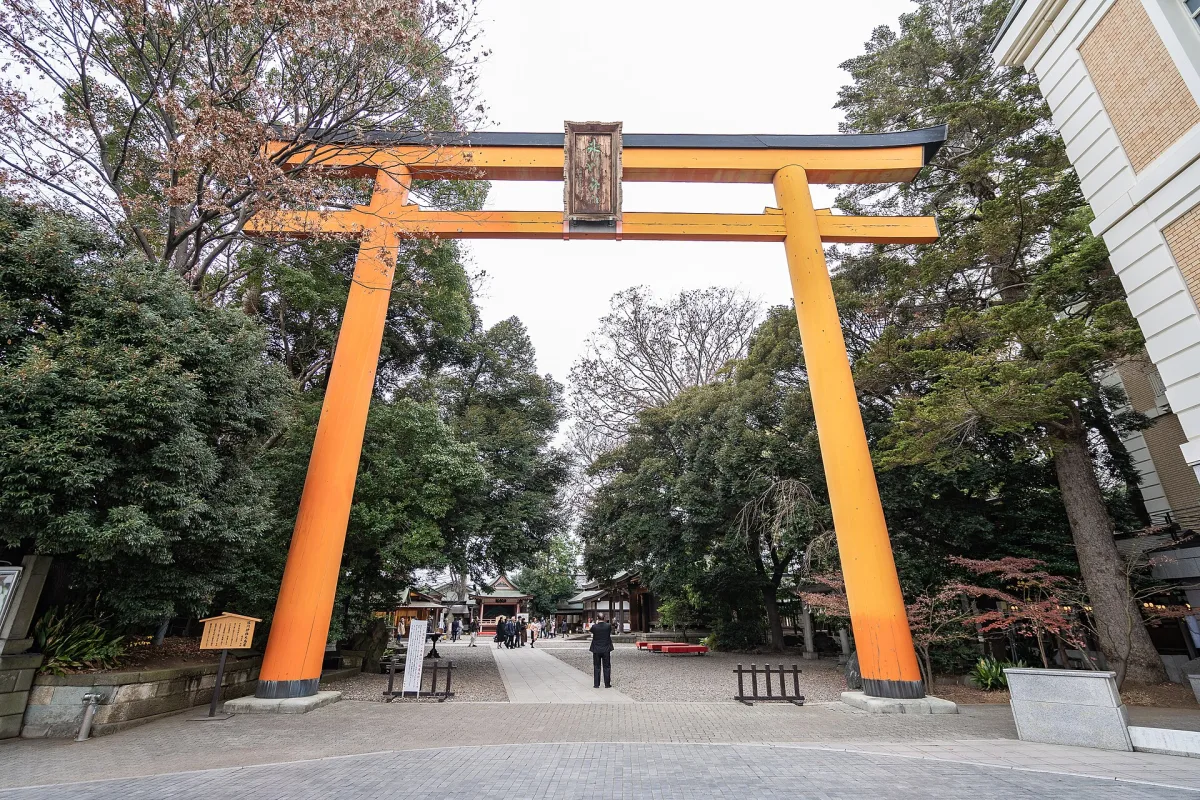
On the eastern approach stands a great torii (the gate that marks a shrine) 15 m tall. It is one of the largest wooden torii in Japan, and the characters on the plaque in its centre were written by Katsu Kaishu, a statesman of the final years of the Edo shogunate. The grounds are also home to a sacred zelkova tree more than 500 years old.
The main hall was built in the late Edo period with donations from the lord of Kawagoe Castle at the time and local people. Every surface of the building is covered in fine carving known as Edo-bori, and in May 2026 it was designated a national Important Cultural Property.
The Kawagoe Festival, held every October, is a tsukematsuri (an accompanying festival) timed to coincide with this shrine's reitaisai (its biggest festival of the year), and it is inscribed on UNESCO's Intangible Cultural Heritage list.
Sea bream fortunes, matchmaking stones and a tunnel of ema
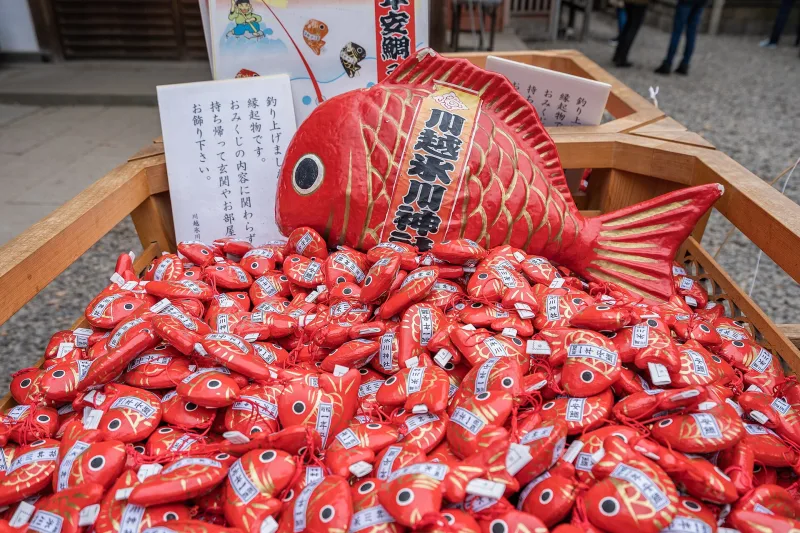
A big favourite is the tai-mikuji, a fortune slip shaped like a tai (sea bream). There is a red Ichinen An-tai Mikuji (for a peaceful year) and a pink Ai-tai Mikuji for love, and other colours sometimes appear depending on the season or period.
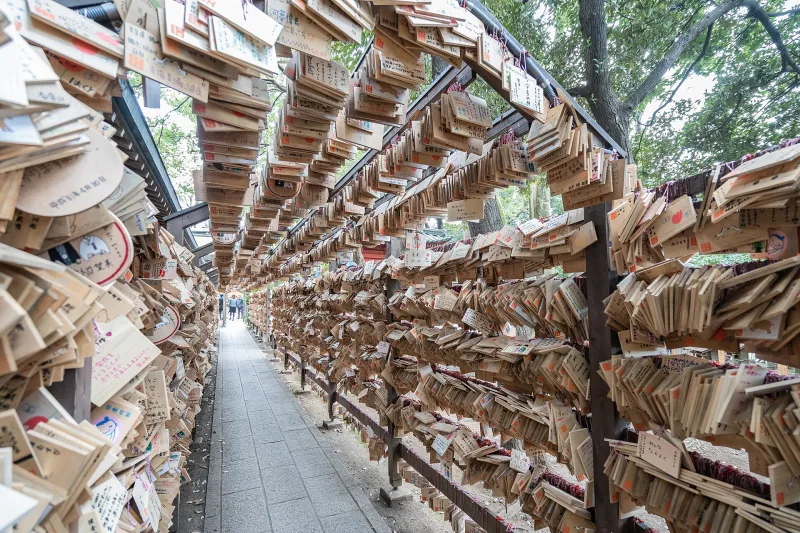
Every morning, a limited number of en-musubi dama (matchmaking stones) are given out free: small pebbles from the shrine grounds wrapped in hemp netting by miko (women who assist with shrine rituals). The Ema Tunnel, lined with ema (wooden plaques on which people write their wishes and leave them at the shrine), is another spot where lots of people take photos.
In summer (27 June to 6 September in 2026), the En-musubi Furin event decorates the grounds with about 2,000 Edo furin (Edo-style wind chimes), and they are lit up at night.
Getting there
The nearest stations are Kawagoe Station (JR and Tobu Tojo Line) and Hon-Kawagoe Station (Seibu Shinjuku Line), but both are a fair walk away, so the bus is handy. From Kawagoe or Hon-Kawagoe Station, take a Tobu bus or the Koedo Loop Bus and get off at Kawagoe Hikawa Jinja or Hikawa Jinja-mae; the shrine is right there.
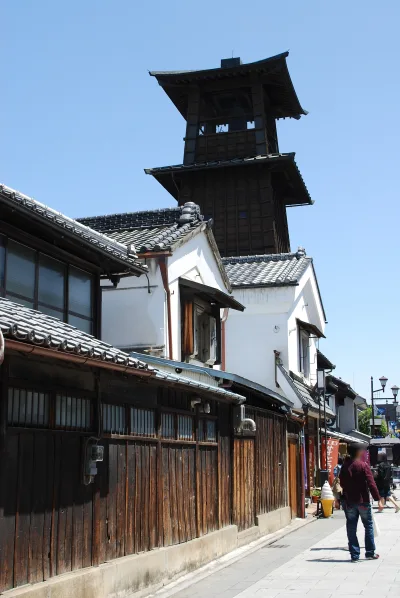
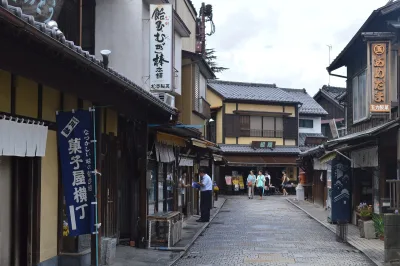
You can also walk there from Ichibangai, with its surviving storehouse-style streets, and from Toki no Kane, so it fits nicely into a walk around Kawagoe. The shrine has no free car park.
Tips
- Only a limited number of matchmaking stones are given out each morning, so go early if you want one.
- The shrine has no free car park of its own, so it is easiest to go by train and bus.
- During the En-musubi Furin wind chime event in summer, the grounds are lit up from the evening. If your dates match, come back again after dark.
Sources
- 川越氷川神社(公式サイト)
- 川越氷川神社|ご由緒・ご祭神
- 川越氷川神社|アクセス
- 川越氷川神社|季節の祭事
- 川越氷川神社|小江戸川越観光協会
- 氷川神社 (川越市) - Wikipedia
- 縁結びで有名「川越氷川神社」とは?(縁結び玉・鯛みくじ)
Updated 28 September 2026. Opening hours and prices change, so check the official site before you go.
.jpg)
.jpg)
.jpg)