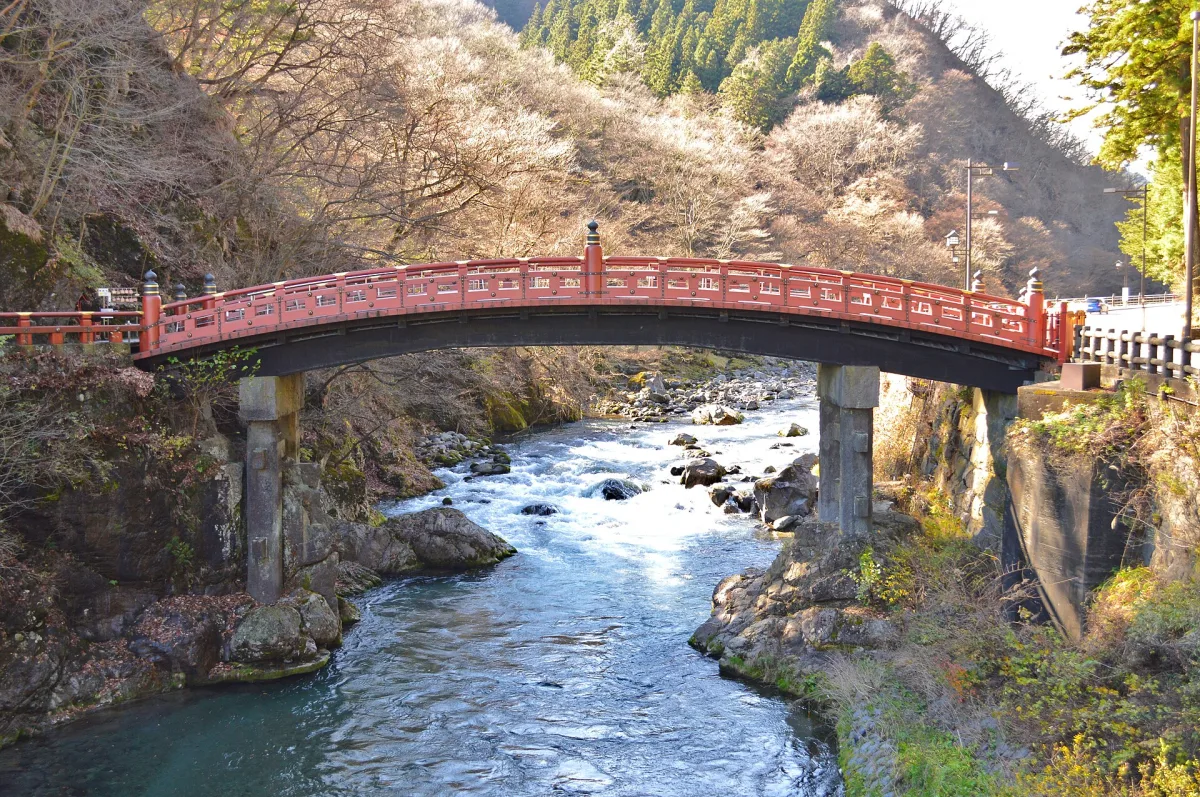
Shinkyo Bridge
神橋
A vermilion wooden bridge over the rushing Daiya River at the gateway to Nikko's shrines and temples, steeped in legend. Buy a ticket and you can cross it.
The gateway to Nikko's sacred ground
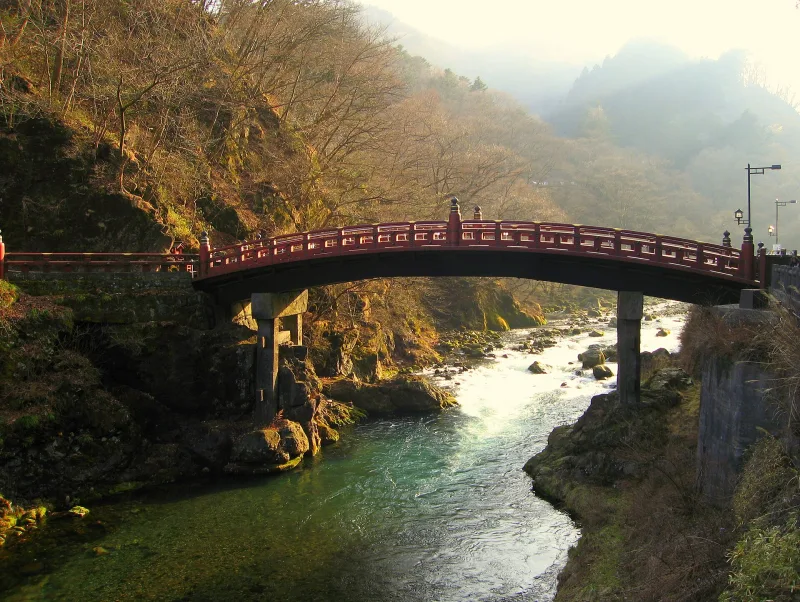
Shinkyo Bridge is an arched, vermilion-lacquered bridge over the Daiya River in Nikko city, Tochigi Prefecture. It belongs to Nikko Futarasan Shrine and stands at the entrance to Sannai, the area where Nikko's shrines and temples are gathered.
It is a national Important Cultural Property, and in 1999 it was inscribed as one of the cultural properties making up the "Shrines and Temples of Nikko" World Heritage Site. It is also counted among Japan's three most unusual bridges, chosen for their rare shape and construction.
The legend of two snakes that became a bridge
Legend has it that at the end of the Nara period, the monk Shodo Shonin, who opened Mt Nikko to worship, found his way blocked by the raging Daiya River and prayed to the gods and buddhas. A deity called Jinja-o appeared and released two snakes, and yamasuge (a kind of sedge grass) sprouted from their backs to form a bridge. That is why it is also called Yamasuge no Jabashi, "the sedge snake bridge".
It took on its present vermilion look in 1636, when Nikko Toshogu shrine was rebuilt on a grand scale. That bridge was washed away by a flood in 1902 but was rebuilt in 1904. It is about 28m long and about 7.4m wide.
An unusual design and the view through the seasons
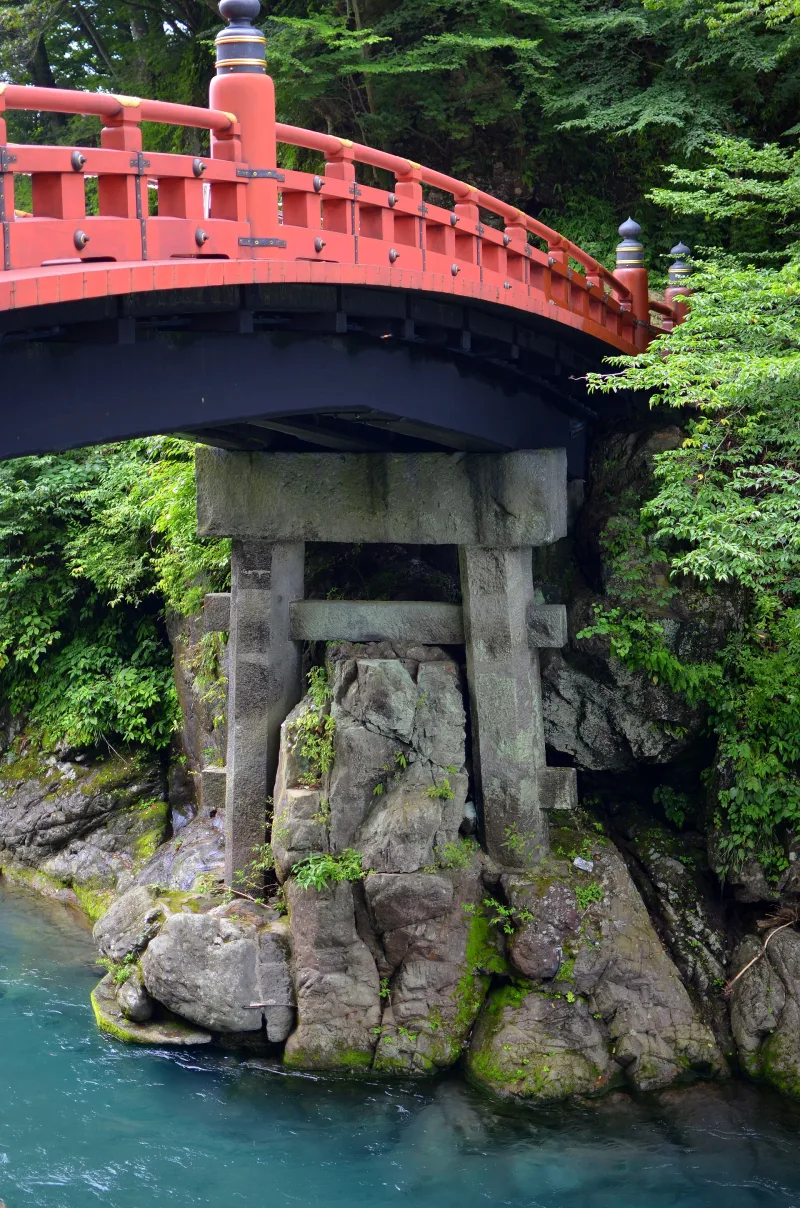
The bridge has an unusual structure: thick timbers reach out over the river from stone piers on both banks to hold it up. Among bridges that are Important Cultural Properties, Shinkyo is said to be the only one built this way.
From spring to early summer the vermilion bridge stands out against fresh green leaves, and in autumn against mountains blazing with colour, so many people come here to take photos. It is sometimes lit up at night.
Crossing the bridge and getting there
The bridge was originally for Shinto rituals, and the general public has only been allowed to cross since 1973. You need a paid crossing ticket, and the bridge is one-way. Reception hours and prices change with the season, so check the official information.
From JR Nikko Station or Tobu Nikko Station, take the World Heritage sightseeing bus for about seven minutes and get off at the Shinkyo stop; the bridge is right there. Shinkyo is the front door to the "Shrines and Temples of Nikko" World Heritage Site, and from here you can head into Sannai, home to Toshogu, Rinnoji temple and Futarasan Shrine. There is no dedicated car park, so if you drive, use a nearby public car park.
Tips
- Sometimes a wedding couple performs a ceremonial first crossing on the bridge.
- The car parks are about a 5 to 10-minute walk from the bridge. From Nikko Station, taking the bus is easier.
- Reception for crossing closes 30 minutes before closing time, so keep an eye on the time if you visit in the late afternoon.
Sources
Updated 29 September 2026. Opening hours and prices change, so check the official site before you go.
_-1.JPG)
.JPG)
