Atsuta Jingu
熱田神宮
A Nagoya shrine housing the Kusanagi sword, one of the three sacred treasures, long ranked just below Ise. 1,900 years of history in a city-centre forest.
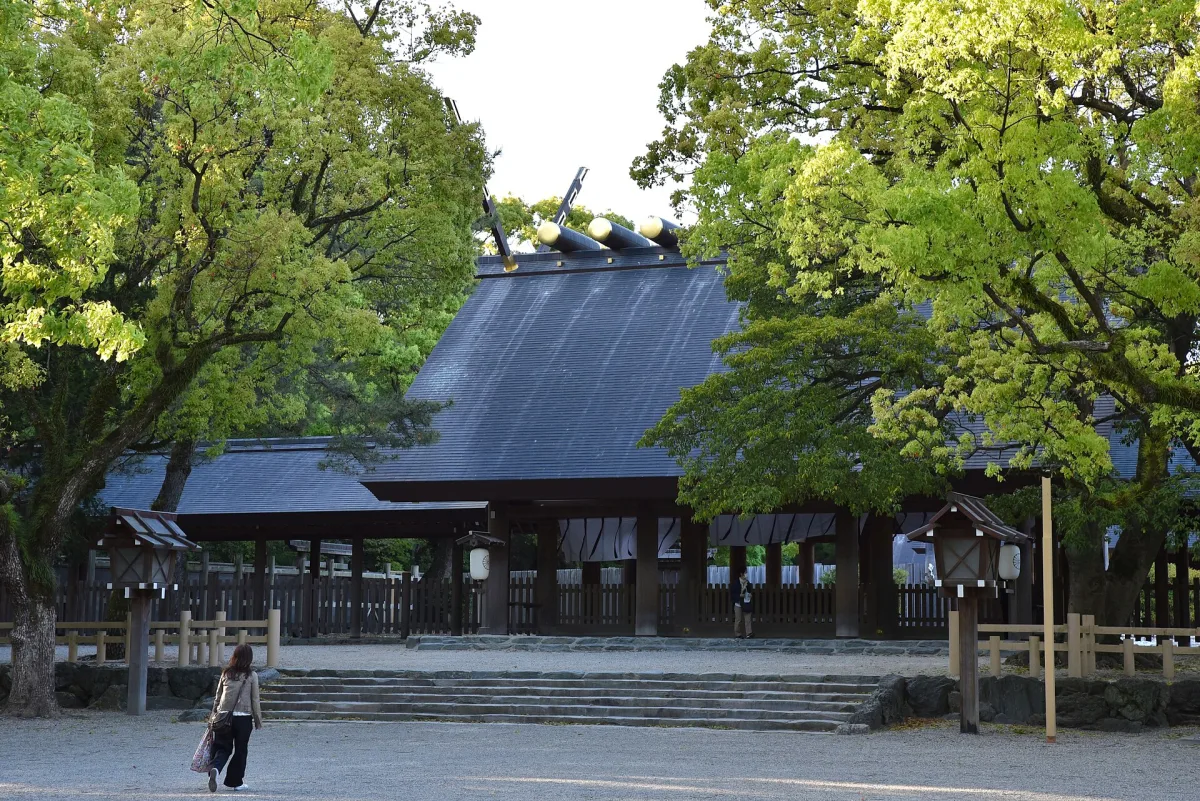
The shrine of the Kusanagi sword
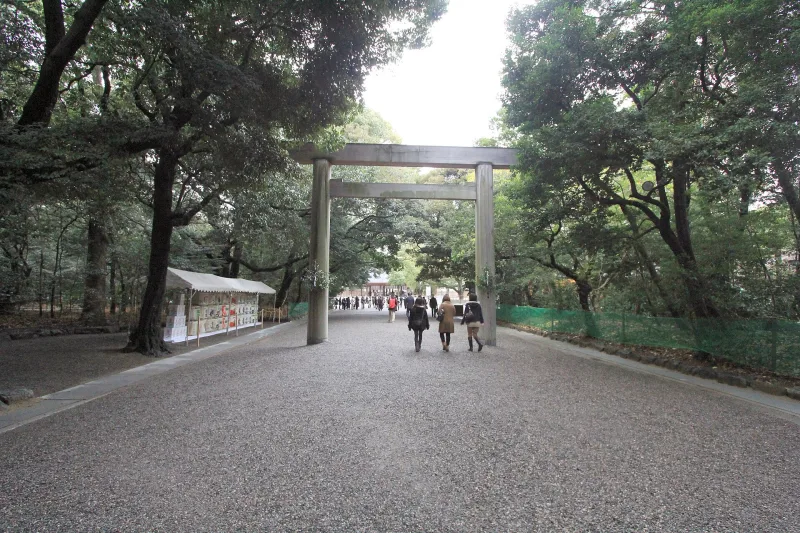
Atsuta Jingu is a shrine in Atsuta Ward, Nagoya, affectionately known locally as Atsuta-san. It is said to have begun about 1,900 years ago, when Miyasuhime no Mikoto, wife of the mythical hero Yamato Takeru no Mikoto, enshrined the Kusanagi no Mitsurugi sword here.
The Kusanagi sword is one of the Sanshu no Jingi, the three sacred treasures handed down as symbols of the emperor's throne. Atsuta no Okami, the shrine's principal deity, is Amaterasu Omikami (the sun goddess regarded as the ancestor of the Imperial family), whose spirit resides in this sword.
Since ancient times it has been revered by the Imperial court and the samurai, and it has been regarded as a shrine of the highest standing after Ise Jingu. About 7 million people visit each year.
Highlights in the grounds
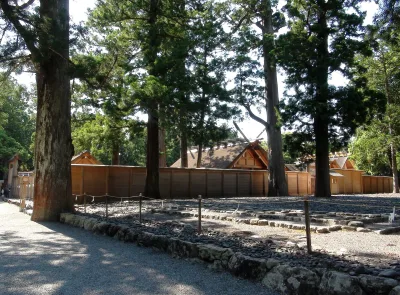
In 1893 the main shrine was rebuilt, changing from the earlier owari-zukuri style to shinmei-zukuri (a simple, ancient style with a gabled roof), the same style as Ise Jingu.
Near the main shrine is the Nobunaga-bei, an earthen wall said to have been offered by Oda Nobunaga in 1560 in thanks for victory in battle. It counts as one of the three great earthen walls of Japan.
Other historic sights dot the grounds, including a great camphor tree over 1,000 years old said to have been planted by Kobo Daishi (Kukai), the Nijugocho-bashi, said to be the oldest stone bridge in Nagoya, and the Sakuma Lantern, one of the three great lanterns of Japan.
The Kusanagi sword museum and the treasure hall
The Kusanagi-kan (Sword Treasury), opened in 2021, displays Japanese swords and other items offered to Atsuta Jingu. The treasure hall holds more than 6,000 offerings, of which over 170 are national designated cultural properties and the like.
Check the official website for exhibition changes and opening hours.
Getting there
It is about a 3-minute walk from Jingu-mae Station on the Meitetsu Nagoya Main Line, about 7 minutes from Jingu-nishi Station on the Meijo subway line and about 8 minutes from Atsuta Station on the JR Tokaido Main Line.
Tips
- Every year on 5 June, Atsuta Jingu holds the Atsuta Festival (its annual grand festival), one of its most important festivals.
- Shimizu-sha in the grounds is a small shrine to a water god. Legend says that washing your eyes with its spring water improves your eyesight, and washing your skin makes it beautiful.
- Atsuta Jingu holds about 60 festivals and ceremonies a year. Visit on a festival day and you will see a different side of the shrine.
Sources
Updated 28 September 2026. Opening hours and prices change, so check the official site before you go.

.jpg)