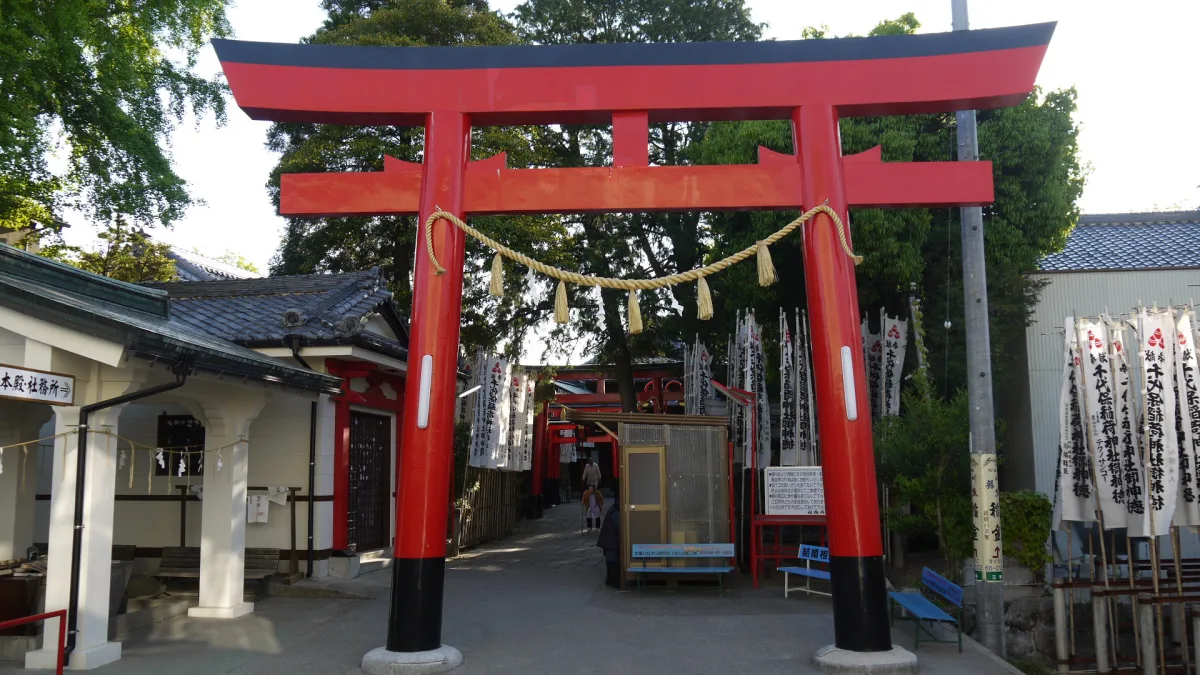
Chiyobo Inari Shrine
千代保稲荷神社
Locals call it "Ochobo-san": a shrine for business success where you offer fried tofu, then snack along an approach of about 120 shops.
"Ochobo-san", a shrine for ordinary people
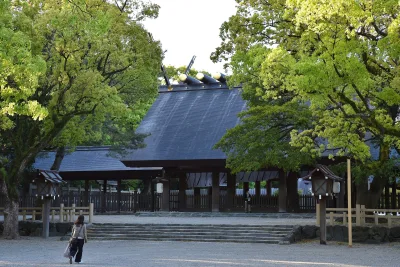
Chiyobo Inari Shrine is an Inari shrine in Kaizu, in the south-west of Gifu Prefecture. Inari is the deity of business and good harvests, worshipped all over Japan. According to Gifu Prefecture, the shrine goes back about 500 years to the Muromachi period. It is said to have begun when Mori Hakkai, the man who first settled this land, enshrined a sacred jar, a treasured sword and other objects said to have been given to him by the samurai commander Minamoto no Yoshiie.
Local people call it by the affectionate nickname "Ochobo-san". It is known as the deity of thriving business and a safe, happy household, and according to Kaizu City more than 1.2 million people come to pray here each year.
Praying with fried tofu and candles
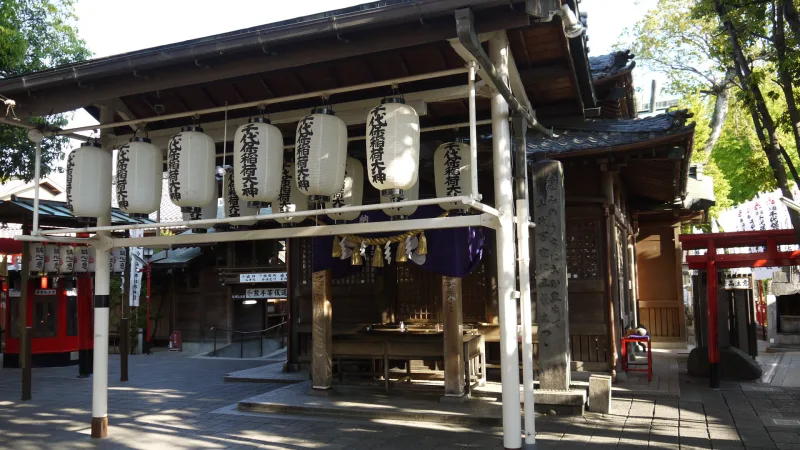
Praying here involves a custom you will rarely see at other shrines. Along with your osaisen (the money offering to the deity), you place aburaage (fried tofu) and a candle before the altar. The fox, believed to be the messenger of the Inari deity, is said to love aburaage, so the tofu is an offering for the fox. Aburaage and candles are sold near the shrine entrance.
The way to pray is the same as at other shrines: nirei nihakushu ichirei, meaning bow twice, clap twice, then bow once more.
Every month, from the night of the last day until dawn on the 1st of the next month, the shrine holds tsukikoshi mairi (month-crossing worship). Business owners come to give thanks for the past month and pray for a prosperous month ahead, and the approach is lively at night.
Eating your way along the approach
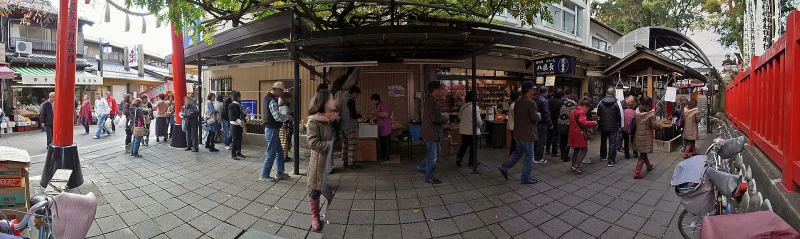
The approach runs for about 700m from the east entrance to the south entrance and is lined with about 120 shops. You will find the old-fashioned flavours of a monzenmachi (a town that grew up in front of a shrine or temple): kushikatsu (deep-fried skewers) dipped in a sauce of akamiso (dark soybean miso), the famous kusamochi (mugwort rice cakes), river fish dishes, pickles and more.
In the shrine grounds there is also the Onko Shuseikan, which displays artworks and other items, and entry is free.
Getting there
From Gifu-Hashima Station on the Tokaido Shinkansen, it is about 20 minutes by Kaizu City community bus. Coming from the Mie Prefecture side, you can take a community bus from Ishizu Station on the Yoro Railway. By car, it is about 12 minutes from the Anpachi Smart IC on the Meishin Expressway. Check bus times on the Kaizu City website.
Tips
- For a different atmosphere from the daytime, time your visit for tsukikoshi mairi on the night at the end of the month.
- Aburaage and candles for your offering are sold near the shrine entrance, so you can turn up empty-handed.
- The classic snacks on the approach are kushikatsu with red miso and kusamochi. While you are there, take a look at the free Onko Shuseikan in the shrine grounds.
Sources
- 千代保稲荷神社について | 海津市
- 千代保稲荷神社【海津市】|岐阜県観光公式サイト「岐阜の旅ガイド」
- 海津市「おちょぼさん(千代保稲荷神社)」で食べ歩き!!|岐阜県観光公式サイト
- 【岐阜県】油揚げをお供えして幸運を! 千代保稲荷神社へ行こう - MATCHA
Updated 29 September 2026. Opening hours and prices change, so check the official site before you go.






.jpg)