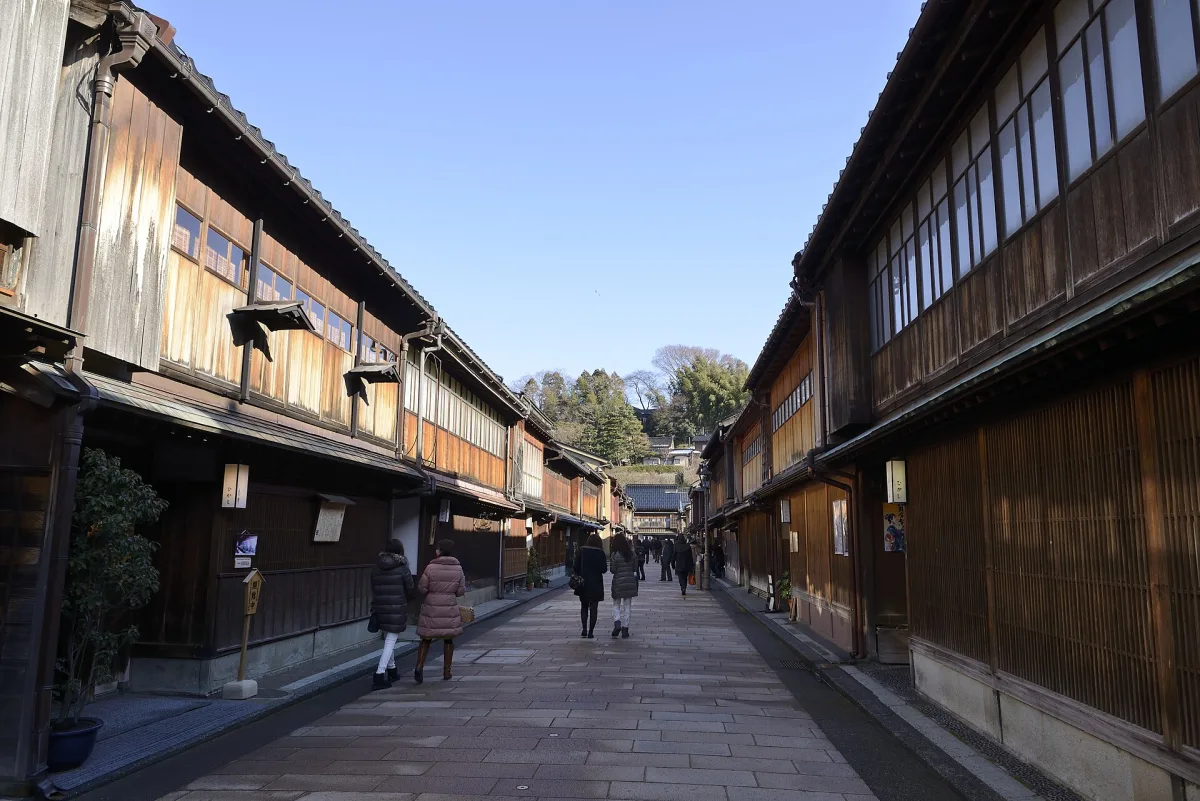
Higashi Chaya District
ひがし茶屋街
Kanazawa's teahouse district, dating from the late Edo period: wooden lattices on stone-paved streets, teahouses to tour and cafés in old townhouses.
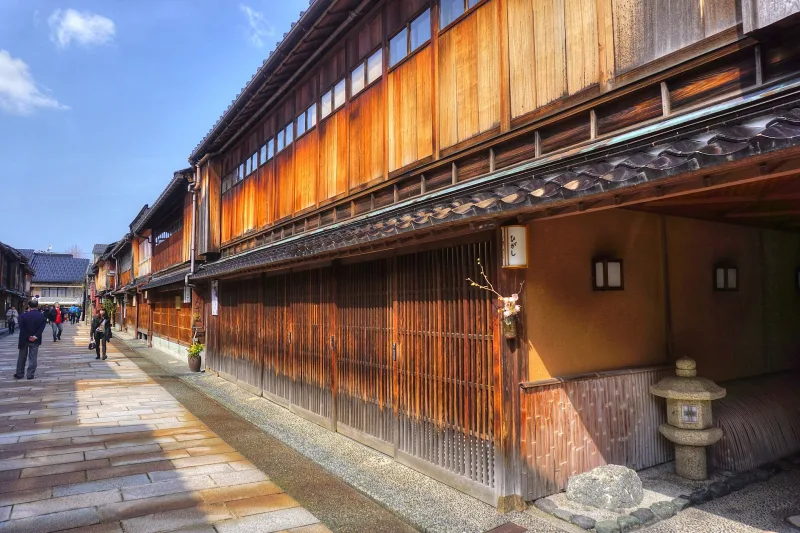
A teahouse quarter born in 1820
The Higashi Chaya District is an old streetscape on the east side of the Asano River in Kanazawa. An ochaya (teahouse) is a place where guests hold banquets and call in geigi (geisha, women who entertain guests with song and dance). The district began in 1820 (the 3rd year of the Bunsei era), when it was officially recognised as a teahouse quarter together with the "Nishi" (west) district on the west side of the Sai River.
The streets from the end of the Edo period to the early Meiji period survive in good condition, and in 2001 the district was selected by the national government as an Important Preservation District for Groups of Traditional Buildings. As a teahouse district, it is regarded as a rare example on a par with Gion in Kyoto.
Lattices and banquet rooms: the teahouse style
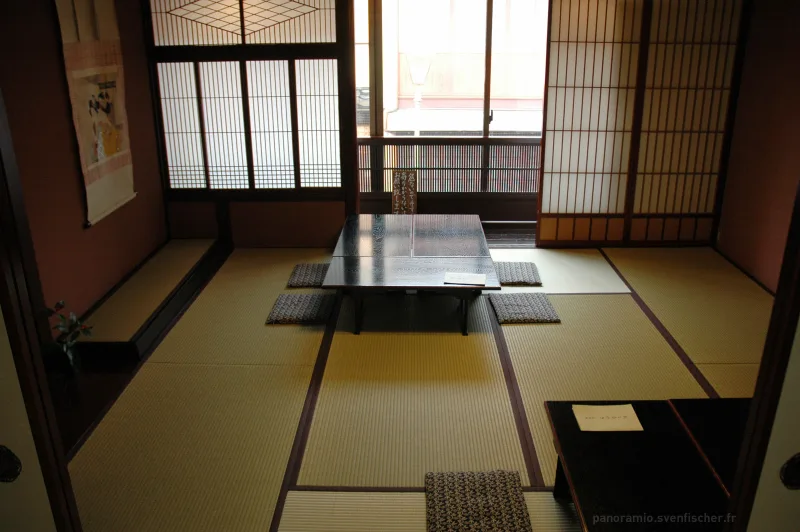
The buildings along the street are built in what is called the chaya style. The ground-floor fronts are fitted with fine wooden lattices, and the upper floor, where guests were entertained in zashiki (tatami banquet rooms), is built with generous ceiling height.
The stone-paved street is lovely on a sunny afternoon, but the Kanazawa city tourism association notes that at dusk it takes on quite a different atmosphere from the daytime.
Stepping inside a teahouse
Shima is a surviving teahouse building from the old days and is designated a national Important Cultural Property. Inside, you can see how a traditional teahouse was laid out and the tools of the trade, such as the shamisen (a three-stringed instrument), and enjoy matcha while gazing at the garden.
Kaikaro is one of the largest teahouse buildings in Kanazawa. Here you can see a room with tatami woven with gold leaf, a staircase finished in Wajima-nuri (lacquerware from Wajima in Ishikawa Prefecture), Kaga Yuzen (Kanazawa's traditional dyed silk) and more.
The street is lined with shops selling wagashi (Japanese sweets), crafts and gold-leaf products, as well as cafés in old machiya townhouses. Some shops let you try applying gold leaf yourself.
Getting there and how long to allow
From Kanazawa Station, take a local bus or a sightseeing loop bus to the Hashiba-cho stop, then walk about 5 to 6 minutes. The Kanazawa city tourism association suggests allowing about 60 minutes to look around. Check the official websites for each facility's opening hours and fees.
Tips
- If you want to see inside an old teahouse, visit Shima or Kaikaro, both of which are open to visitors.
- As well as strolling during the day, walk the street again in the evening to enjoy the change in atmosphere.
- You can also rent a kimono to walk around in, or tour the area by rickshaw.
Sources
Updated 28 September 2026. Opening hours and prices change, so check the official site before you go.





.jpg)
_-_panoramio.jpg)