Zuiganji Temple
瑞巌寺
Matsushima's Zen temple, rebuilt by Date Masamune over five years. Its National Treasure main hall has ten rooms of gleaming gold sliding-door paintings.
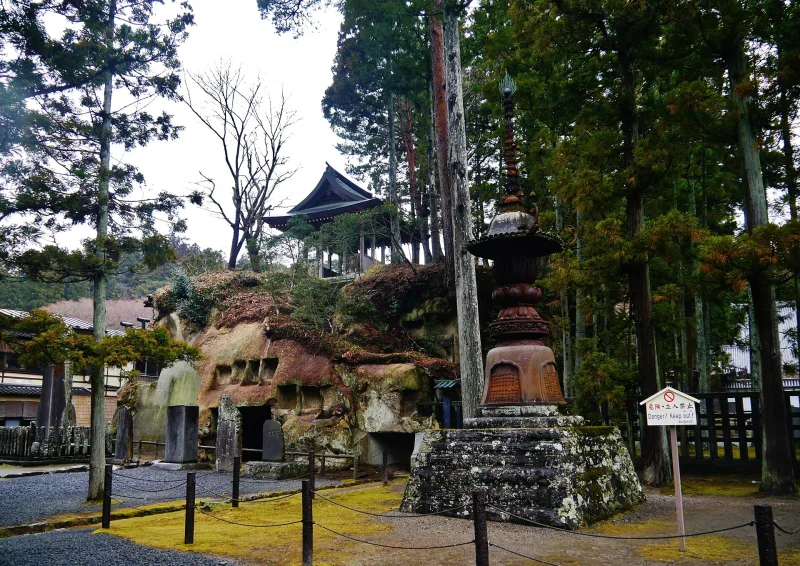
The temple Date Masamune poured himself into
Zuiganji Temple is a Zen temple of the Rinzai school (Myoshinji branch) in Matsushima, Miyagi Prefecture, one of the Three Views of Japan. Its full name is Matsushima Seiryuzan Zuigan Enpuku Zenji. It is said to have begun as a Tendai temple founded by the monk Jikaku Daishi Ennin in the early 9th century, and it was converted to Zen in the mid-13th century and became Enpukuji.
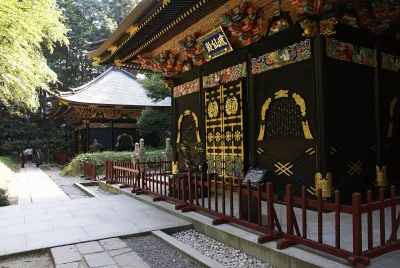
Enpukuji had fallen into decline through the Warring States period, and it was revived by Date Masamune, founder of the Sendai domain. Masamune personally decided the temple's layout, had timber brought from Kumano in the province of Kii (today's Wakayama Prefecture and nearby), long regarded as a Pure Land on earth, and summoned 130 master craftsmen from the Kinai region (around Kyoto and Osaka). The work was finished in 1609 after five years, and the temple was renamed Zuiganji. From then on it served as the Date family's bodaiji (the temple that keeps a family's graves and memorial tablets) and was the largest and most prestigious temple in their domain.
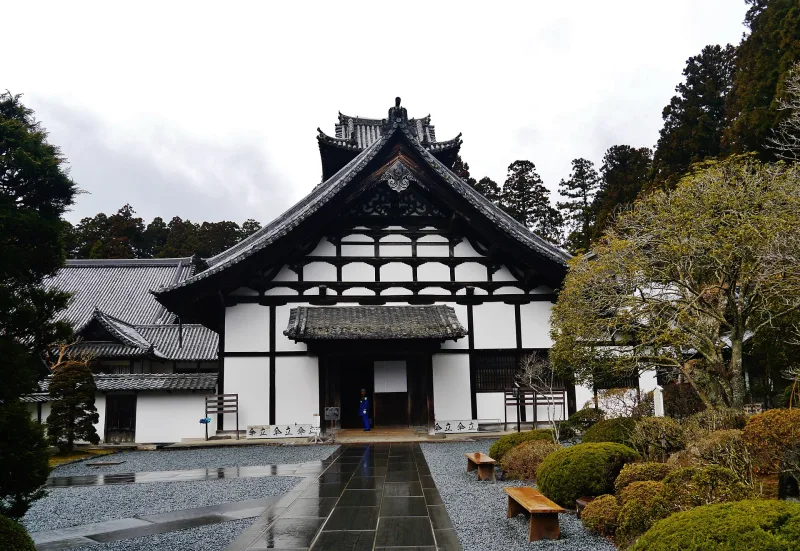
The main hall, the kuri (the building that served as the kitchen) and the corridor are National Treasures. In 2018 the Great Heisei Restoration, which took ten years, was completed, bringing back the look the temple had when it was first built.
A National Treasure main hall of ten rooms
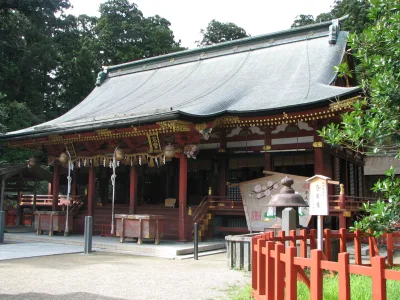
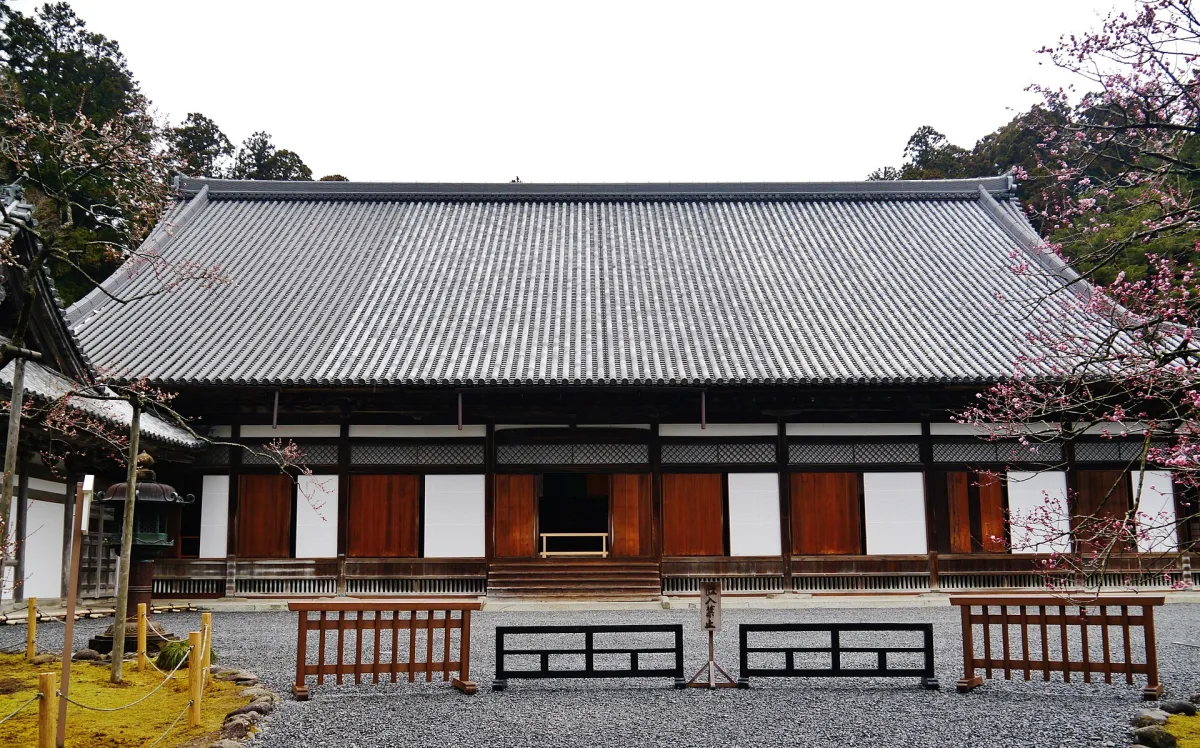
The main hall is a large building, 38m across the front and 24.2m deep, with ten rooms. Each room is decorated with paintings and carvings on a theme suited to its use, and the ceiling construction differs from room to room.
The central Peacock Room is where Buddhist services are held, and its sliding doors bear the Pines and Peacocks painting by Kano Sakyo, the first official painter of the Sendai domain. Other rooms include the Jodan-no-ma, where the lord sat, and the Jojodan-no-ma, said to have been made for receiving the emperor and members of the imperial family. It is worth noticing how the floor height and decoration change with each room's rank. In the Jodan-no-ma there is a statue of Date Masamune in armour (a reproduction).
The sliding-door paintings and other works in the main hall have been replaced with detailed reproductions made from 1985 onwards. Some of the originals are shown for limited periods in the treasure hall within the grounds.
The caves along the approach and getting there
On the right of the approach to the temple, a series of caves has been cut into the rock. Their walls are carved with many memorial stupas and posthumous Buddhist names, showing that this was once a place for honouring the dead. Since ancient times Matsushima has been a sacred site known as the Koya of Oshu (after Mount Koya, a famous sacred mountain).
It is about a ten-minute walk from Matsushima-Kaigan Station on the JR Senseki Line. Allow about 30 to 40 minutes for your visit. Visiting hours change with the season; check them, along with the admission fee, on the official website.
Tips
- The Sumie-no-ma (Ink Painting Room) in the main hall entered a five-year conservation project in May 2026 and cannot be seen at present.
- From 1 October 2026, goshuin (an ink inscription and seal given as proof of your visit) will no longer be given to people who do not visit the temple. If you would like one, hand in your goshuin book first, visit the main hall, and collect it on your way out.
- In 2026, from 30 October to 23 November, there is an Autumn Night Visit, when you can visit the temple amid light and sound effects (separate fee).
- Only the treasure hall can be visited in a wheelchair; the main hall and the kuri are not wheelchair accessible.
Sources
- 国宝 瑞巌寺(公式)
- 縁起|国宝 瑞巌寺
- 境内のご案内(本堂)|国宝 瑞巌寺
- 境内のご案内 ― 洞窟遺跡群|国宝 瑞巌寺
- 拝観案内|国宝 瑞巌寺
- 2026年 NAKED松島・国宝 瑞巌寺「秋の夜間参拝」|国宝 瑞巌寺
- 瑞巌寺|日本三景松島-松島観光協会
Updated 29 September 2026. Opening hours and prices change, so check the official site before you go.