Kurayoshi Shirakabe Dozogun (White-Walled Storehouses)
倉吉白壁土蔵群(倉吉市打吹玉川 重要伝統的建造物群保存地区)
Old Kurayoshi, where white-plastered, red-tiled storehouses line the Tamagawa canal; former sake and soy sauce stores now house cafés, shops and workshops.
From castle town to merchant town
Kurayoshi is a town in central Tottori Prefecture, between the cities of Tottori and Yonago. It grew up as a castle town after Utsubuki Castle was built here in the Muromachi period. When the castle was abolished in 1615, the Tottori domain set up a jin'ya (a local administrative office) in its place, and the town prospered through trade and crafts such as cotton, textiles, sake brewing and soy sauce making. That prosperity lasted into the Meiji era.
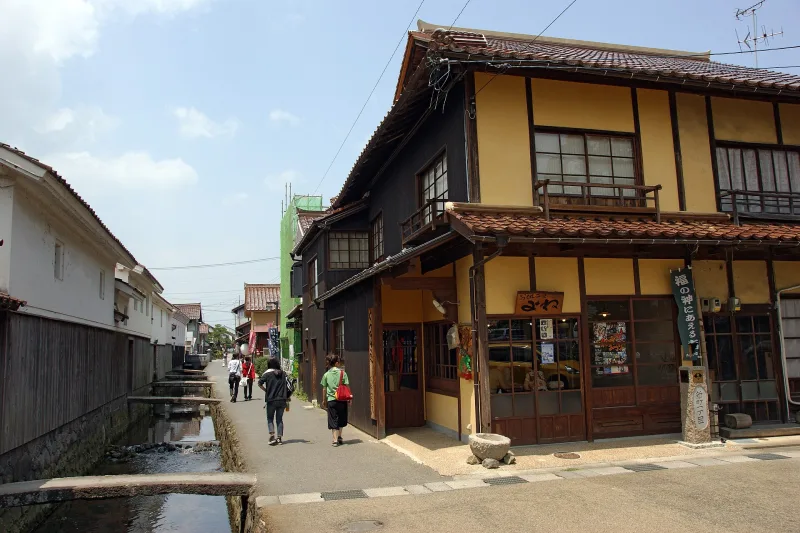
The streetscape of those days survives in the Utsubuki Tamagawa district, on the north side of Mount Utsubuki. Around 40 white-walled dozo (earthen-walled storehouses) stand along the Tamagawa, an irrigation canal flowing east to west, and around 90 machiya (merchant houses that combined a shop and a home) face Honmachi-dori, the main street. In 1998 the district was chosen by the national government as an Important Preservation District for Groups of Traditional Buildings (a system in which the state selects and protects historic townscapes), and the protected area was enlarged in 2010.
White walls, black boards, red tiles
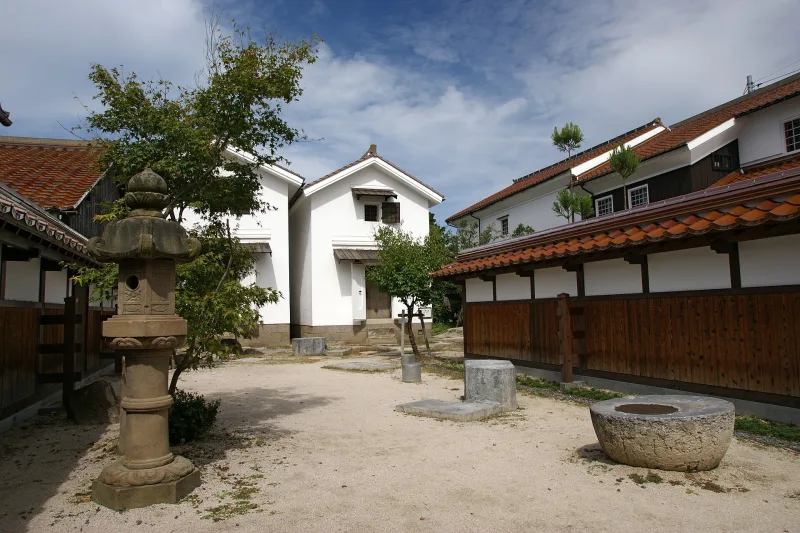
The storehouse walls along the Tamagawa are white shikkui (lime plaster) on the upper half and black charred cedar boards on the lower half. The plaster keeps water out, while cedar with a scorched surface stands up better to fire, wind and rain. Several gently arched bridges, each made from a single slab of stone, cross the canal.
The red roof tiles are Sekishu-gawara, tiles that originated in the Iwami area of western Shimane Prefecture. Because they are fired at over 1,200°C, they are less likely to freeze and crack in the cold, which is why they have long been used in the snowy San'in region. The pairing of white walls and red tiles gives the whole townscape a bright, cheerful feel.
Part of the fun is that the town shows two different faces: on the main street, the latticed fronts of the merchant houses; on the back lanes by the canal, a row of white storehouses.
Shops and crafts in the old storehouses
Buildings that were once sake and soy sauce storehouses are now local-produce shops, cafés, galleries and workshops. One of the best known is Akagawara Ichigokan (Red Tile Building No. 1), a converted soy sauce storehouse from the Taisho era.
Some places let you try painting the face of a Hakota doll, a papier-mâché doll made in Kurayoshi since the Edo period, or weaving on a loom to make Kurayoshi-gasuri, the town's traditional ikat-style textile. The area was also a filming location for the much-loved film series Otoko wa Tsurai yo (It's Tough Being a Man).
Getting there
From JR Kurayoshi Station, take a local bus (city line, bound for Nishi-Kurayoshi) for about 12 minutes, get off at the Akagawara Shirakabe Dozo stop and walk about 5 minutes. By car, it is about 40 minutes from the Yubara IC or Hiruzen IC on the Yonago Expressway.
Inside the old town there is the Kurayoshi Shirakabe Dozogun tourist information centre, where you can pick up walking maps and make use of the local guides.
Tips
- Walk both the main street, Honmachi-dori, and the canal-side lane behind it to compare the merchant houses with the storehouses.
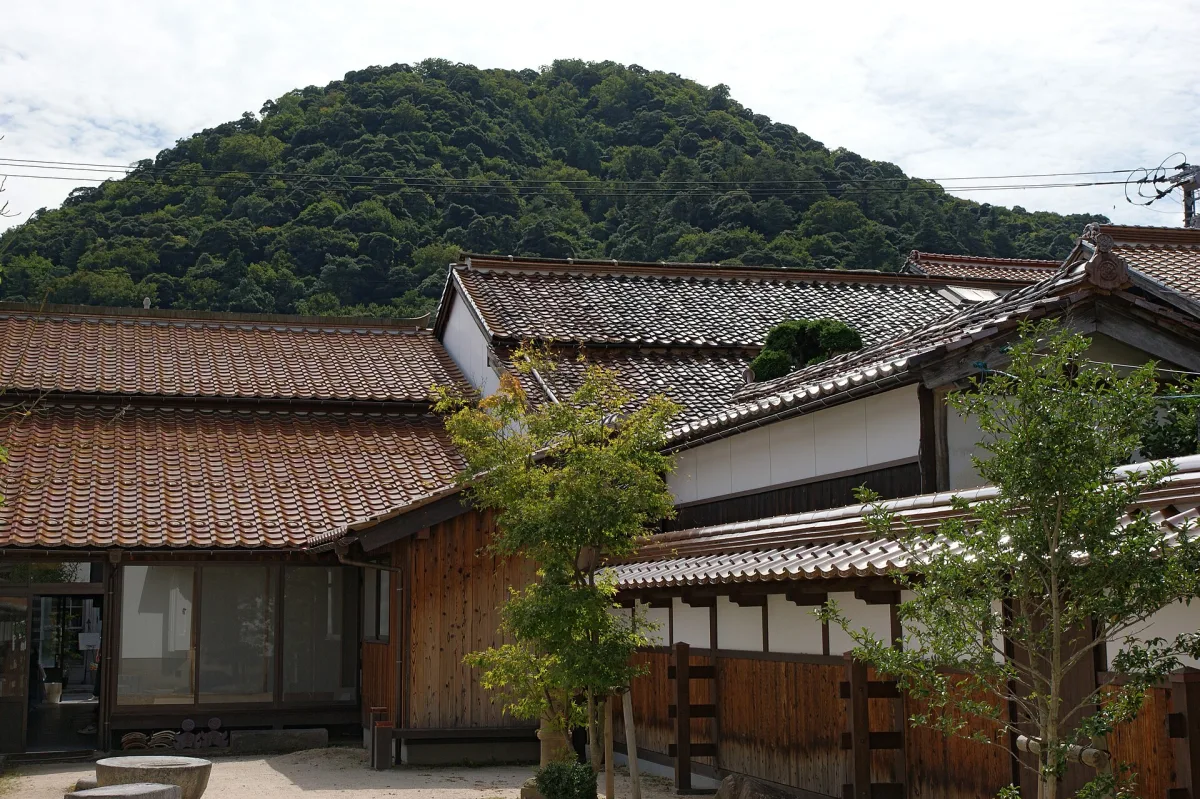
- The view of red-tiled roofs lined up with Mount Utsubuki behind them is recommended as a photo spot within the old town.
- Sekigane Onsen, a hot spring area, is about 15 minutes away by car, so you can combine the two in one trip.
Sources
Updated 29 September 2026. Opening hours and prices change, so check the official site before you go.