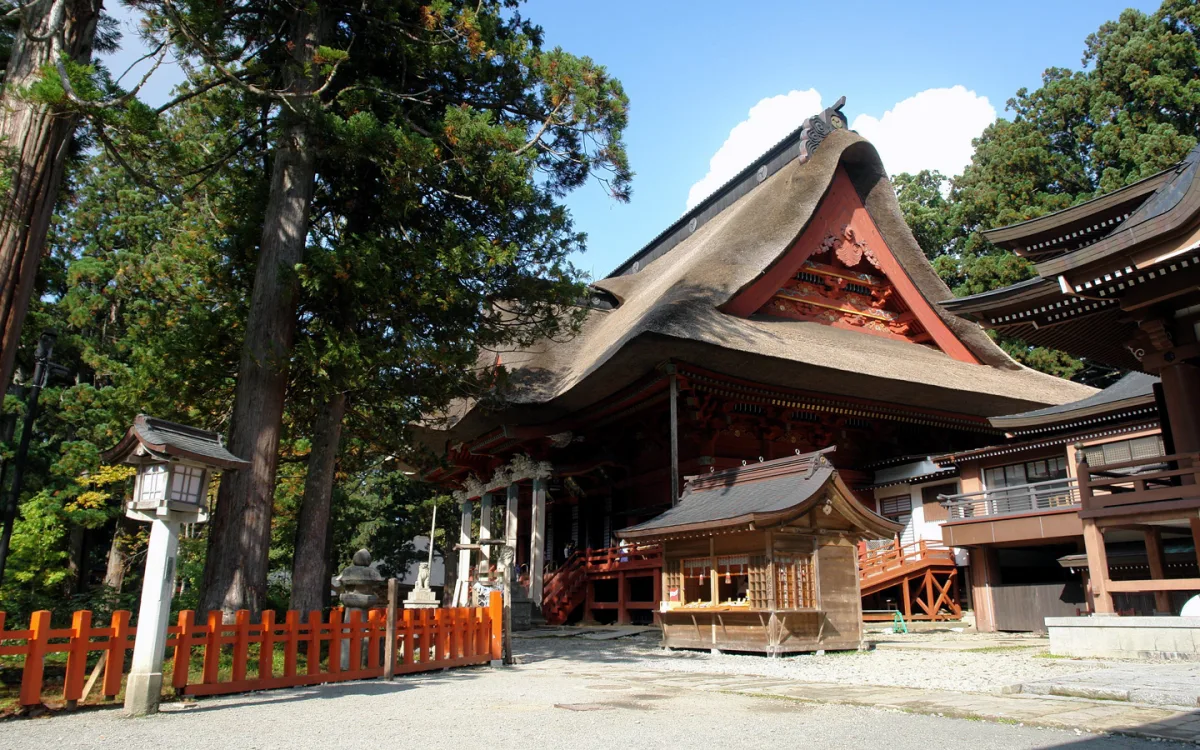
Dewa Sanzan Shrine (Sanjin Gosaiden, Mt. Haguro)
出羽三山神社
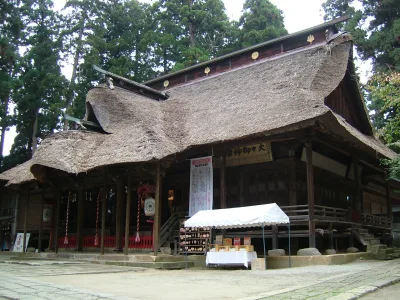
On the summit of Mt Haguro, the mountain where yamabushi ascetics train, a thick-thatched hall honours all three Dewa Sanzan deities.
Where the journey of "rebirth" begins
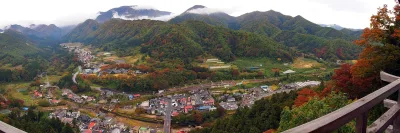
Dewa Sanzan, "the three mountains of Dewa", is the collective name for three peaks in the middle of Yamagata Prefecture: Mt Haguro (414m), Mt Gassan (1,984m) and Mt Yudono (1,504m). They are said to have been opened for worship in the 6th century. Since ancient times they have been a place of mountain worship, where the mountains themselves are held sacred, and one of the centres of Shugendo, a faith blending Shinto and Buddhism in which followers retreat into the mountains to train. Here yamabushi, the mountain ascetics of Shugendo, have kept up their training ever since.
Each mountain carries its own meaning: Mt Haguro stands for the present (happiness in this life), Mt Gassan for the past (peace after death) and Mt Yudono for the future (rebirth). In the Edo period many pilgrims entered at Mt Haguro, then went on to Mt Gassan and Mt Yudono, praying to be reborn.
Mt Gassan and Mt Yudono get very deep snow, so they can be visited only during a limited season, mainly in summer. Mt Haguro is the only one you can visit all year round, and on its summit stands the Sanjin Gosaiden, the hall where the deities of all three mountains are enshrined together.
The Sanjin Gosaiden and its thick thatched roof
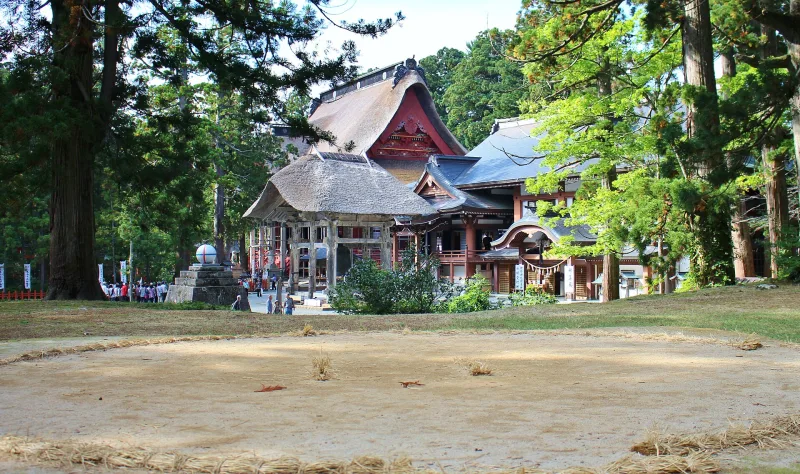
The present Sanjin Gosaiden was rebuilt in 1818 (the first year of the Bunsei era). It is a wooden building with a thatched roof, and it keeps features that go back to the Middle Ages, such as the nagatoko, a long hall where yamabushi stayed in retreat. It was designated a national Important Cultural Property in 2000. The thatch on the roof is about 2.1m thick, built to bear Yamagata's heavy snow.
The pond in front of the hall is called Mitarashi-ike or Kagami-ike, "mirror pond", because bronze mirrors have been offered into it since the Heian period. Around it spreads a scene typical of a mountain temple, with buildings arranged to fit the lie of the land.
2,446 stone steps and a National Treasure pagoda
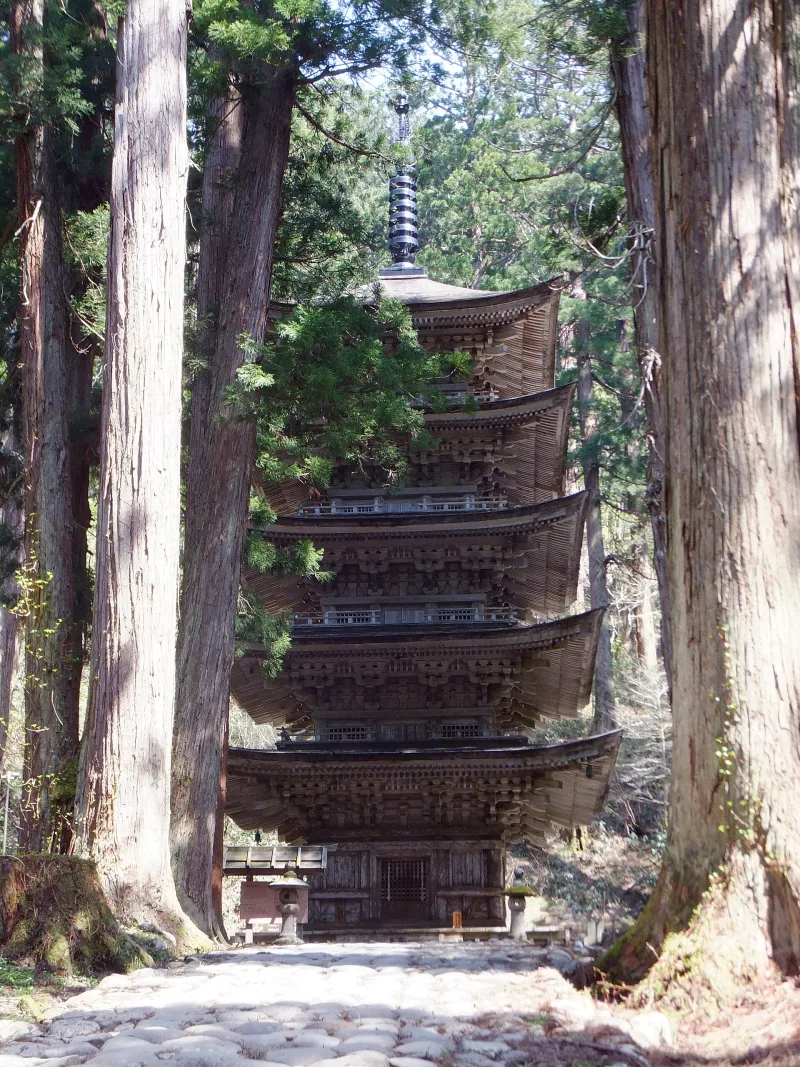
From the Zuishinmon Gate at the foot of the mountain to the summit, 2,446 stone steps run along an approach of about 2km. The walk takes around an hour to an hour and a half. The cedar avenue lining the path is a Special Natural Monument, and on the way you pass Jijisugi, "Grandfather Cedar", a giant cedar that is a natural monument, and the Mt Haguro Five-Storey Pagoda, a National Treasure.
2026 (Reiwa 8) is Mt Haguro's Umadoshi Goennen, a special year that comes round once every 12 years. Mt Haguro is said to have a deep connection with the Year of the Horse, and visiting in this year has long been believed to bring special blessings. Commemorative charms and goshuin (shrine stamps) are available.
Getting there
You can take a local bus from JR Tsuruoka Station to the summit of Mt Haguro. By car, it is about 40 minutes from the Shonai-Asahi IC (interchange) on the Yamagata Expressway, and there is parking. The Mt Haguro toll road up to the summit charges a fee.
The usual way to tour all three mountains is to stay the night on Mt Haguro, at the saikan (the shrine's lodging for pilgrims) or at a shukubo (temple or shrine lodgings for worshippers), then head to Mt Gassan and Mt Yudono the next day.
Tips
- The stone steps go on for a long time and get slippery in the rain. Wear comfortable shoes, and take the bus back down to make things easier.
- In winter more than 1m of snow piles up on Mt Haguro. The path from the Zuishinmon Gate past the pagoda to the summit is cleared, but you will need warm clothing and non-slip shoes.
- The main shrines on Mt Gassan and Mt Yudono are open only for a limited season. If you want to visit all three mountains, check this year's opening period on the official website before you plan.
Sources
- 令和8年丙午「羽黒山午歳御縁年」ご参拝案内|出羽三山神社 公式ホームページ
- 出羽三山神社・三神合祭殿|羽黒町観光協会
- 出羽三山|羽黒町観光協会
- Mt. Haguro's Sanjin Gosaiden|日本遺産 出羽三山
- Dewa Sanzan|Travel Japan (JNTO)
- 出羽三山神社 羽黒山三神合祭殿|やまがたへの旅
- 2026年は12年に一度の特別な「羽黒山午歳御縁年」|つるおか観光ナビ
- 出羽神社 - Wikipedia
Updated 29 September 2026. Opening hours and prices change, so check the official site before you go.


_%E5%87%BA%E7%BE%BD%E4%B8%89%E5%B1%B1%E7%A5%9E%E7%A4%BE_-_panoramio.jpg)
