Kumano Taisha Shrine (Nanyo)
熊野神社(熊野大社)
An ancient shrine in Nanyo, Yamagata, called "the Ise of Tohoku", with a huge thatched hall and three hidden carved rabbits to hunt for.
"Okuman-sama", the Kumano of Tohoku
Kumano Taisha is a Shinto shrine in Miyauchi, Nanyo city, Yamagata Prefecture. According to the shrine, it was rebuilt in 806 (the first year of the Daido era) on the orders of Emperor Heizei, and it traces a history of more than 1,200 years. Locals call it Okuman-sama affectionately, and it is also known as "the Ise of Tohoku", after Japan's most revered shrine at Ise. Together with the Kumano Sanzan shrines in Wakayama Prefecture and Kumano Kotai Shrine in Nagano Prefecture, it counts as one of Japan's three great Kumano shrines, and it keeps the Kumano faith of northeastern Japan alive today.
The main sanctuary (honden) enshrines Izanami-no-Mikoto, who in Japanese mythology is said to be half of the first married couple. The shrine describes her as a deity of musuhi, the power that brings all life into being, and it is well known as a shrine for en-musubi, finding love and good relationships. In all, the grounds hold shrines to 30 hashira of deities (hashira is the counter used for Shinto gods).
The thatched worship hall and the great ginkgo
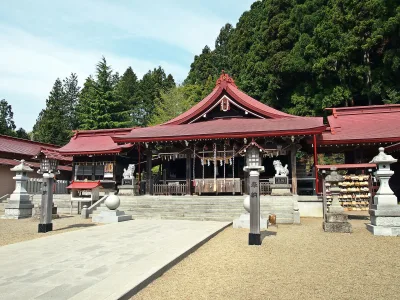
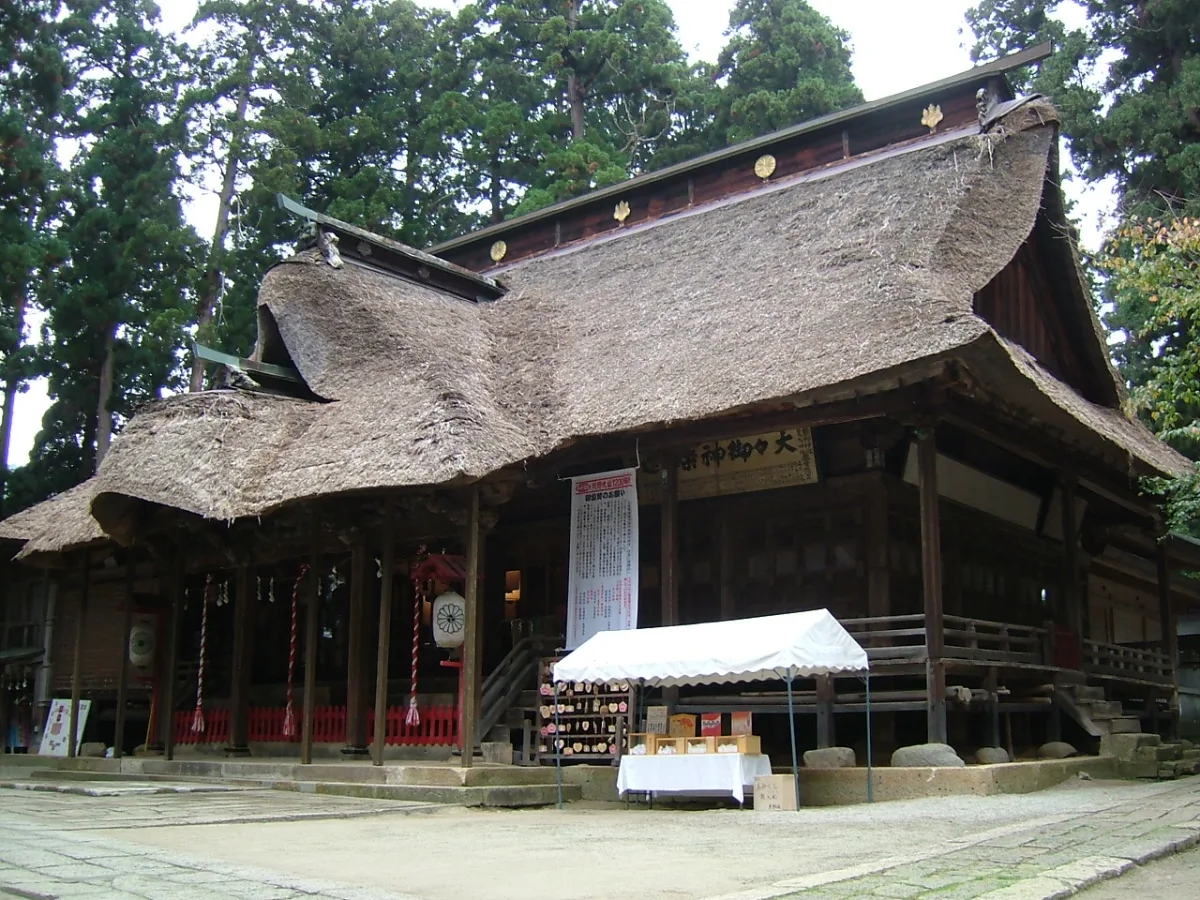
Climb the 46 stone steps known as Omisaka and a large worship hall with a roof of kaya (thatching grass) comes into view. When the roof was repaired in 2006, an ink inscription dated 1787 (the 7th year of the Tenmei era) was found, showing that the hall was built before then. Thatching ornate gabled roof shapes called karahafu and chidorihafu is a building style unique to Yamagata Prefecture, and according to the shrine, this hall is the oldest example of it.
The great ginkgo tree in the grounds is a natural monument of Yamagata Prefecture. It is said to have been planted by hand by Kamakura Gongoro Kagemasa, a retainer of the warrior Minamoto no Yoshiie. A large bell donated in 1626 is still rung three times a day, morning, noon and evening. At the start of the approach stands a great stone torii (the gate that marks a shrine).
The three rabbits behind the main sanctuary
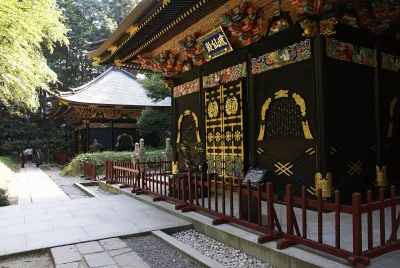
What people talk about most at Kumano Taisha are the three rabbits hidden in the carvings on the back of the main sanctuary. Tradition says that if you find all three, you will be blessed with good relationships and your wishes will come true. According to Yamagata Prefecture's tourism site, staff at the juyosho (the counter where you receive charms and talismans) will tell you where the first two are, but asking about or revealing the third is said to cancel out its blessing. So look for the third one with your own eyes.
On full-moon nights the shrine holds Tsuki-musubi, a prayer ceremony for finding love, and in summer there is an event called Kanade, where you put your wishes into the sound of wind chimes. In 2026, from 1 October until late November, "Aki no Kazahana" (autumn kazahana) is planned, with the shrine's stone steps decorated with colourful kazahana.
Getting there
The nearest station is Miyauchi on the Yamagata Railway Flower Nagai Line. From Tokyo, take the Yamagata Shinkansen Tsubasa to Akayu Station and change to the Flower Nagai Line. From Akayu Station it is about 10 minutes by car.
By car, it is about 15 minutes from the Nanyo-Takahata IC (interchange) on the Tohoku-Chuo Expressway, and there is parking for 200 standard cars. From New Year's Eve night into New Year's Day, roads near the approach are closed or become one-way, so use the temporary car parks then.
Tips
- If you want to hunt for the three rabbits, allow plenty of time. You can ask at the juyosho counter where the first and second are, but by custom you find the third on your own.
- Part of the city road known as the Hygeia Fruit Line may be closed for winter, usually from mid-December to mid-March. If you are driving in winter, check the access information on the official website.
- At the juyosho counter in the grounds you can also get a goshuin, a stamp with brushed calligraphy given as a record of your visit.
Sources
- 東北の伊勢|熊野大社(公式)
- 熊野大社の神様|熊野大社(公式)
- 境内のご案内|熊野大社(公式)
- 交通|熊野大社(公式)
- 秋の風花(10月1日~11月下旬)|熊野大社(公式)
- 熊野大社|やまがたへの旅(山形県観光情報ポータル)
Updated 29 September 2026. Opening hours and prices change, so check the official site before you go.