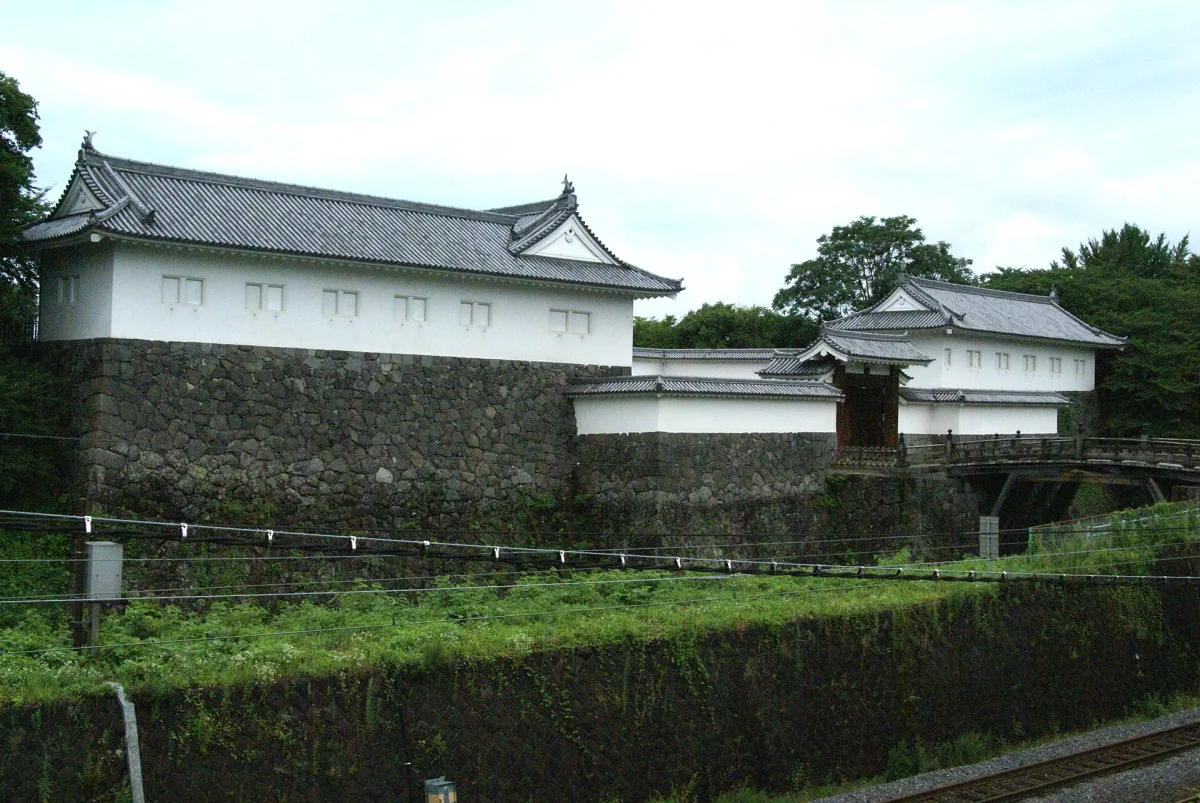
Kajo Park (Yamagata Castle Ruins)
霞城公園
The ruins of Yamagata Castle, once among Tohoku's largest, a walk from Yamagata Station: a rebuilt gate, moats and about 1,500 cherry trees.
Kasumi-ga-jo, the castle hidden in mist
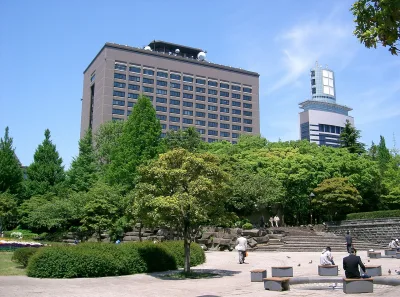
Kajo Park sits in the middle of Yamagata city, on the site of Yamagata Castle. Covering about 35.9 hectares, it takes in what were once the castle's inner citadel (honmaru) and second enclosure (ninomaru). It is a designated National Historic Site and is also listed among Japan's 100 Fine Castles.
Tradition says the castle was first built by Shiba Kaneyori, who arrived in Yamagata in 1356 and became the first head of the Mogami family. The castle as we picture it today, though, was shaped by the 11th head of the family, Mogami Yoshiaki. In 1600, the same year as the famous Battle of Sekigahara, an army of the Uesugi clan invaded Yamagata in what became known as the Battle of Hasedo, sometimes called "the Sekigahara of the north". Legend has it that from the enemy camp the castle could not be seen because it was hidden in mist (kasumi). That gave it the nickname Kasumi-ga-jo, "the castle of mist", and the park's name comes from the same story.
It was a hirajiro, a castle built on flat ground, with its inner citadel, second and third enclosures ringed by three moats and dorui (defensive walls of piled-up earth). According to Yamagata City, it was the largest castle in Tohoku (northeastern Japan). There was no main keep; the inner citadel held only a palace. The moats, earth walls and stone walls of the second enclosure that survive today are said to date from the time of Torii Tadamasa, who became lord of the castle in 1622 after the Mogami family lost its domain.
The rebuilt East Otemon Gate and the inner citadel
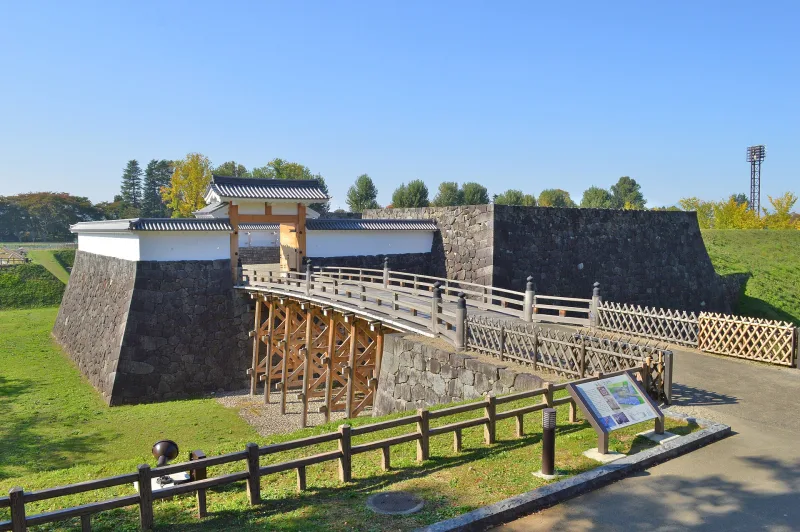
The park's grand front entrance is the Ninomaru East Otemon Gate, rebuilt in 1991 from mid-Edo-period records. Cross the bridge over the moat and you find a yagura-mon (a gate with a building on top), a Korai-style gate, and a masugata, a square courtyard boxed in by earthen walls. Together they show clearly how a castle was designed to stop invaders getting in. The gate has even stood in for Edo Castle in a film. The turret above the gate is open to the public; check Yamagata City's website for the days and times.
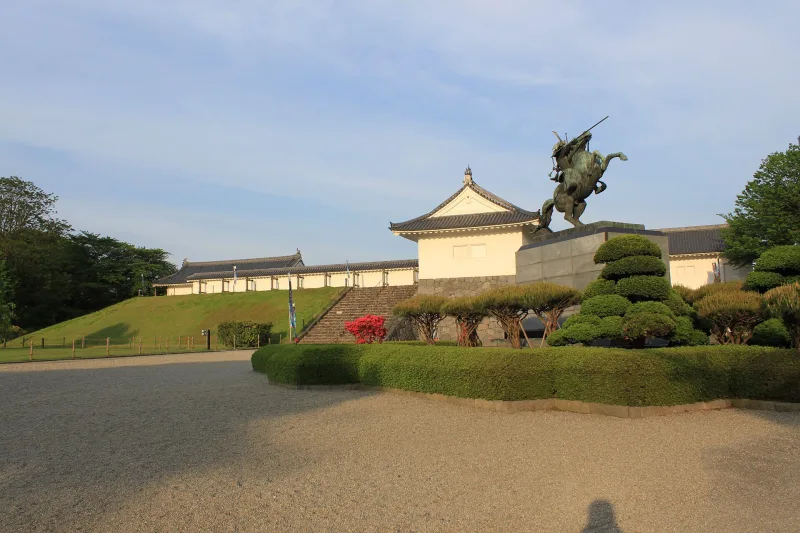
Excavation and reconstruction work is still going on inside the park. In 2005 the Ote Bridge at the inner citadel's Ichimonji Gate was rebuilt, and the city aims to finish restoring the inner citadel's moat and earth walls, among other work, by 2033 (Reiwa 15). The park is also home to an equestrian statue of Mogami Yoshiaki, showing him riding out at the head of his troops at the Battle of Hasedo.
Cherry blossoms and museums
In spring around 1,500 cherry trees bloom here, making it the best cherry blossom spot in Yamagata city. The blossoms are usually at their best from early to mid-April. The Kajo Cherry Blossom Festival (Kajo Kan'okai) is held to coincide with the bloom, and during the festival the rows of cherry trees along the moat on the east and south sides are lit up, so you can enjoy the night blossoms reflected in the water.
In and just around the park you will find the Yamagata City Local History Museum, Yamagata Prefectural Museum, Yamagata Museum of Art and the Mogami Yoshiaki Historical Museum. The Local History Museum is the former main building of Saiseikan, a Western-style hospital completed in 1878, which was moved into the park and restored. It is a nationally designated Important Cultural Property and displays material on local history and medicine.
Getting there
The nearest station is JR Yamagata Station. According to Yamagata City, it is about a 15-minute walk from the station's east exit to the East Otemon Gate, and about 10 minutes from the west exit to the South Gate. If you take the Beni-chan Bus that loops around the city, get off at Kajo Koen-mae; the East Otemon Gate is about a five-minute walk from there.
By car, it is about 15 to 20 minutes from the Yamagata-Zao IC (interchange) on the Yamagata Expressway. Parking at the park is free, but cars can enter and leave only through the North Gate. The park is open every day of the year and admission is free.
Tips
- If you are walking from the station, leave by the east exit and enter through the East Otemon Gate, so you approach with the moat and gate right in front of you.
- If you drive, the car park can only be reached through the North Gate, so set your sat nav to the North Gate side.
- On spring evenings in cherry blossom season, the illuminations along the moat are well worth seeing. The festival dates depend on when the trees bloom, so check shortly before you go.
Sources
- 霞城公園(国指定史跡山形城跡)について|山形市公式ホームページ
- 山形城の特徴|国指定史跡 山形城(山形市)
- 山形城と歴代の城主|国指定史跡 山形城(山形市)
- 霞城公園(山形城)の整備|国指定史跡 山形城(山形市)
- 山形市郷土館(国指定重要文化財・旧済生館本館)|山形市公式ホームページ
- 山形城跡・霞城公園|やまがたへの旅(山形県観光情報ポータル)
- 第2章 見えない大城郭 山形城|山形市観光協会
Updated 29 September 2026. Opening hours and prices change, so check the official site before you go.



.jpg)