Ise Grand Shrine Geku (Toyouke Daijingu)
豊受大神宮(伊勢神宮 外宮)
By custom, a visit to Ise Jingu begins here at the Geku, home of the god who prepares Amaterasu's meals, offered morning and evening for some 1,500 years.
The shrine of Amaterasu's "god of meals"
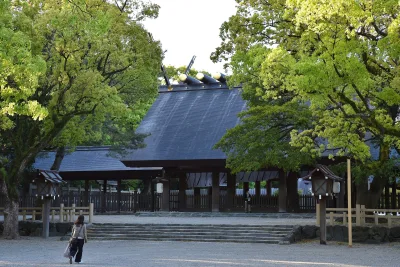
Ise Jingu in Ise City, Mie Prefecture, has two central shrines: the Naiku (Inner Shrine) and the Geku (Outer Shrine). The Outer Shrine's official name is Toyouke Daijingu. It enshrines Toyouke no Omikami, the god in charge of the meals of Amaterasu Omikami, who is enshrined at the Inner Shrine. Toyouke is also worshipped as a protector of food, clothing and shelter, and of every kind of industry.
According to the shrine, the Outer Shrine was established on its present site about 1,500 years ago, in the reign of Emperor Yuryaku. The story goes that Amaterasu appeared in the emperor's dream and said, "It is hard to stay in one place alone. Please summon the god of meals to me", and so Toyouke was brought from Tanba Province (today's northern Kyoto Prefecture and nearby areas). This was about 500 years after the founding of the Inner Shrine.
1,500 years of morning and evening meals, and rebuilding every 20 years
Since the shrine was founded, the Higoto Asayu Omike-sai, the offering of meals to the gods twice a day, morning and evening, has been carried out without missing a single day. The building where the meals are offered is called the Mikeden.
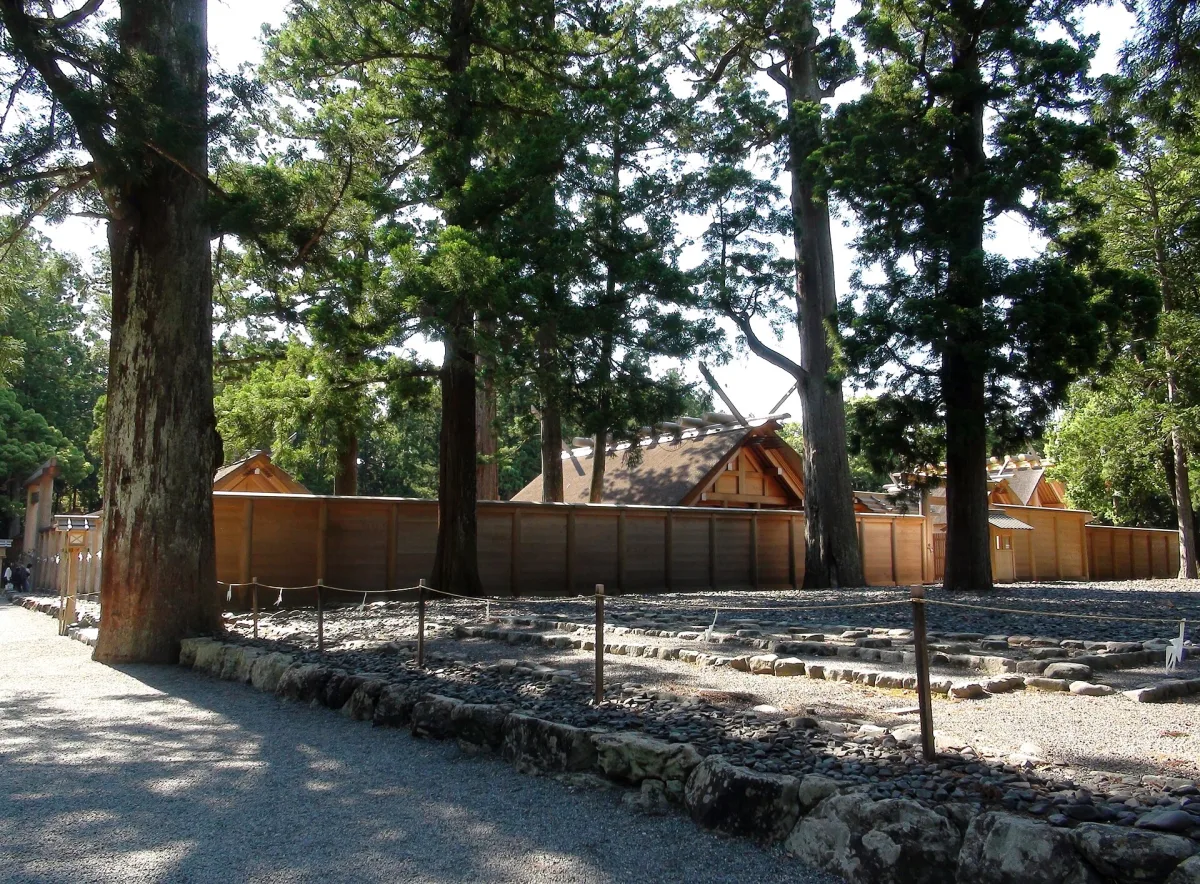
For more than 1,300 years, Ise Jingu has held the Shikinen Sengu once every 20 years, making all its shrine buildings and sacred treasures anew and moving the gods into the new buildings. Next to the Shogu (main sanctuary, the most important place, where the main hall stands) is the Mishikichi, an empty plot where the new buildings will go up at the next Sengu. Preparations for the next, 63rd Shikinen Sengu are now under way.
In the grounds: three secondary shrines, Magatama Pond and the Sengukan
Besides the Shogu, the Outer Shrine's grounds hold three betsugu (secondary shrines, ranking just below the Shogu): Takanomiya, Tsuchinomiya and Kazenomiya. Takanomiya ranks highest among the Outer Shrine's betsugu.
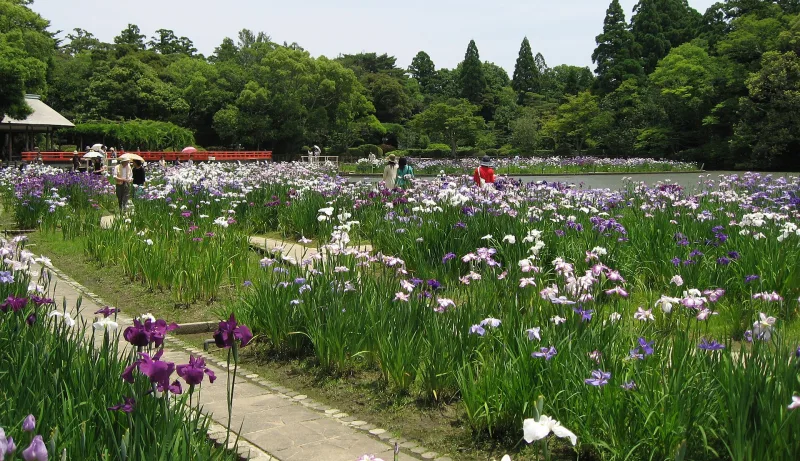
At Magatama Pond near the entrance, Japanese irises, the flower of Mie Prefecture, bloom in early summer. On the edge of the pond is the Sengukan, a museum about the Shikinen Sengu whose highlight is a full-size model of the Outer Shrine's main hall. Shrine staff also give guided tours of the exhibits every day.
The shrine's official website suggests a 30-minute course taking in the main sights and a 60-minute course for those who want to learn more.
The order of visiting and getting there
Ise Jingu has a custom called Geku-sensai: visit the Outer Shrine first, then go on to the Inner Shrine. You pray with two bows, two claps and one bow (two deep bows, two claps, then one more deep bow).
The Outer Shrine is about a 5-minute walk from Iseshi Station (JR and Kintetsu). About 50 shops line the approach street linking the station and the shrine, and there is a luggage storage service in front of Iseshi Station. You can travel between the Outer and Inner Shrines by local bus and other means. Visiting hours change with the season, so check the shrine's official website.
Tips
- At the Outer Shrine, walk on the left of the approach path (at the Inner Shrine you keep to the right).
- If you are visiting the Inner Shrine as well, go to the Outer Shrine first. Starting with the Outer Shrine, which is close to Iseshi Station, also makes getting around easier.
- Smoking is not allowed in the grounds, visitors are asked not to eat or drink except in the rest areas, and pets cannot be brought in.
- It is easier to walk around if you leave large bags at the luggage storage in front of Iseshi Station first.
Sources
- 豊受大神宮(外宮)|神宮について|伊勢神宮
- 正宮|豊受大神宮(外宮)|伊勢神宮
- 参拝の作法とマナー|伊勢神宮
- 外宮のモデルコース|伊勢神宮
- 式年遷宮について|伊勢神宮
- 式年遷宮記念 せんぐう館
- 豊受大神宮 外宮(伊勢神宮 外宮)|伊勢志摩観光ナビ
- ゆるり伊勢神宮 外宮|近畿日本鉄道
- 豊受大神宮 - Wikipedia
Updated 28 September 2026. Opening hours and prices change, so check the official site before you go.