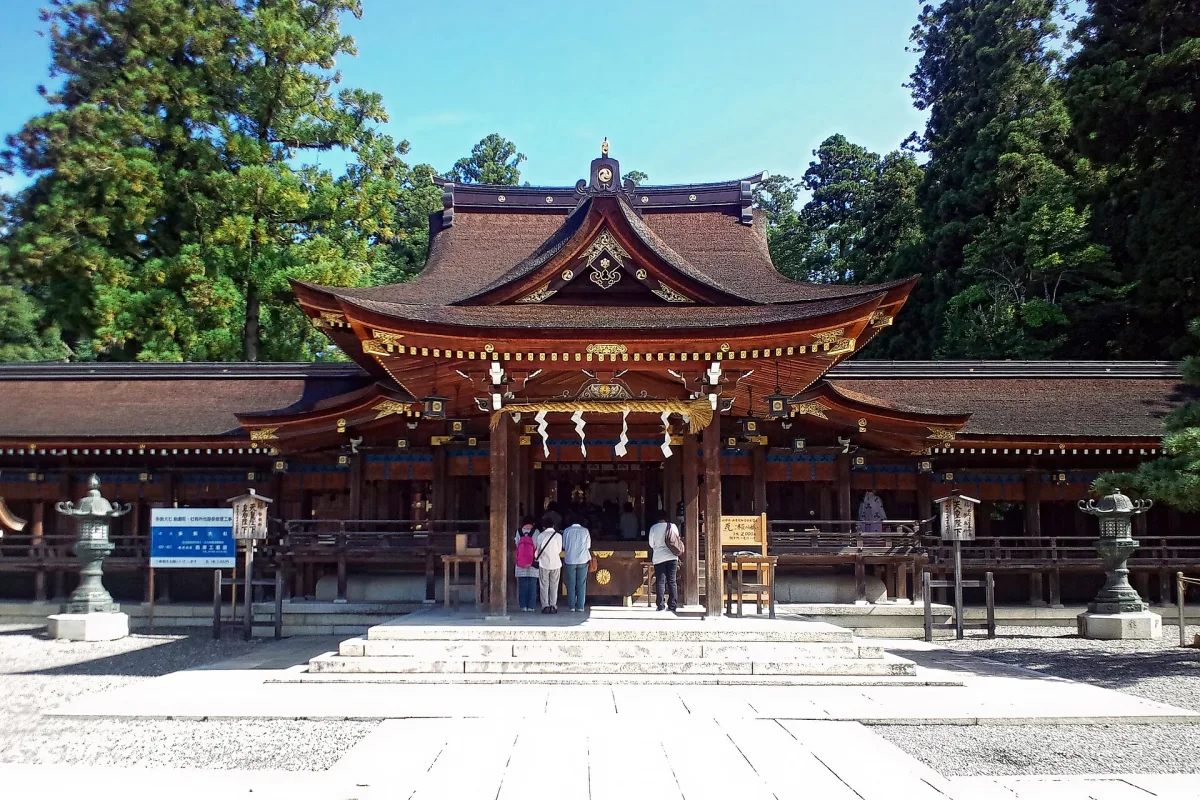
Taga Taisha Shrine
多賀大社
Shiga's largest shrine, dedicated to the divine couple who created Japan and its gods. Locals call it "Otaga-san"; people come to pray for long life and love.
"Otaga-san", the deities of life
Taga Taisha Shrine is in the town of Taga in eastern Shiga Prefecture. It is dedicated to Izanagi no Okami and Izanami no Okami. According to the Kojiki, Japan's oldest book of history, this divine couple gave birth to the islands of Japan and to many gods, including the sun goddess Amaterasu Omikami.
As the parent deities who created life, they have long been known for bringing long life, good matches in love and yakuyoke (protection from misfortune). From the Kamakura period to the Edo period, worship spread among samurai and ordinary people alike, and there are now 239 branch shrines across Japan. Because Taga Taisha stands in a parent-child relationship with Ise Grand Shrine, which is dedicated to Amaterasu, an old song goes: "If you visit Ise, visit Taga too, for Ise is the child of Taga."
From Taiko Bridge to the main hall, and Hideyoshi's garden
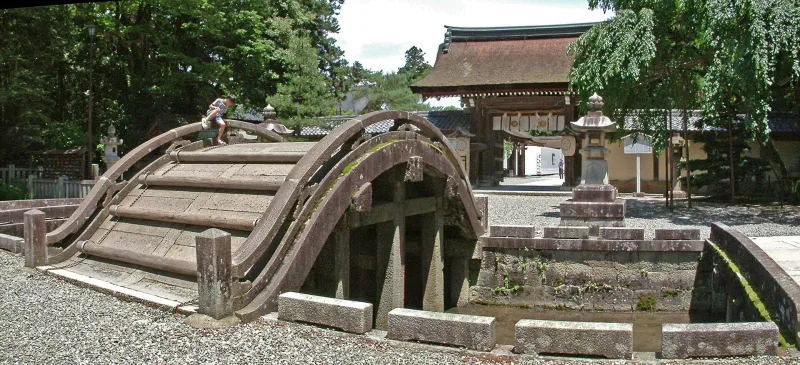
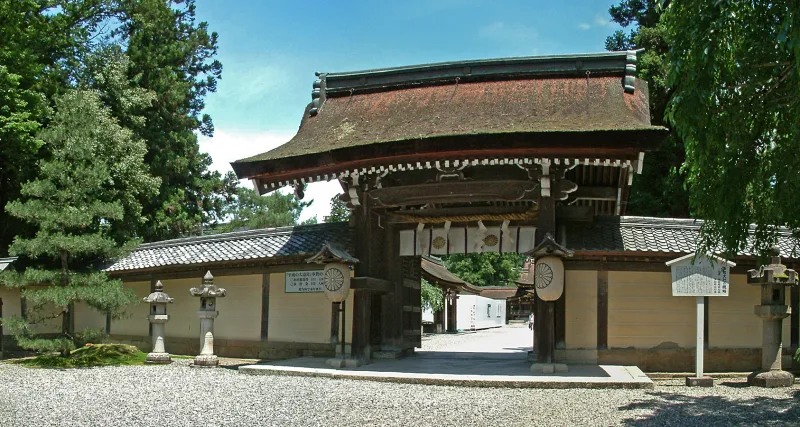
At the entrance to the grounds is Taikobashi, an arched stone bridge. It was built in 1638 and named after Toyotomi Hideyoshi, who was known as the Taiko. In 1588, Hideyoshi offered 10,000 koku of rice to the shrine as he prayed for his mother to recover from illness. Cross the bridge and pass through the gate, and the main hall stands at the far end of a wide courtyard of fine gravel. The present buildings were rebuilt in 1932 (Showa 7).
Deep in the grounds is the Okushoin Garden, said to have been made after Hideyoshi's offering. It dates from the Azuchi-Momoyama period and is a nationally designated Place of Scenic Beauty. Unusually, it is designed to be viewed looking down on the pond from the building. It has islands called Crane Island and Turtle Island, and a karedaki (dry waterfall), a waterfall represented with stones instead of water. There is a fee to see the garden.
The grounds also hold the Jumyo-ishi (Stone of Long Life); legend says that Chogen, the monk who rebuilt Todai-ji temple, was granted a longer life here. Another thing to look for is the large temple bell, surprising at a shrine. Until Shinto and Buddhism were separated in the Meiji era, it was normal for a shrine and a temple to share the same grounds. The bell is a relic of that time and is said to have been cast in 1555.
The rice-paddle charm and "otamajakushi"
Taga Taisha's speciality is the Otaga-jakushi, a charm shaped like a shamoji (the paddle used to serve rice). It comes from a legend: long ago, when Empress Gensho fell ill, the shrine's priest cooked rice and presented it to her along with a rice paddle made from the wood of a shide tree, and she soon recovered.
One theory says that this Otaga-jakushi gave rise to the word otamajakushi, a ladle for scooping soup, and from that to otamajakushi, the word for a tadpole, which is shaped like one.
Getting there and seasonal highlights
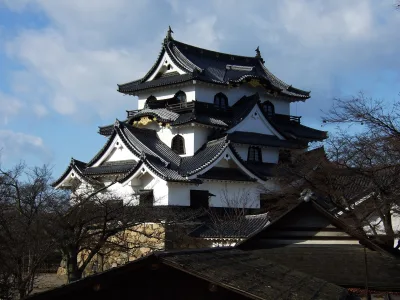
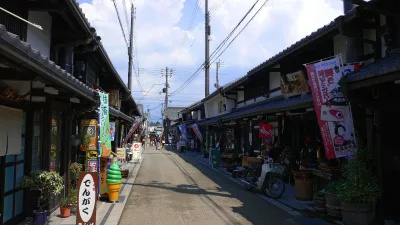
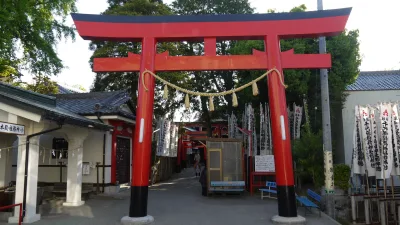
At JR Hikone Station change to the Ohmi Railway, get off at Taga-taisha-mae Station on the Taga Line and walk for about 10 minutes. The sando (approach) from the big torii (the gate that marks a shrine) in front of the station to the shrine is lined with souvenir shops. By car it is about 10 minutes from Hikone Interchange on the Meishin Expressway, and there is a car park. You can combine a visit with Hikone Castle and Lake Biwa.
In spring the weeping cherry trees are at their best, and in autumn the leaves in the Okushoin Garden. At the Mantosai (Festival of Ten Thousand Lanterns) from 3 to 5 August every year, the many lanterns offered by worshippers are lit. On 22 April the shrine holds its great annual festival, known as the Taga Matsuri. Festival dates and garden opening hours can change, so check the official website.
Tips
- Viewing of the Okushoin Garden is sometimes cancelled on festival days and similar occasions (in September 2026 there were days it was closed for the Koreisai festival). If the garden is your main reason for going, check the notices on the official website first.
- Otaga-jakushi rice paddles are offered as charms. They make a very Japanese souvenir, and people love them even more when you tell them the "otamajakushi" story.
- The official website has guidance on taking photos in the grounds and on visiting with pets. It is worth reading before you go.
Sources
Updated 29 September 2026. Opening hours and prices change, so check the official site before you go.



.jpg)