Kurokabe Square
黒壁スクエア
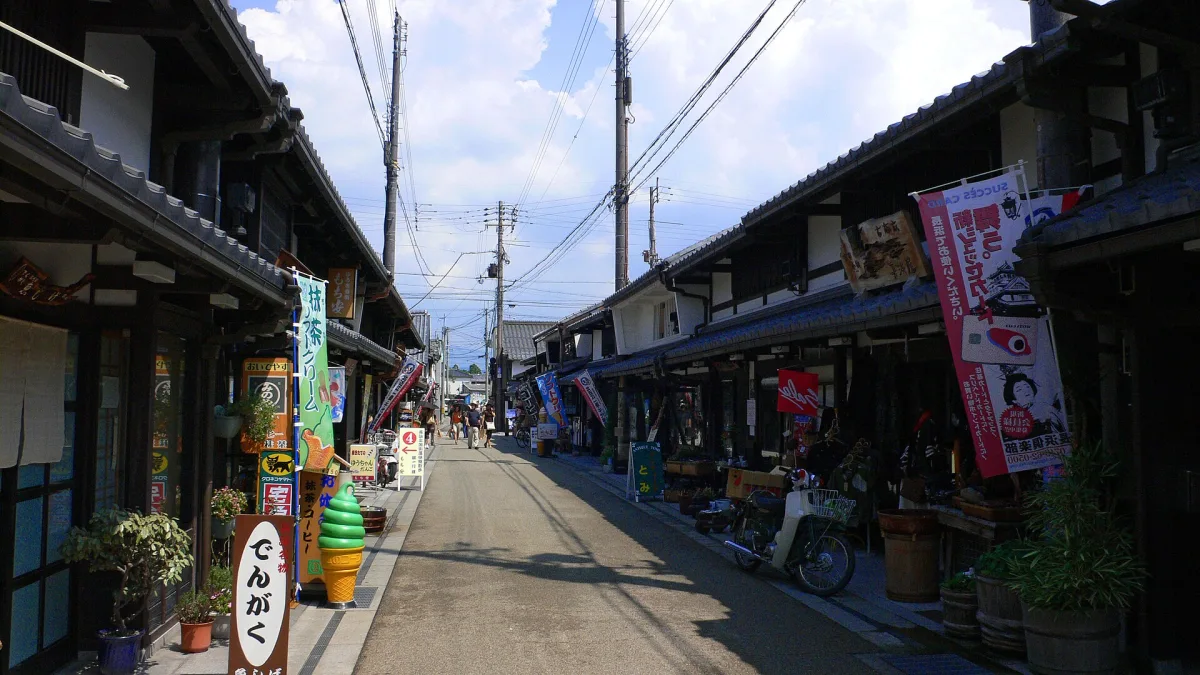
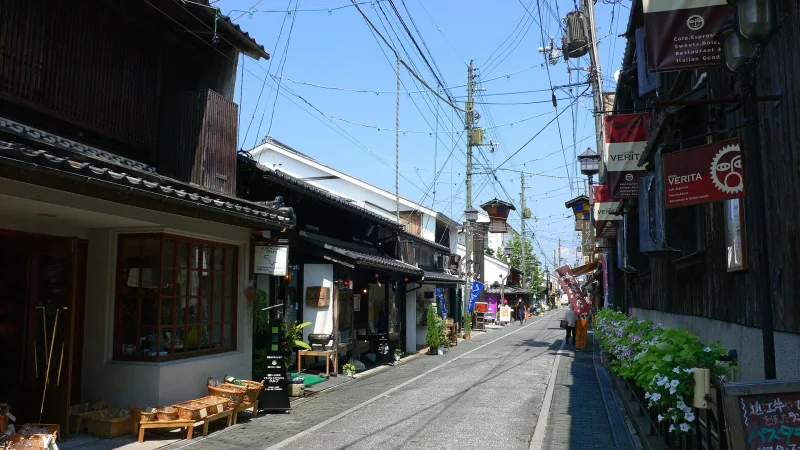
Old Nagahama townhouses, centred on the Meiji-era "Black Wall Bank", reborn as glass shops, studios and cafés. Try glassmaking and snack as you stroll.
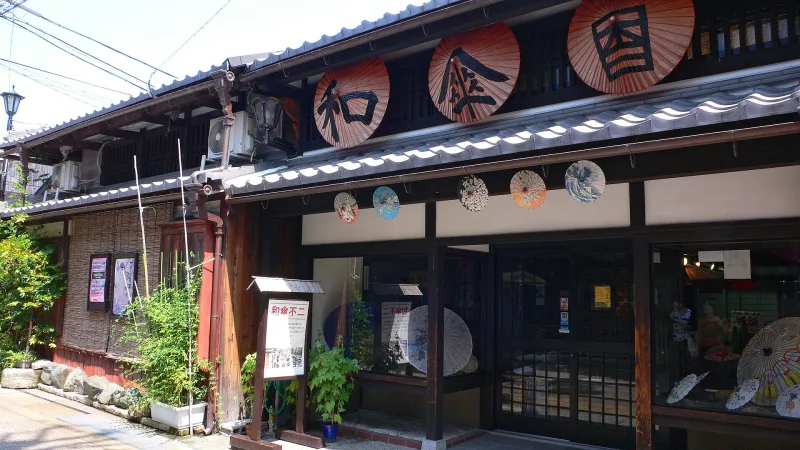
A town revival that began with the "Black Wall Bank"
Kurokabe Square is a sightseeing area in the old town of Nagahama, Shiga Prefecture. Nagahama grew up as the castle town of Nagahama Castle, the first castle Toyotomi Hideyoshi ever built, and prospered as a merchants' town. The heart of the area is Fuda no Tsuji, the crossroads where the Hokkoku Kaido (one of the old highways) meets Otemon-dori street. In the Edo period, official notice boards (kosatsu) announcing the rulers' orders stood here, and the place is still called by that name.
In 1900 (Meiji 33), the Nagahama branch of the 130th National Bank was built on this crossroads. Its walls were coated in black shikkui (lime plaster), so townspeople fondly called it the Kurokabe Ginko, the "Black Wall Bank". It later served as another bank, a church and more, but in the 1980s it was about to be demolished. Nagahama City and local businesses then put up money to form a company called Kurokabe, which bought the building back.
In 1989 the building was reborn as the Kurokabe Glass Museum. This set things in motion: one after another, the old Edo- and Meiji-era buildings around it were converted into shops, studios and galleries, becoming today's Kurokabe Square. As an example of town planning that brought a fading town centre back to life, it even draws visitors from around Japan who come to study it.
Touring the glass shops and studios
Glass is the theme of Kurokabe Square. At its centre, the Kurokabe Glass Museum (Kurokabe Building No. 1) is a building that blends Japanese and Western styles, its white window frames standing out against the black walls. The ground floor sells glass accessories and everyday items, and the first floor displays glassware bought from all over the world.
About 30 shops are gathered around Building No. 1. At shops with their own studios, you can watch craftspeople making glass pieces. Each building has a number, "Building No. such-and-such", and there are numbered buildings for a music box shop, a local food restaurant, cafés and more.
Try making glass yourself
The glass workshops offer options that beginners can join, such as glassblowing, stained glass, sandblasting (a technique that carves patterns into glass by blasting it with sand) and painting furin (glass wind chimes). Something you made yourself makes a great memento of your trip.
At busy times such as Obon (the mid-August holiday for honouring ancestors), the booking method may change and some workshops may be closed. Check the official website, including prices and booking times.
Getting there
It is about a 5-minute walk north-east from JR Nagahama Station. Some Special Rapid trains run from Kyoto and Osaka without a change. By car, it is about 10 minutes from Nagahama Interchange on the Hokuriku Expressway, and there are city-run car parks nearby.
The area as a whole has no closing days, but some shops have their own regular days off. If there is a particular shop you want to visit, check beforehand.
Tips
- The centre of the area is the Fuda no Tsuji crossroads. Use the Kurokabe Glass Museum as your landmark and walk along the Hokkoku Kaido from there for the easiest route.
- How the glass workshops take bookings can vary by season (during Obon, some workshops accepted same-day bookings only or were cancelled). If a workshop is the reason for your trip, check the notices on the official website.
- Every building has a "Kurokabe Building No." number, which is useful as a landmark when you are looking for a shop.
Sources
Updated 29 September 2026. Opening hours and prices change, so check the official site before you go.