Shukkeien Garden
縮景園
A 400-year-old stroll garden built around a pond by a Hiroshima lord. Badly damaged by the atomic bomb and restored, it is a quiet retreat in the city centre.
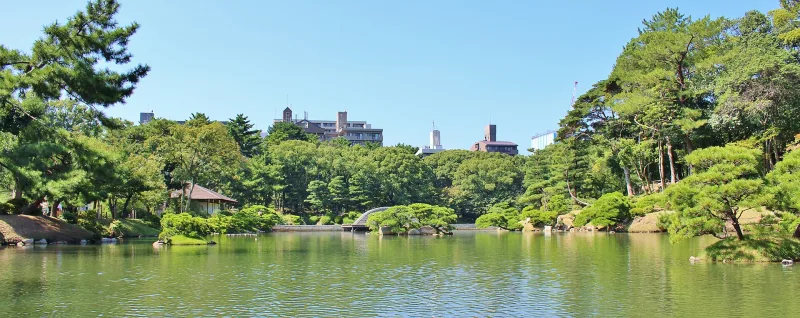
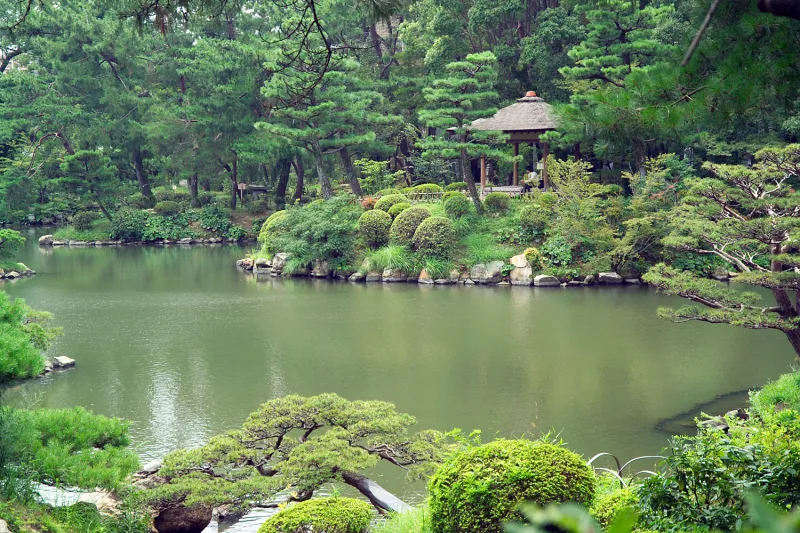
The garden of a Hiroshima lord's villa
Shukkeien Garden is a daimyo garden (a garden made for a feudal lord) that Asano Nagaakira, the first lord of the Hiroshima domain, had built as the garden of his villa from 1620. It was designed by Ueda Soko, a senior retainer who was also a tea master.
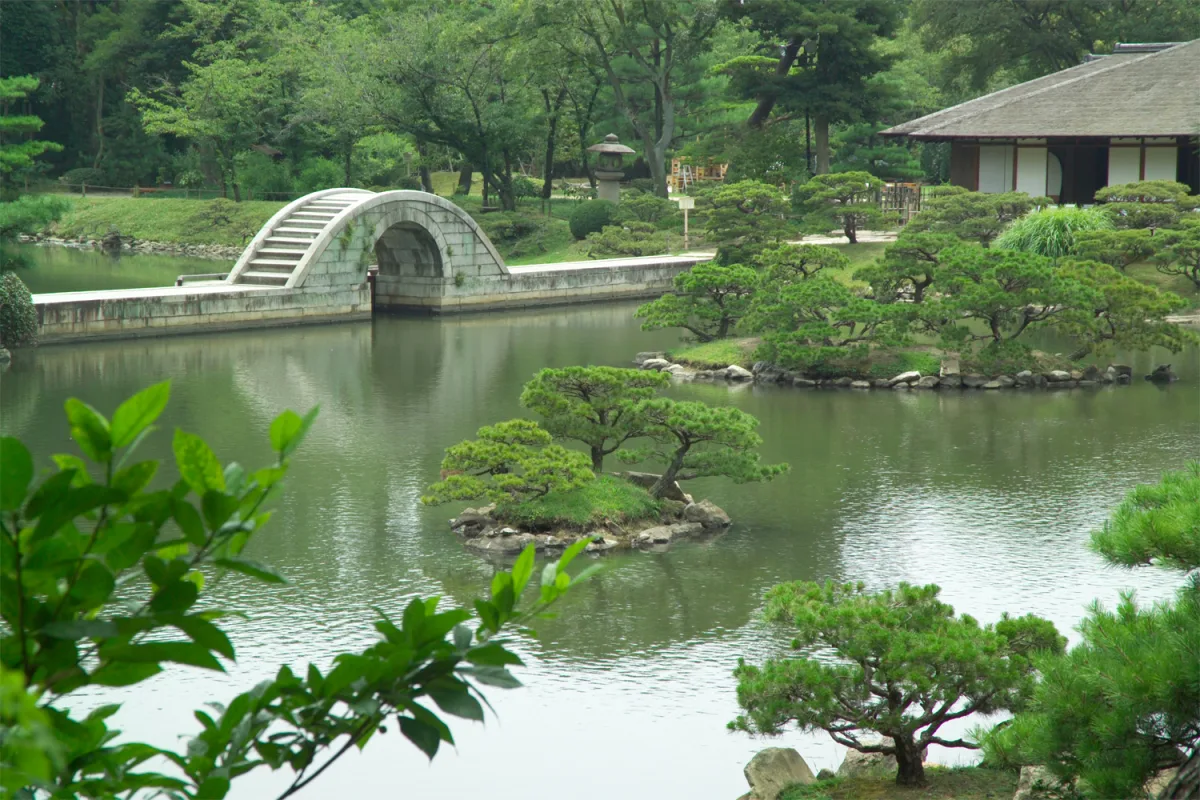
Shukkei means shrunken scenery, and the garden is said to recreate, in miniature, the scenery of the famous West Lake in Hangzhou, China. Hills, valleys, bridges and teahouses are arranged around a central pond, and it is a kaiyu-shiki garden, a stroll garden where the view keeps changing as you walk the paths.
In the later Edo period, the Kyoto gardener Shimizu Shichirozaemon carried out a major redesign. Kokokyo, the arched stone bridge at the heart of the garden, is the best-known feature of that work. In 1940 the Asano family donated the garden to Hiroshima Prefecture, and in the same year it was designated a national Place of Scenic Beauty.
Atomic bomb damage and recovery
The atomic bomb of 6 August 1945 destroyed almost every building in Shukkeien except the stone bridge. It is known that after the bombing, people who died were temporarily buried in the garden, and there is a memorial here to mourn them.
After the war, restoration went ahead step by step over about 30 years from 1949, and the last building was restored in 1974. The garden has three hibaku jumoku, atomic-bombed trees that survived the blast here, about 1.4km from the hypocentre: a Japanese black pine, a ginkgo and a muku tree. The ginkgo was knocked into a slant by the blast and still bears a large burn scar over a third of its trunk, yet it has sent out new shoots from there.
Walking around the pond
The central pond is called Takuei-chi. Although the garden was badly damaged by the bomb, its framework, including the pond and Kokokyo bridge, survived. The path circles the pond, and the way the water, buildings and trees overlap changes depending on where you stand.
The trees and flowers change their look with each season. In some years there have been summer events that light up the garden at night. Check the official website for the schedule of events.
Getting there
The garden is in Kaminoboricho, Naka Ward, Hiroshima, next to the Hiroshima Prefectural Art Museum. From JR Hiroshima Station, take a tram (Hiroden, Hiroshima Electric Railway) to Hatchobori, change to the Hakushima Line and get off at Shukkeien-mae. You can also take a bus from the Shinkansen exit of Hiroshima Station to Kenritsu Bijutsukan-mae (Shukkeien).
There is little parking, so visitors are encouraged to come by public transport. Opening hours change with the season, so check the official website.
Tips
- It is well worth combining a visit with the Hiroshima Prefectural Art Museum next door, which has in the past held exhibitions in partnership with Shukkeien.
- Look for the atomic-bombed ginkgo as you walk around the garden. The scars of the bomb can still be seen on its leaning trunk.
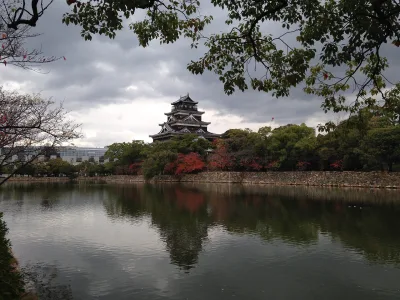
- Hiroshima Castle is close by, so you can walk to the castle grounds as part of the same outing.
Sources
- 縮景園(公式サイト)
- 縮景園の歴史|縮景園(公式サイト)
- アクセス|縮景園(公式サイト)
- 縮景園の歴史、被爆前、被爆、現在の状況|地域観光資源の多言語解説文データベース(観光庁)
- 縮景園連携企画|広島県立美術館
- クロマツ・イチョウなど(縮景園内)(被爆樹木)|広島ピースツーリズム
Updated 29 September 2026. Opening hours and prices change, so check the official site before you go.