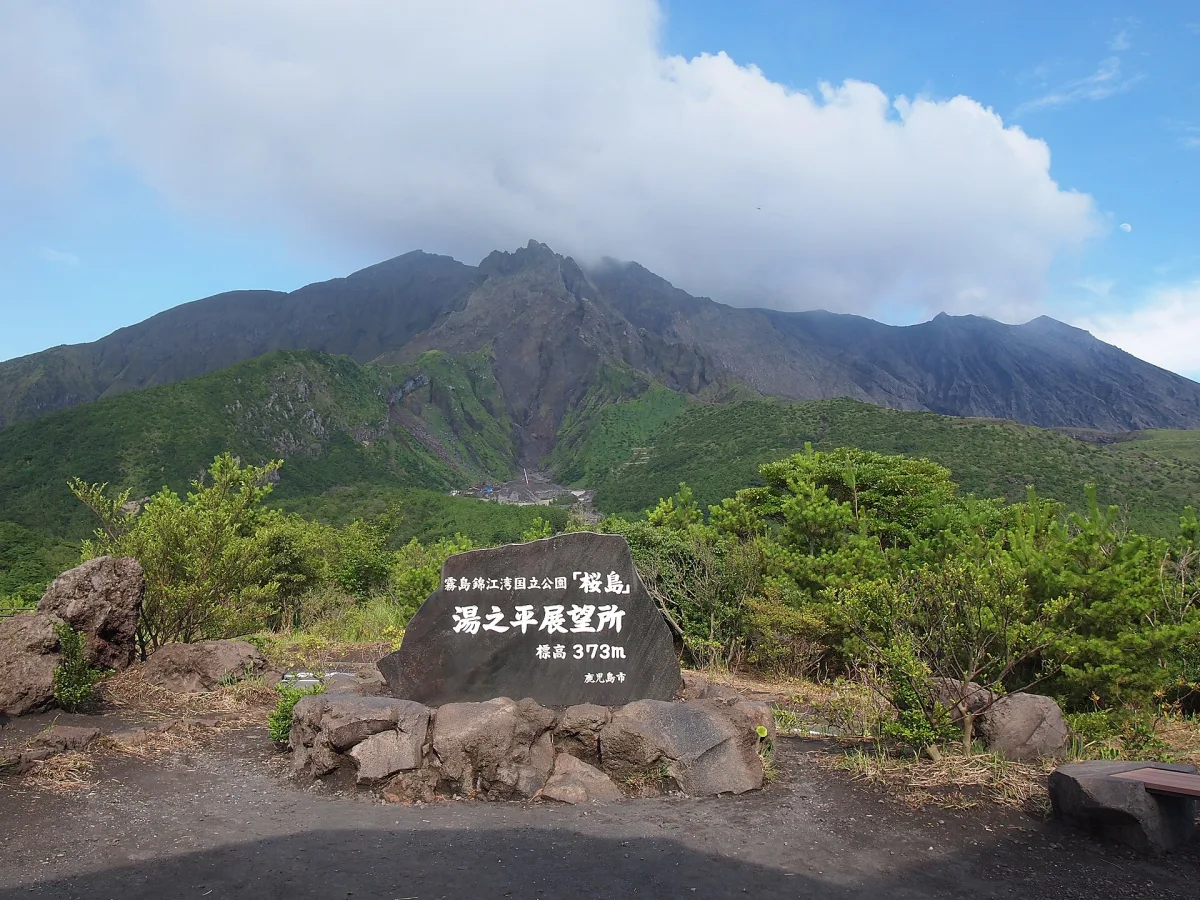
Yunohira Observatory
湯之平展望所
At 373m, the highest point on the active volcano Sakurajima open to the public. Smoking slopes loom close; turn round for Kinko Bay and Kagoshima city.
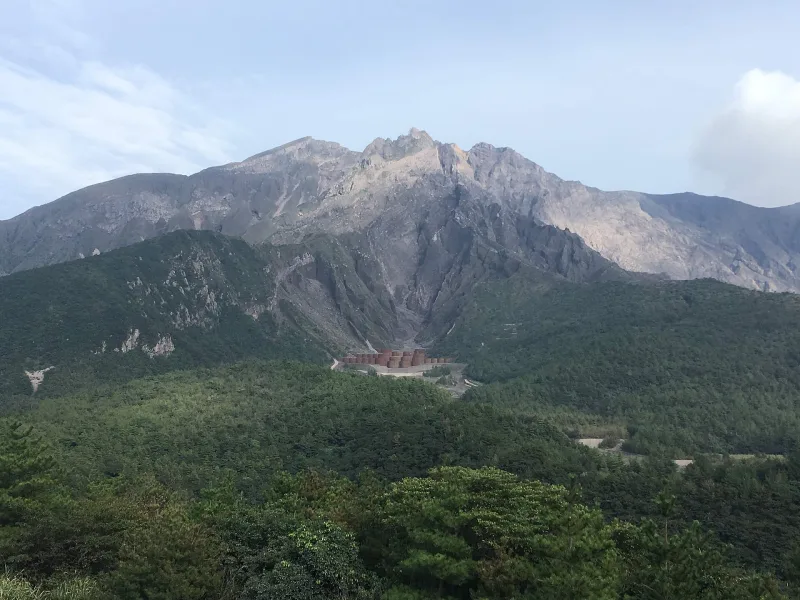
The highest lookout on Sakurajima
Sakurajima is a volcano that is still erupting, sitting across Kinko Bay from central Kagoshima City. Yunohira Observatory is at the fourth station of its northern peak, Kitadake, 373m above sea level. It is the highest point on Sakurajima that ordinary visitors can reach.
The observatory's roof is designed in the shape of cherry blossom petals. Entry is free and open to all, and you can visit at any time of year.
Volcano, sea and city all around you
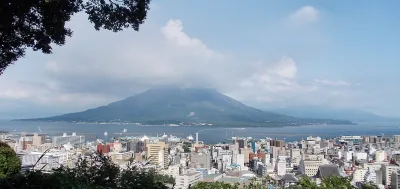
Right in front of you rise the rugged slopes of the southern peak, Minamidake, and its plume of volcanic smoke. Below spreads the Taisho Lava Field, formed by lava that poured out in an eruption during the Taisho era (1912-1926).
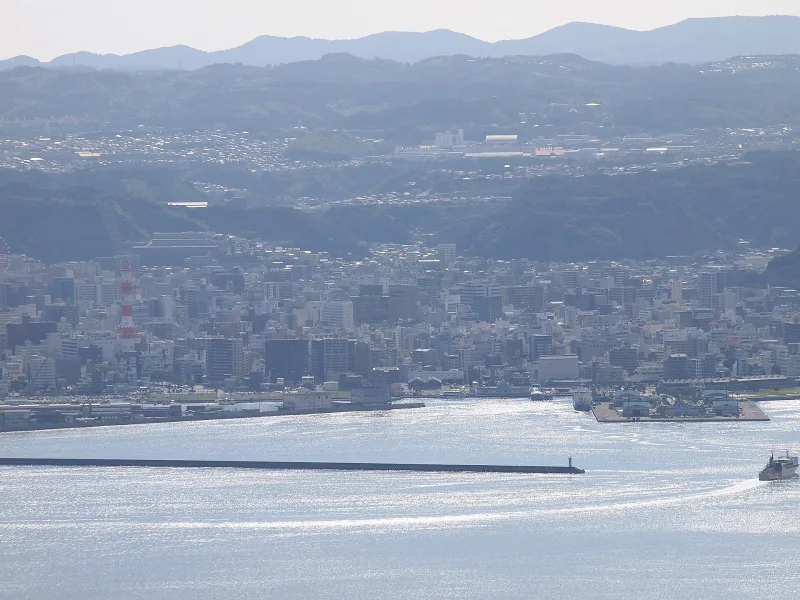
On the other side lie the calm waters of Kinko Bay and the streets of Kagoshima City. On a clear day you can see as far as the Kirishima mountains to the north and Mount Kaimon to the south. The view from evening into the night is also recommended, with the lights of the city across the water.
Seven heart-shaped stones are hidden in the observatory's stone walls. Find one and good luck might come your way: a small bit of fun.
Getting there
From central Kagoshima, take the Sakurajima Ferry across to Sakurajima Port, then the Sakurajima Island View sightseeing bus, which loops round the island, for about 40 minutes to the Yunohira Tenbōsho stop; the observatory is right there. By car it is about 11 minutes from the Sakurajima Ferry toll gate, and there is a car park. The observatory has a shop where you can buy souvenirs.
Sakurajima's volcanic activity now
According to the Japan Meteorological Agency (JMA), as of 28 September 2026 Sakurajima's volcanic alert level was 3 (no entry to the mountain), with warnings about large volcanic rocks and pyroclastic flows within about 2km of the Minamidake summit crater and the Showa crater. Eruptions have occurred repeatedly during this period too.
Depending on the wind, volcanic ash and small stones can be carried a long way. Check the volcano information from the JMA and Kagoshima City before you go, and follow the guidance on site.
Tips
- Volcanic conditions change from day to day. Before you set out, check the volcanic alert level and the restricted area in the JMA's volcano information.
- The Sakurajima Island View sightseeing bus drops you right by the observatory, so you can get there without a car.
- The local tourism website also recommends coming in the late afternoon or evening. On a clear day you can enjoy everything from the sunset to the night lights of Kagoshima.
Sources
Updated 29 September 2026. Opening hours and prices change, so check the official site before you go.
.jpg)

.jpg)