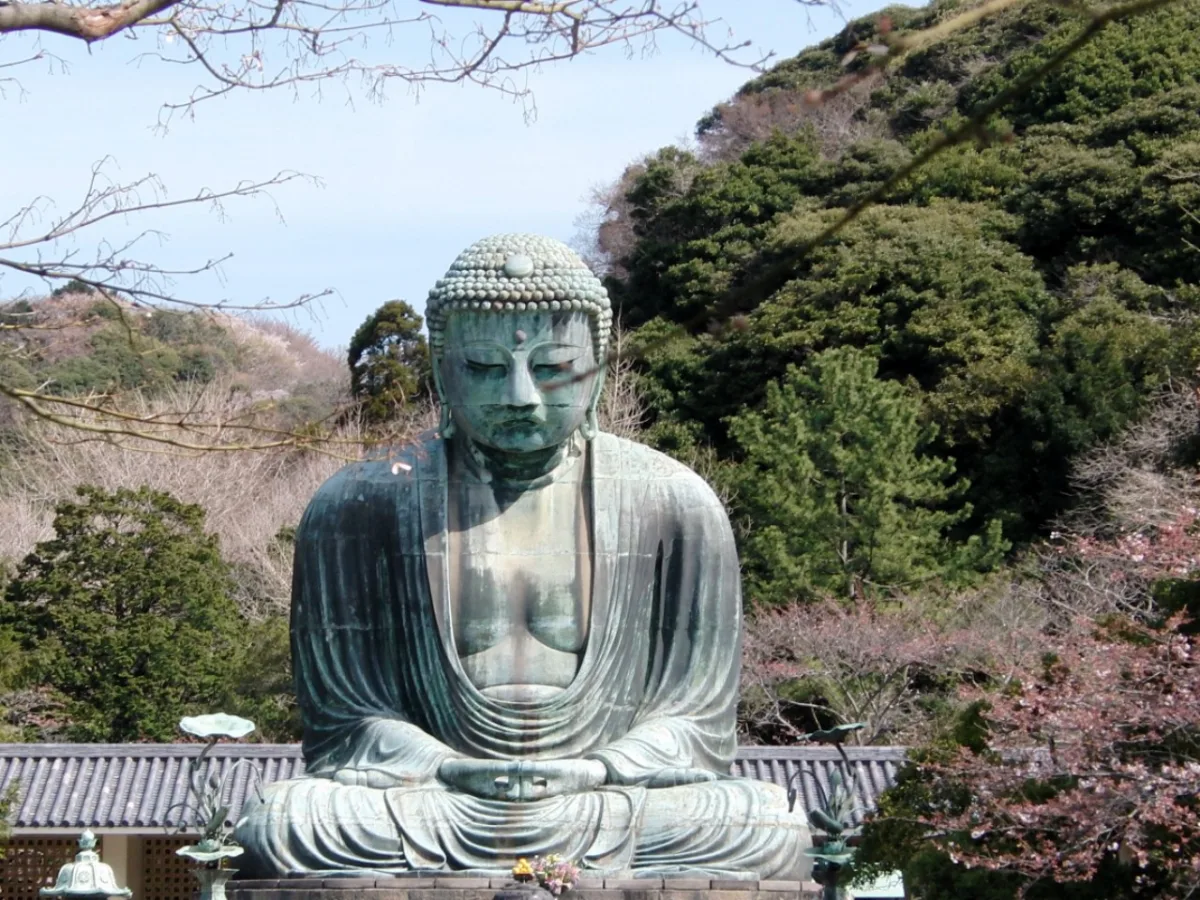
Kotoku-in (Great Buddha of Kamakura)
鎌倉大仏殿高徳院
A Kamakura temple where a bronze Great Buddha made over 700 years ago sits in the open air. Kamakura's only National Treasure Buddha, and you can go inside.
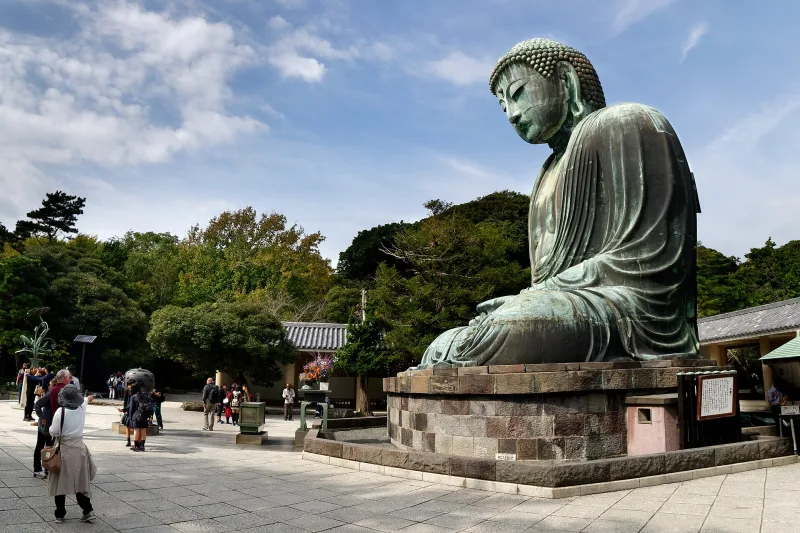
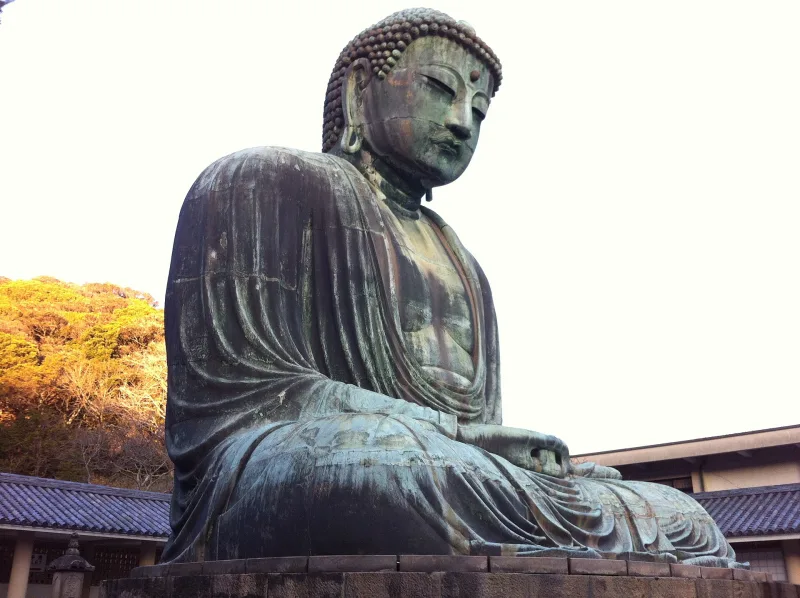
A National Treasure Buddha under the sky
Kotoku-in is a temple of the Jodo (Pure Land) school of Buddhism in the Hase district of Kamakura City, Kanagawa Prefecture. Its honzon (the principal image, the most revered statue in a temple) is the bronze seated Amida Nyorai known as the Great Buddha of Kamakura; Amida is the Buddha believed to lead people to the Pure Land paradise. It is the only Buddhist statue in Kamakura designated a National Treasure.
Including its pedestal it stands about 13.35m high and weighs about 121 tonnes. We know work on it began in 1252, but many details, such as who made it and how, are still unclear. Tradition says it was paid for with donations collected from ordinary people by a monk named Joko.
Why the Great Buddha Hall disappeared
The Buddha was originally housed inside a large building, the Daibutsuden (Great Buddha Hall). But the hall was destroyed again and again by typhoons and tsunami, and from around 1498 onwards the statue has sat outdoors without a building, in the style called roza ("sitting in the open").
The foundation stones (soseki, the stones that once held up the pillars) of the old hall still remain in the grounds, and they give you an idea of how big the building was. A little of the original gold leaf from when the statue was made still survives on its surface.
Step inside the Buddha, and look for the poem stone
At Kotoku-in you can go inside the statue (the tainai, or "inside the body") for an extra fee. The Buddha was cast in bronze (molten metal poured into a mould), and looking up at it from the inside is a rare experience.
In the grounds there is also a stone carved with a tanka (a classical 31-syllable poem) by the poet Yosano Akiko, in which she calls the Great Buddha a binan, a handsome man. After seeing the Buddha from the front, take a look from the side and from behind too.
Getting there
It is about a 7-minute walk from Hase Station on the Enoshima Electric Railway (Enoden). From Kamakura Station you can take a bus to the Daibutsu-mae stop, which is right by the temple. Walking from Kamakura Station takes about 30 minutes. Check opening hours and fees on the official website.
Tips
- Eating and drinking are not allowed in the grounds (drinking water is fine). Selfie sticks cannot be used inside the statue, and drone filming is banned in the grounds.
- On very hot days, entry to the inside of the Buddha may be restricted. Check the notices on the official website before you go.
- The temple has no car park, so the train or bus is the easy way to get there. At busy times such as autumn holiday weekends, goshuin (the handwritten temple stamps visitors collect) may be limited.
Sources
Updated 29 September 2026. Opening hours and prices change, so check the official site before you go.
.jpg)

_-_panoramio_(2).jpg)