Tsurugaoka Hachimangu Shrine
鶴岡八幡宮
Minamoto no Yoritomo's shrine at the heart of Kamakura, the samurai capital, with city views from its great stone steps and 800 years of horseback archery.
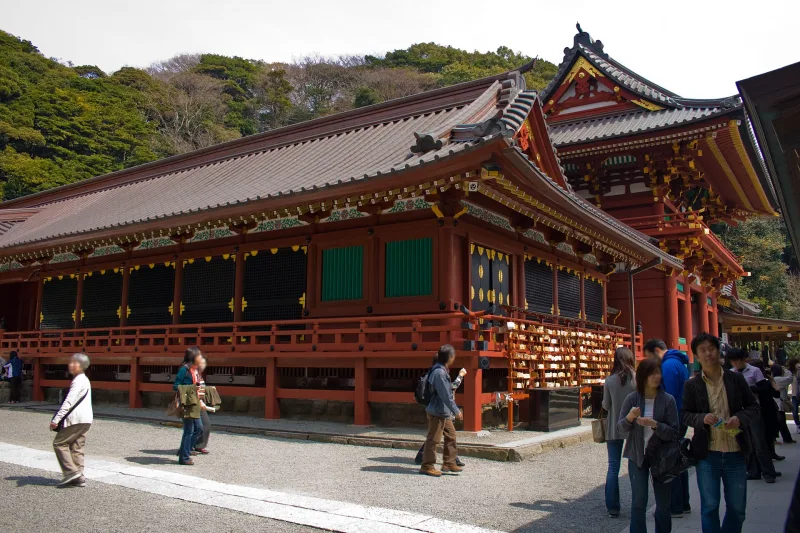
Kamakura, the samurai capital, began with this shrine
Tsurugaoka Hachimangu is a Shinto shrine in Kamakura City, Kanagawa Prefecture. It began when Minamoto no Yoriyoshi, an ancestor of Minamoto no Yoritomo, brought a share of the spirit of Hachiman, a Shinto god, from Iwashimizu Hachimangu in Kyoto and enshrined it near Yuigahama beach. Hachiman was the guardian deity of the Genji (the Minamoto clan) and has been worshipped all over Japan as a god of success in battle.
In 1180, Minamoto no Yoritomo made Kamakura the base of the Kamakura shogunate, Japan's first government run by the samurai, and in the same year he moved the shrine to where it stands today. The town grew up around the shrine, and Wakamiya-oji, the sandō (approach) of about 2km that runs in a straight line from the shore at Yuigahama to the shrine, is still the main axis of Kamakura.
The great stone steps, the main shrine and the great ginkgo
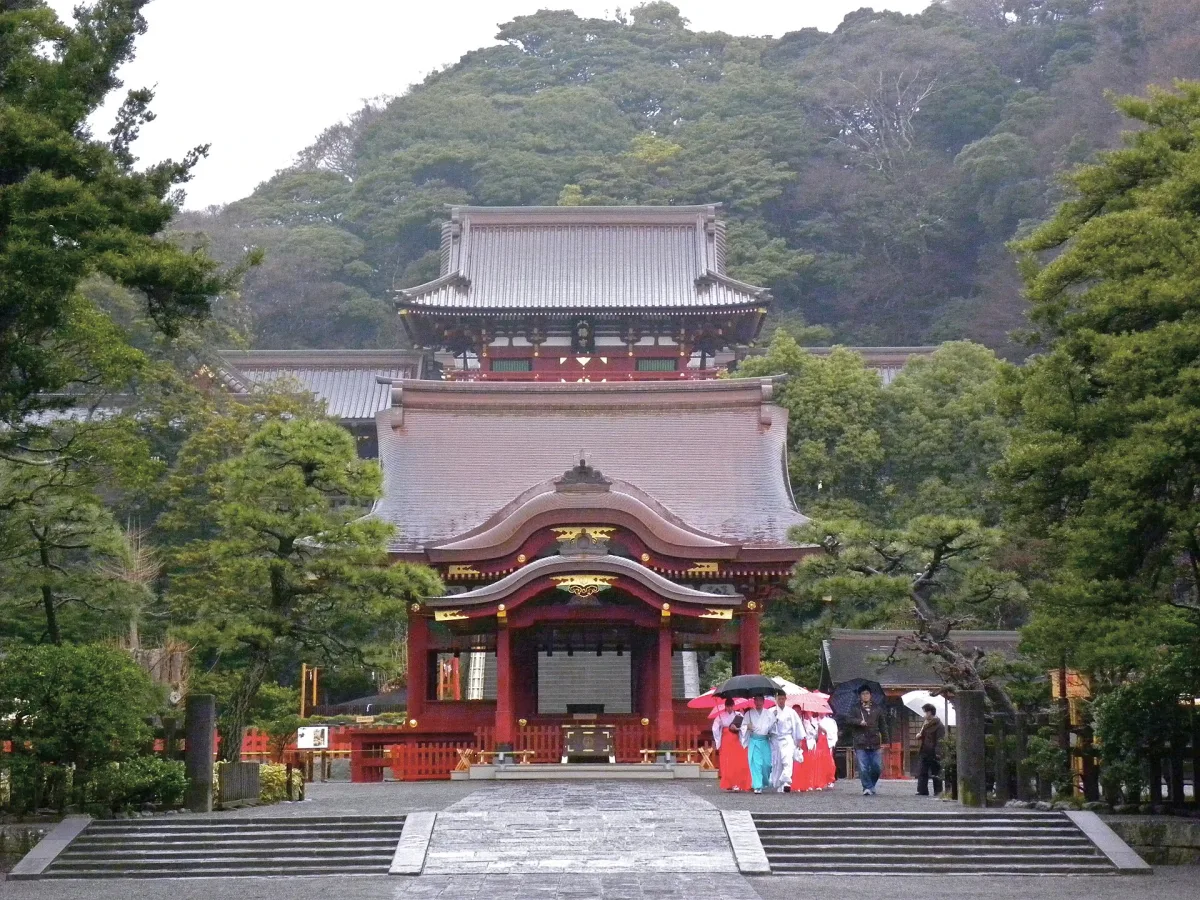
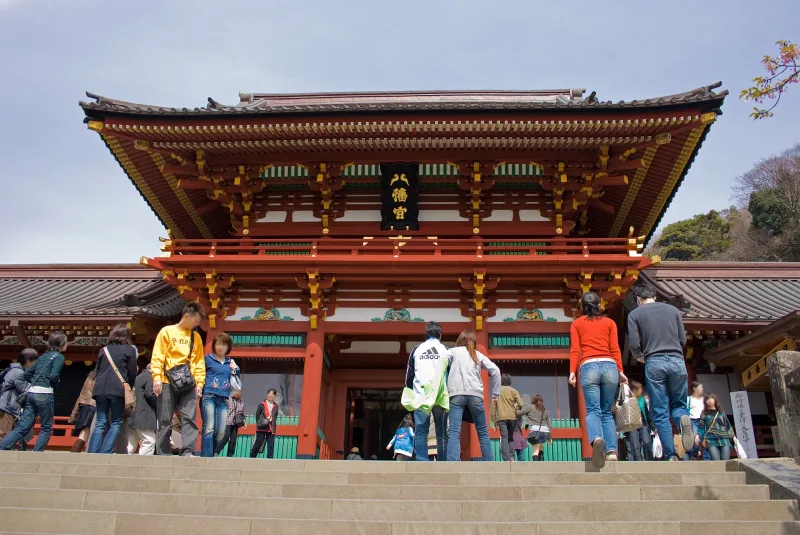
Follow the main approach and you reach a great flight of stone steps, the Oishidan. At the top stands the Hongu (Upper Shrine), the central hall enshrining three deities: Emperor Ojin, Himegami and Empress Jingu. Together with the Wakamiya (Lower Shrine) below, it is a national Important Cultural Property. From the top of the steps you can see across the whole of Kamakura, and on clear days when the air is crisp you may even see the Pacific Ocean and Izu Oshima island.
The grounds were once home to a great ginkgo tree, a goshinboku (sacred tree) that had watched over Kamakura's history. It was blown down by strong winds in the early hours of 10 March 2010, but young shoots that sprouted from its roots (hikobae) are now growing as the "child" ginkgo, alongside the "parent" ginkgo, which was replanted next to it.
The Genpei Ponds and the stage linked to Shizuka Gozen
The Genpei Ponds were made on Yoritomo's orders. The Genji Pond, with three islands wishing for prosperity, faces the Heike Pond, whose four islands stand for decline. The Genji and the Heike were two samurai clans who fought each other before the Kamakura shogunate was founded. Cherry blossoms colour the ponds in spring, and red and white lotus flowers in summer.
The Maiden stage stands on the site of the Wakamiya's former corridor, where Shizuka Gozen, the lover of Minamoto no Yoshitsune, is said to have danced while longing for him. Today it is used for shrine festivals and ceremonies, and for many weddings throughout the year.
Horseback archery, and getting there
Yabusame at Tsurugaoka Hachimangu is a sacred ritual in which archers gallop on horseback and shoot at three targets. It began in Yoritomo's time. It is still performed every year on 16 September by archers in hunting costume, as part of the Reitaisai (the shrine's most important festival of the year), held from 14 to 16 September.
It is about a 10-minute walk from the East Exit of JR Kamakura Station or from Kamakura Station on the Enoden line.
Tips
- The view from the top of the great stone steps is wide open, so after praying at the main shrine, turn around and look out over Kamakura.
- Part of the trunk of the great ginkgo that fell in 2010 can be seen up close in the café of the Kamakura Bunkakan Tsurugaoka Museum in the shrine grounds.
- Large crowds gather for the yabusame on 16 September. If you want to watch, set off early.
Sources
Updated 29 September 2026. Opening hours and prices change, so check the official site before you go.