To-no-Hetsuri
塔のへつり
A gorge in Minamiaizu, Fukushima, where tower-like cliffs carved by a river over a million years stand in a row. Cross the suspension bridge to their feet.
"Hetsuri" means a cliff that falls to a river
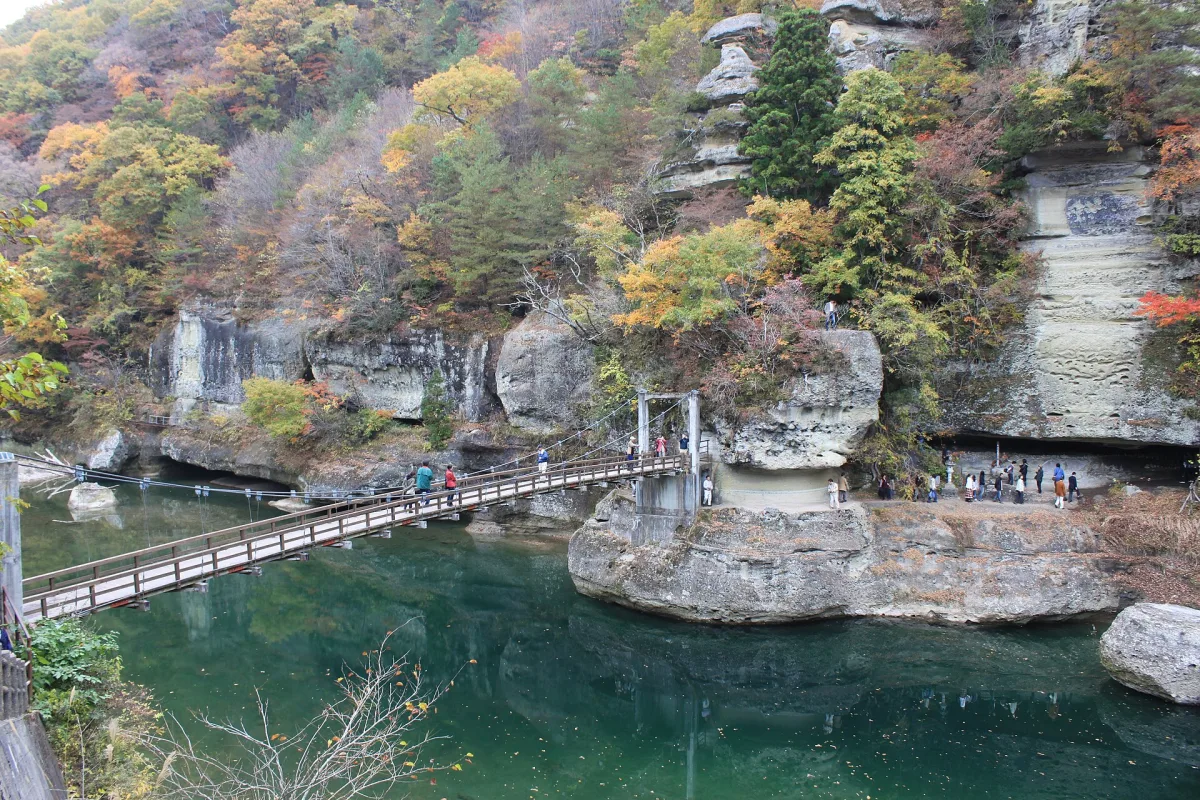
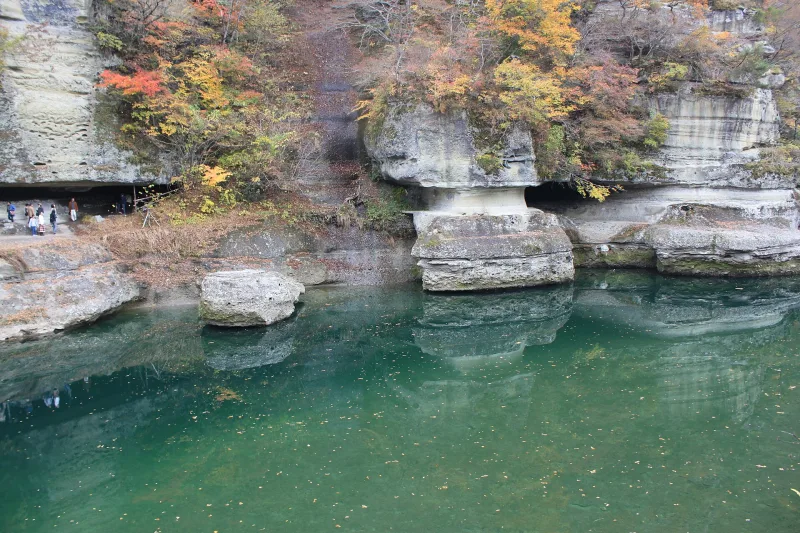
To-no-Hetsuri is a gorge in Shimogo town, Fukushima Prefecture, where rocks shaped like towers (to) line the bank of the Okawa River (also called the Aga River). Hetsuri is a local dialect word for a sheer cliff or steep slope that drops straight into a river, so the name means, roughly, "the riverside cliffs shaped like towers".
Layers of soft rock were worn away by water over a million years and weathered by wind and rain into the shapes you see today. The gorge was designated a national Natural Monument in 1943, and it is considered the finest scenic spot in Okawa-Hatori Prefectural Natural Park.
Across the suspension bridge to the foot of the rocks
A suspension bridge called Fujimi-bashi spans the river, and crossing it takes you to the foot of the cliffs on the far bank. Under the deeply hollowed-out rock runs a walkway like an arcade. In the rock straight ahead as you come off the bridge, Kokuzo Bosatsu, a Buddhist bodhisattva, is enshrined.
The rocks in the row have been given as many as 13 names to match their shapes, such as Byobu-iwa (folding-screen rock) and Eboshi-iwa (named after a tall court hat). The Shimogo Tourist Association's website has an illustration showing which rock is which, and it is fun to compare as you walk.
The view through the seasons
In early summer, wild wisteria flowers hang down from the cliffs against the pale rock. In autumn the rocks are framed by colourful leaves, and fallen leaves drifting on the river add to the charm. Fukushima Prefecture's tourism site recommends photographing the rocks in the afternoon light from the sun in the west, from near the top of the stairs down to the bridge.
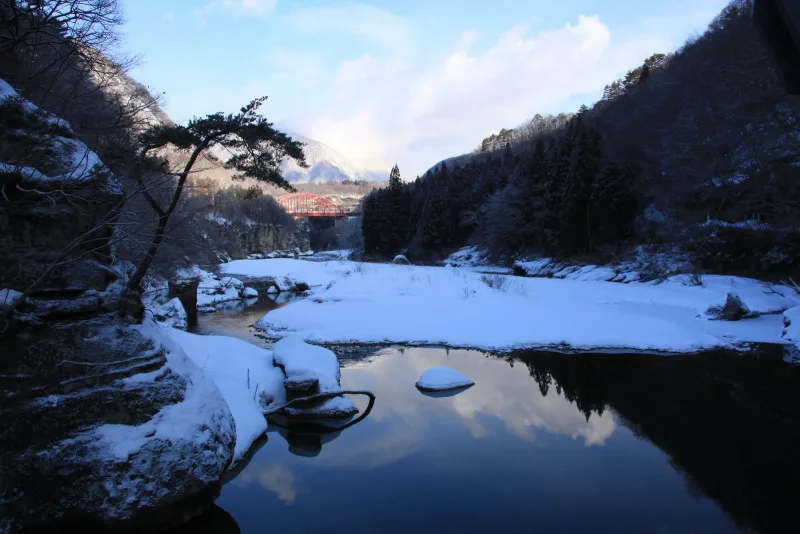
In winter the rocks wear a coat of snow, but the suspension bridge is closed for the season because of snow. In the 2025-26 winter it was closed from 4 December and reopened on 16 March 2026. Even in winter you can still look at the cliffs from the opposite bank.
Getting there
You can walk from To-no-Hetsuri Station on the Aizu Railway (about five minutes on foot, according to Fukushima Prefecture's tourism site). By car, it is about 50 minutes from the Aizu-Wakamatsu IC (interchange) on the Ban-etsu Expressway, or about 60 minutes from the Shirakawa IC on the Tohoku Expressway.
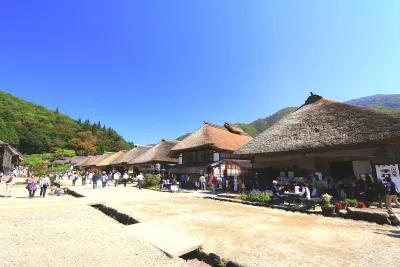
There are a few eateries and souvenir shops nearby. Ouchi-juku, an old post town where travellers once stopped on the road, is also in Shimogo, so you can visit both on the same trip.
Tips
- The suspension bridge is closed in winter (usually from around December to around March). If you want to reach the foot of the rocks, visit between spring and autumn. If you go in winter, check the Shimogo Tourist Association's notices.
- The bridge and the walkway under the rocks are right beside the river. The ground gets slippery after rain, so wear comfortable shoes.
- It gets especially crowded in wisteria season (early summer) and when the autumn leaves are out.
Sources
- 塔のへつり|下郷町観光協会
- 塔のへつり吊り橋の通行止解除について(2026年3月16日)|下郷町観光協会
- 塔のへつり|下郷町
- 塔のへつり|ふくしまの旅(福島県観光物産交流協会)
- 塔の岪(とうのへつり)|ぐるっと会津
- 塔のへつり - Wikipedia
Updated 29 September 2026. Opening hours and prices change, so check the official site before you go.

.jpg)
