Ise Jingu Naiku (Inner Shrine)
皇大神宮(伊勢神宮 内宮)
Ise Jingu's Inner Shrine, sometimes called the spiritual home of the Japanese, honours sun goddess Amaterasu. Cross the Isuzu River and walk the forest path.
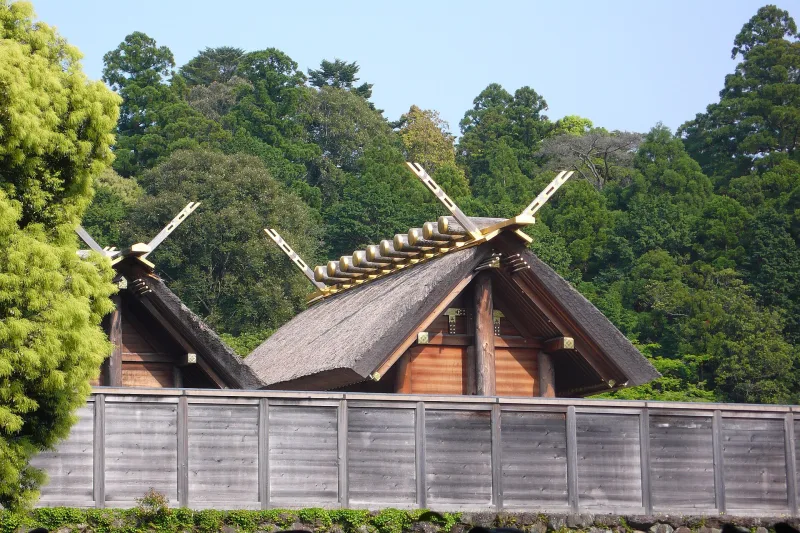
A sacred site for Amaterasu for about 2,000 years
Ise Jingu is a shrine in Ise City, Mie Prefecture, whose official name is simply Jingu. It is made up of 125 shrines, centred on the Naiku (Inner Shrine) and the Geku (Outer Shrine). The Inner Shrine's official name is Kotai Jingu.
The Inner Shrine is dedicated to Amaterasu Omikami, the sun goddess, regarded as the ancestor of the Imperial family and revered as a guardian deity of the whole Japanese people. According to legend, Yamatohime no Mikoto travelled from place to place looking for a fitting site to worship Amaterasu and settled on the banks of the Isuzu River. She has been worshipped here for about 2,000 years since then.
More than 7 million people visit Ise Jingu every year.
From the Uji Bridge to the main sanctuary
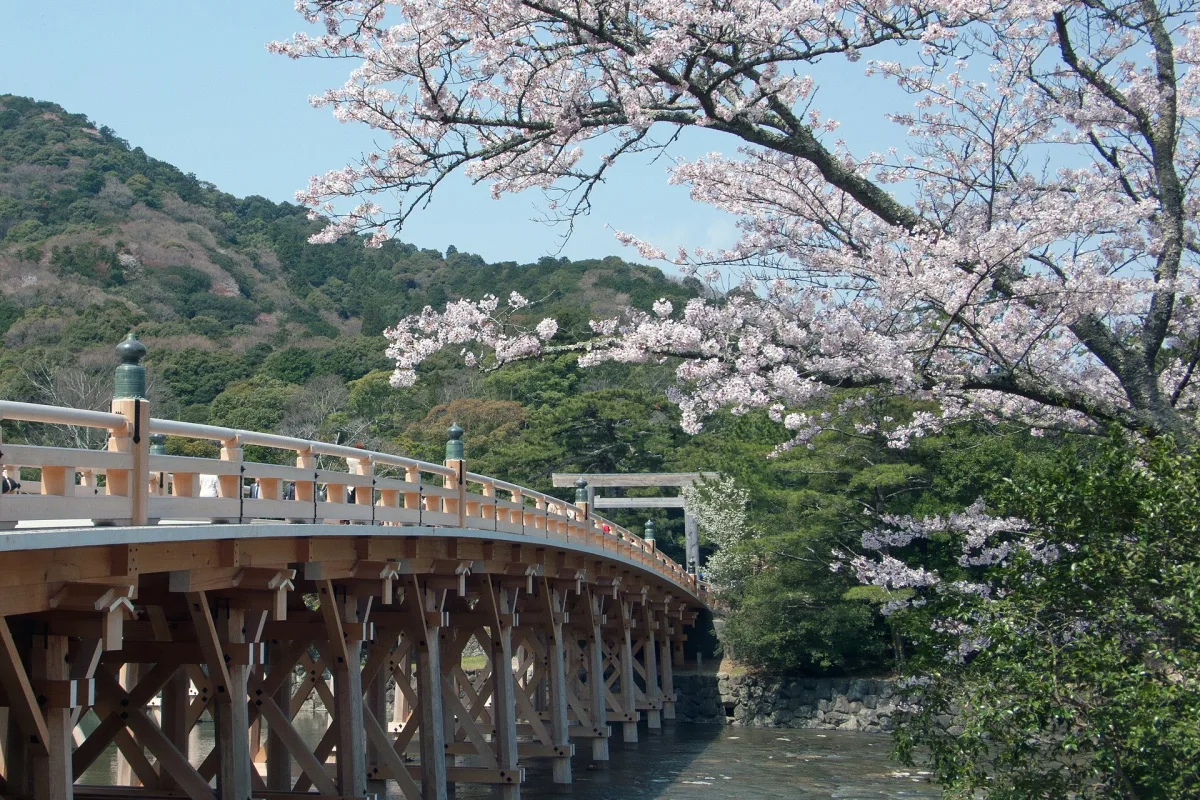
The entrance to the Inner Shrine is the Uji Bridge, a wooden bridge over the Isuzu River. Once you cross it, a sando (approach path) covered in white gravel leads into the forest.
Along the way is the Mitarashi, a spot on the bank of the Isuzu River where you can purify your hands and mouth.
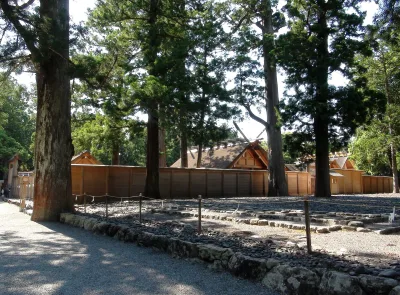
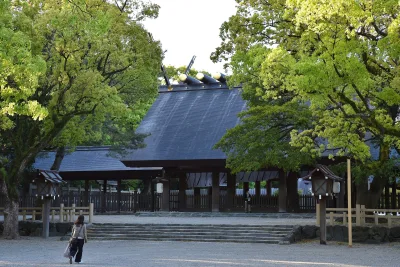
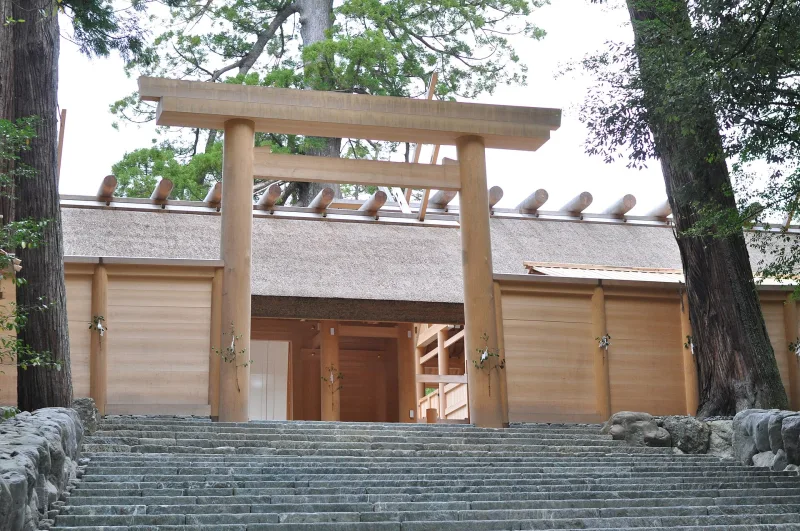
At the end of the path, the Shogu (main sanctuary) is built in yuitsu-shinmei-zukuri, an ancient architectural style found only at Ise Jingu. The Shogu is surrounded by four rows of fences, and ordinary visitors can go only as far as the front of the outermost gate. Photography is forbidden at the Shogu from the stone steps upwards. Besides the Shogu there are other shrines, such as the Aramatsuri-no-miya, a betsugu (secondary shrine) dedicated to Amaterasu's aramitama (the active side of a deity).
The once-every-20-years rebuilding is under way
Once every 20 years, Ise Jingu rebuilds all its buildings, starting with the Shogu, and moves the deity to the new shrine. This is the Shikinen Sengu. The first is said to have taken place in 690, and the central ceremonies of the next one, the 63rd, are planned for autumn 2033.
The related rites began in 2025, and in April 2026 a ceremony was held to bring in the goyozai (the timber for the rebuilding). The Uji Bridge is also rebuilt to coincide with the Sengu, and a ceremony for the first crossing of the new bridge is planned for November 2029.
During the Sengu period, the new and old shrines stand side by side, a sight you can see only once every 20 years.
Getting there and the order of visiting
You can take a bus to Naiku-mae from Iseshi Station (Kintetsu and JR) or Ujiyamada Station (Kintetsu). By long-standing custom, the proper order is to visit the Outer Shrine first and then the Inner Shrine.
Visiting hours change with the season. Check the official website.
Tips
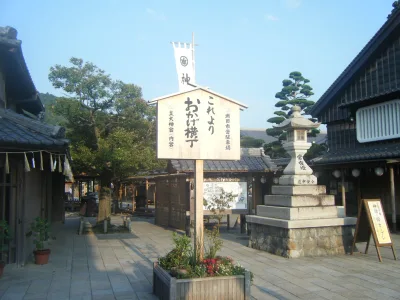
- Oharai-machi and Okage Yokocho, the shrine-front town that stretches from the Inner Shrine's Uji Bridge, are lined with restaurants and souvenir shops, so you can drop in before or after your visit.
- Photography is forbidden at the Shogu from the stone steps upwards. Put your camera and smartphone away when you pray.
Sources
- 神宮について|伊勢神宮(公式)
- 内宮(皇大神宮)|伊勢神宮(公式)
- ご参拝・ご祈祷|伊勢神宮(公式)
- 第63回神宮式年遷宮|伊勢神宮(公式)
- 遷宮予定年表|第63回神宮式年遷宮|伊勢神宮(公式)
- 皇大神宮 - Wikipedia
- 伊勢神宮内宮前 おかげ横丁(公式)
Updated 28 September 2026. Opening hours and prices change, so check the official site before you go.