Motsuji Temple
毛越寺
Once a temple grander than Chusonji. Its halls are gone, but its Heian-period Pure Land garden and great pond survive almost intact.
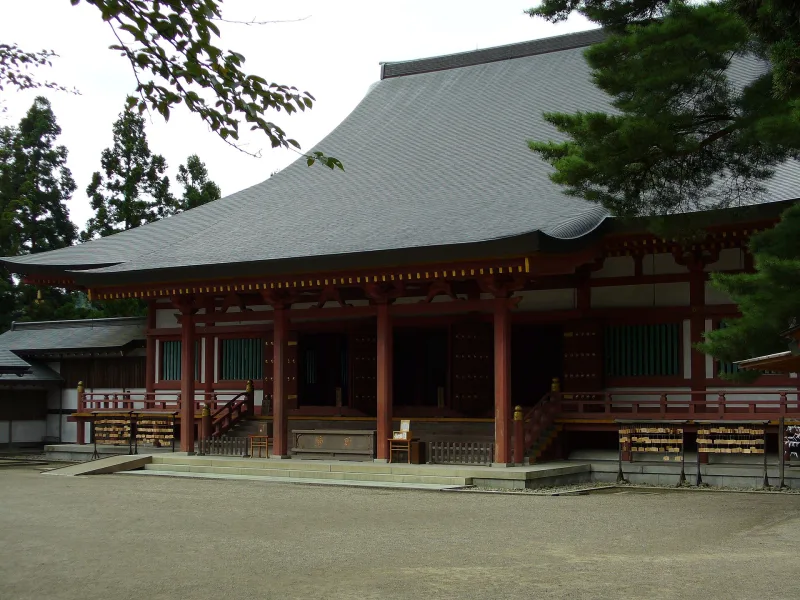
The great temple of golden Hiraizumi
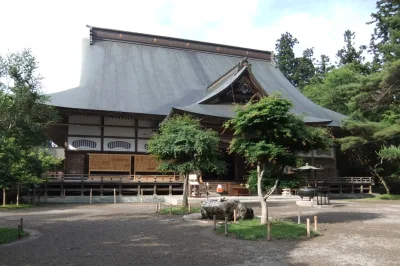
Motsuji Temple is a Tendai Buddhist temple in the town of Hiraizumi, Iwate Prefecture, and one of the sites that make up the Hiraizumi World Heritage Site. According to temple tradition, it was founded in 850 by the monk Jikaku Daishi Ennin.
Many halls were built under Motohira and Hidehira, the second and third heads of the Oshu Fujiwara clan, who flourished in Hiraizumi at the end of the Heian period. At its height the temple is said to have had 40 halls and pagodas and 500 buildings where monks lived, surpassing even Chusonji, also in Hiraizumi, in size and splendour.
After the Fujiwara clan fell, repeated disasters burned every building to the ground. Even so, the Pure Land garden centred on its pond and the remains of the Heian-period buildings survive in almost complete form, and the temple is designated both a national Special Historic Site and a Special Place of Scenic Beauty.
A garden that brings paradise down to earth
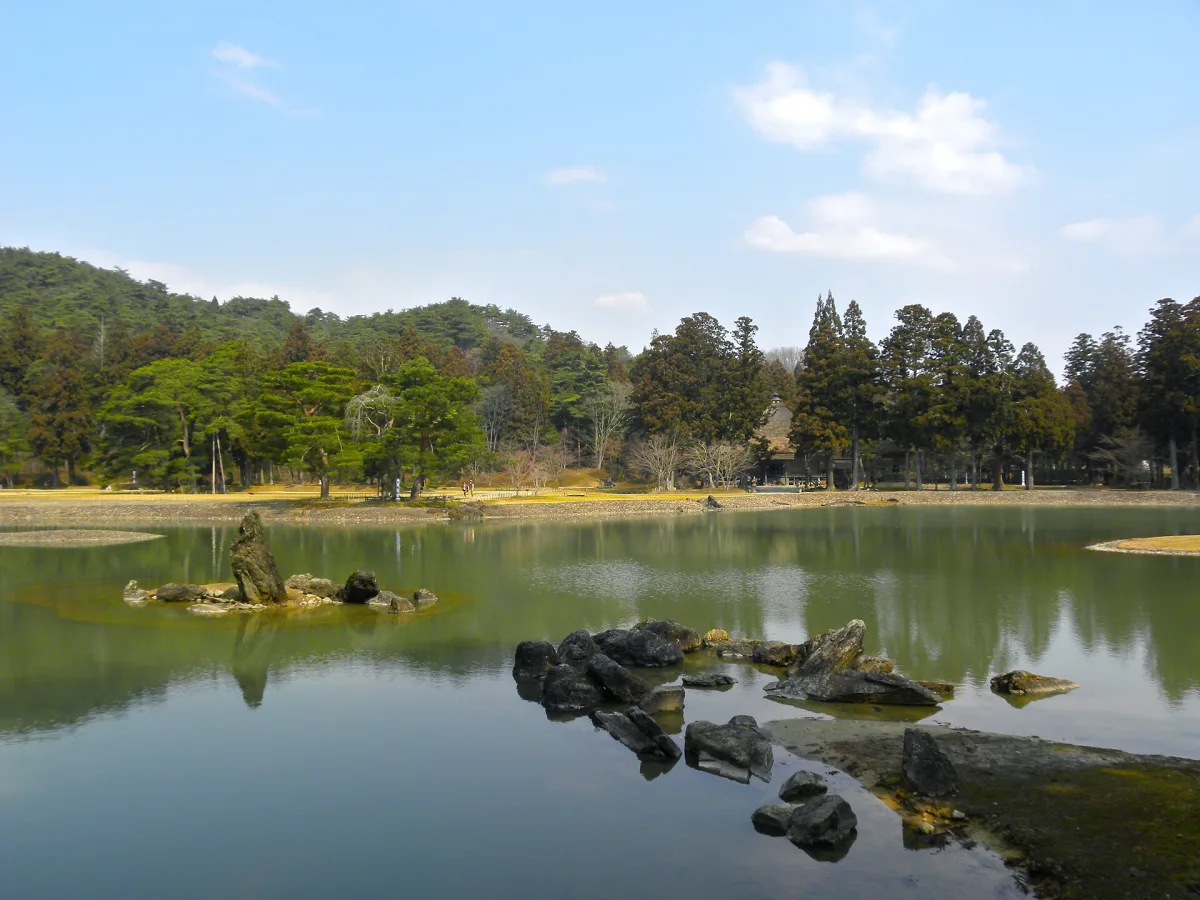
Motsuji's Pure Land garden is said to represent the Buddhist paradise on earth. At its centre is the Oizumi-ga-ike pond, about 180m from east to west and about 90m from north to south, which still shows the form it had when it was first made. In the middle of the pond is an island shaped like a magatama (a comma-shaped jewel), which was once reached by bridges.
On the south-east shore of the pond, a rock arrangement evoking a rugged, rocky coast juts out into the water, with a stone about 2m tall standing at its tip. It is one of the most beautiful views in the garden. To the south-west of the pond is a tsukiyama (an artificial hill) representing a scene of cliffs.
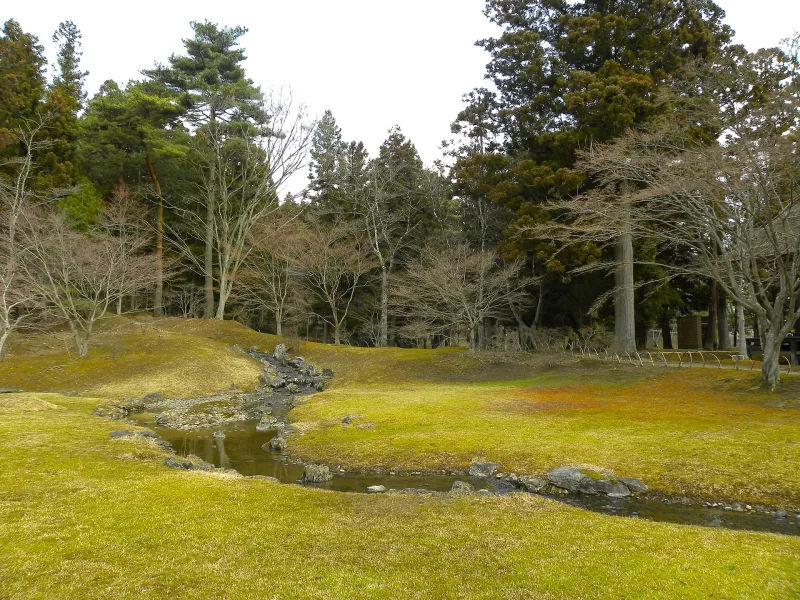
North-east of the pond is the yarimizu, a winding channel that brings water into the pond. It is the only surviving example of a Heian-period yarimizu, and every year in the season of fresh green leaves it is the setting for the Gokusui no En (winding-stream banquet), which recreates the elegant world of the Heian court.
Seasonal flowers and getting there
From mid-June to mid-July, 30,000 irises of 300 varieties bloom and the Ayame Festival (iris festival) is held. In autumn there are also bush clover and autumn leaves festivals.
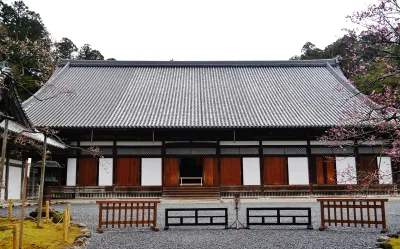
The grounds also include the Jogyodo hall, rebuilt in 1732, and a treasure hall displaying Heian-period Buddhist statues and excavated finds. There is also a stone carved with the haiku that the poet Matsuo Basho composed in Hiraizumi, "Natsukusa ya tsuwamonodomo ga yume no ato" (Summer grasses: all that remains of warriors' dreams), in Basho's own handwriting.
It is about 0.7km, roughly a seven-minute walk, from Hiraizumi Station on the JR Tohoku Line. You can also use Run Run, the loop bus that circles Hiraizumi. Check visiting hours and the admission fee on the official website.
Tips
- The audio guide pens lent out by the Hiraizumi Tourism Association work in seven languages, including English. You can borrow one at Motsuji's main gate, at the tourist information centre in front of Hiraizumi Station or at Chusonji, and return it at a different location.
- From mid-April to early November, guides are stationed in front of the main gate and will show you around the grounds in about 40 minutes (for a fee).
- Almost all the buildings in the grounds have been lost, and much of what you see are the remains: foundation stones (soseki, the stones that held up the pillars) and earthen platforms. Reading the information boards or using the audio guide makes it easier to picture how it once looked.
Sources
Updated 29 September 2026. Opening hours and prices change, so check the official site before you go.